Hybrid Elliptical Comparison: Dual-Mode Machines Tested
By Amir Qureshi • 28th Apr
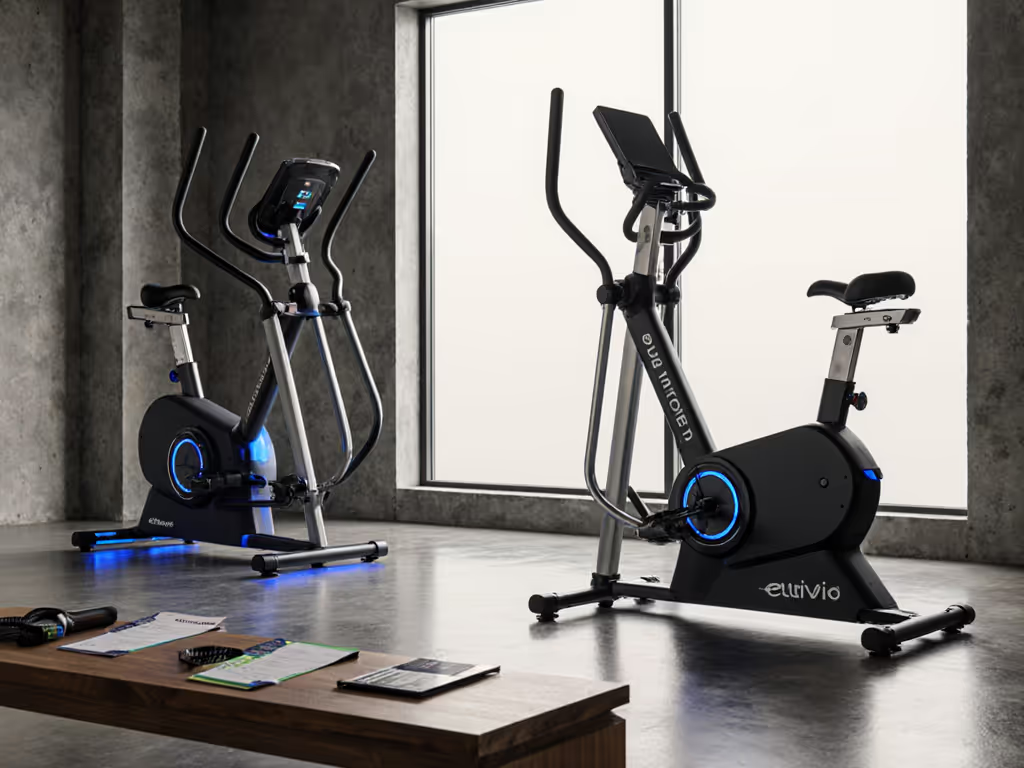
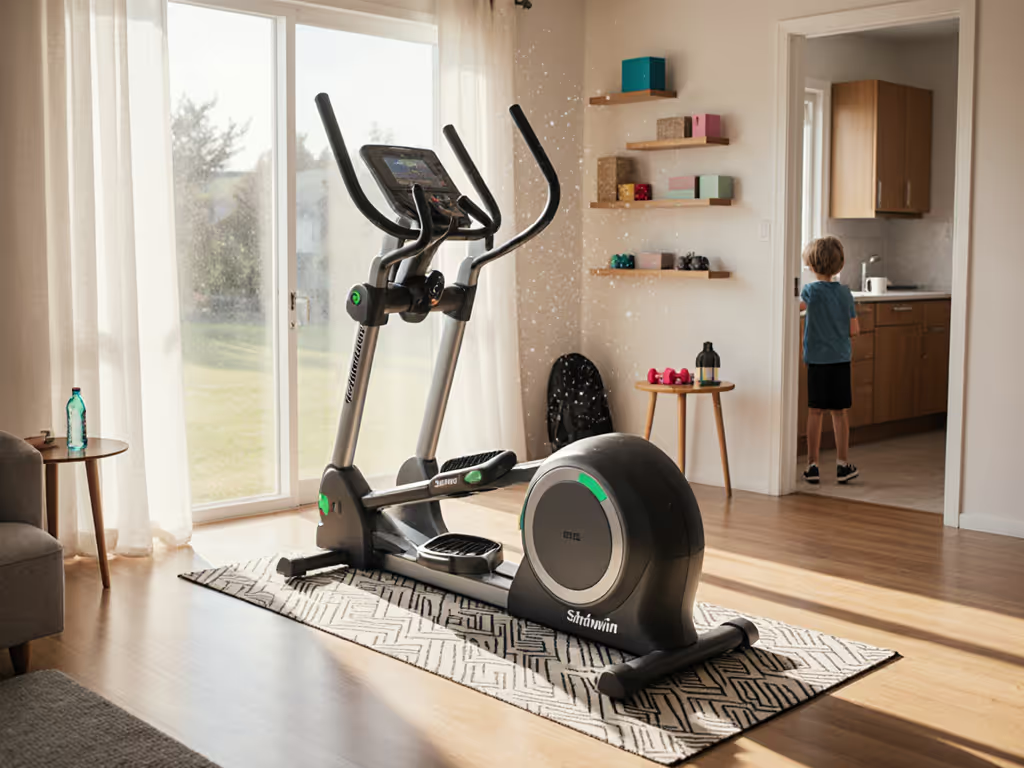
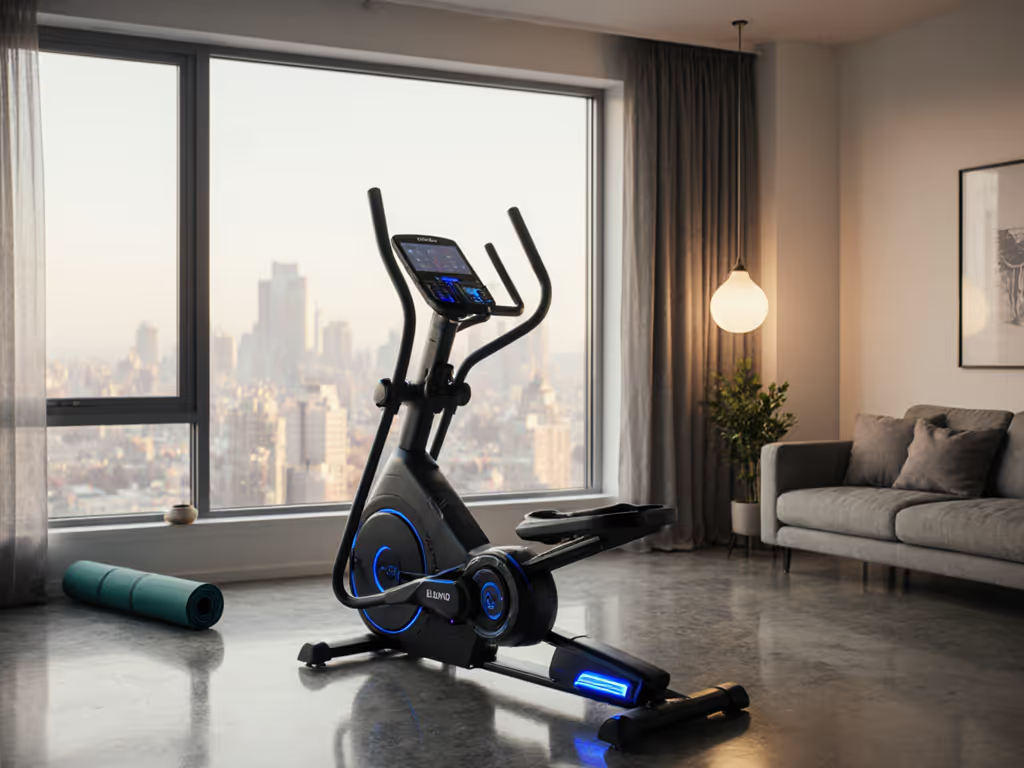
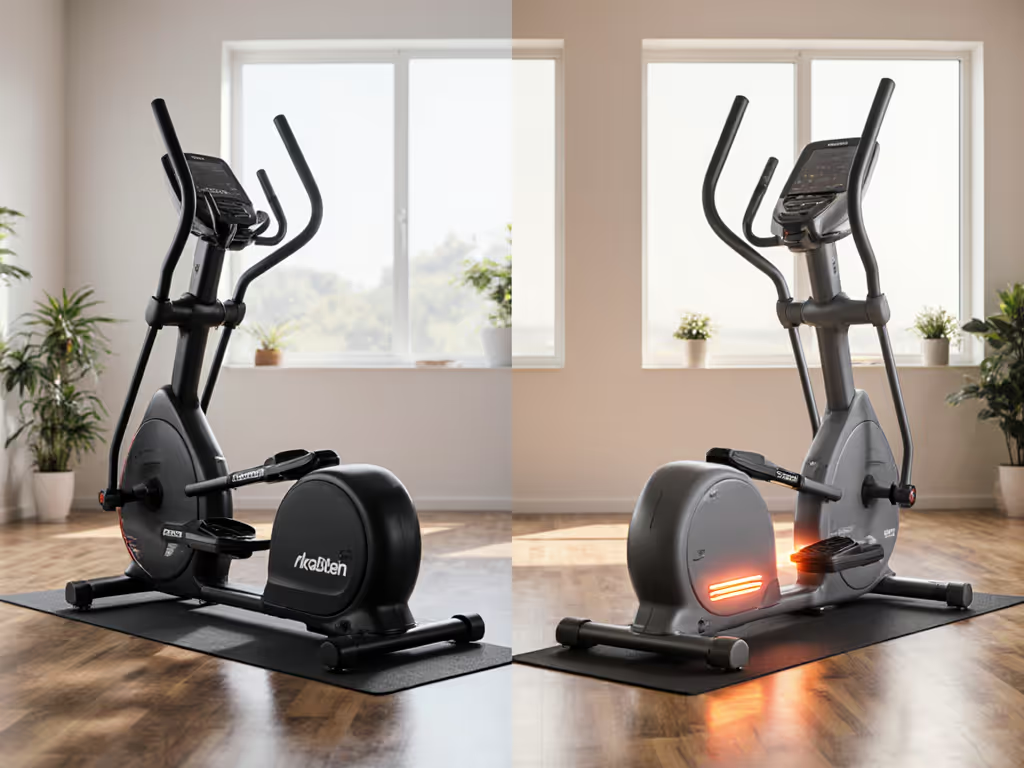
Hybrid ellipticals (machines that blend recumbent bike comfort with elliptical motion) have become the go-to choice for home fitness spaces where footprint matters and joint health comes first. Yet elliptical stair climber hybrid models and convertible elliptical functionality across brands raise a practical question: how do you know which dual-mode machine actually fits your stride, your ceiling, and your body without buying the wrong one?
If you've felt your knees pinch on an unforgiving machine or spent weeks adjusting to awkward foot placement, you're not alone. The issue rarely comes down to brand loyalty. It comes down to whether a machine's geometry matches your measurements. After working with users across different heights and spaces, I've learned that the best purchase starts with body assessment, not marketing specs. Measure your stride once; choose comfort for every workout.
Here's what you need to know before comparing hybrid ellipticals.
FAQ: Understanding Hybrid Elliptical Design
What exactly is a hybrid elliptical, and how does it differ from a traditional elliptical or recumbent bike?
A hybrid elliptical combines the low-impact gliding motion of an elliptical with the seated, supported posture of a recumbent bike. Unlike a standard upright elliptical (where you stand with moving arms and legs), a hybrid seats you in a reclined position while your legs follow an elliptical arc. The key difference: your upper body remains supported, reducing strain on the lower back and knees.
Traditional ellipticals engage the full body through coordinated upper-lower limb movements, but they demand stability and core engagement from a standing position. Recumbent bikes isolate the legs. A hybrid bridges both worlds: moving handlebars work your upper body while the reclined seat takes pressure off your lumbar spine.
Why does this matter? If you have a history of lower-back discomfort or you're returning to fitness after time away, the reclined format reduces compensatory tension in your hip flexors and shoulders. The smooth motion engages both the arms and legs simultaneously, meaning you're firing multiple muscle groups without the jarring impact of running.
How does a hybrid elliptical handle multi-user fit better than a single-mode machine?
This is where hybrid elliptical space efficiency proves its value. A dual-mode machine requires only one footprint instead of two, but the real win is adjustability.
Hybrids typically offer adjustable seats that move forward and backward, which is critical when two people of different heights and inseams share one machine. Here's the practical test:
- Measure each user's inseam (standing in shoes, measure from floor to groin). Record in inches.
- Note the machine's stride range (usually 16-24 inches). If your inseam is 28 inches but the stride caps at 18 inches, your knees will feel cramped, it's not a setup issue; it's a geometry mismatch.
- Test the seat travel distance. A seat that adjusts 4-6 inches forward/back can accommodate a 4-5 inch inseam difference. Anything less won't fully resolve stride mismatch.
The ProForm Hybrid Trainer XT, for example, features a seat that adjusts forward and backward with integrated lumbar support, allowing two users with moderately different proportions to find comfortable positions without buying two machines.
If it hurts, it's wrong.
If either user feels a pinch in the knee, a shallow pedal stroke, or hip tightness after 15 minutes, the seat position isn't the primary problem, it's likely a fundamental stride mismatch that seat adjustment alone can't fix.
What does "Q-factor" mean, and why should I care about it?
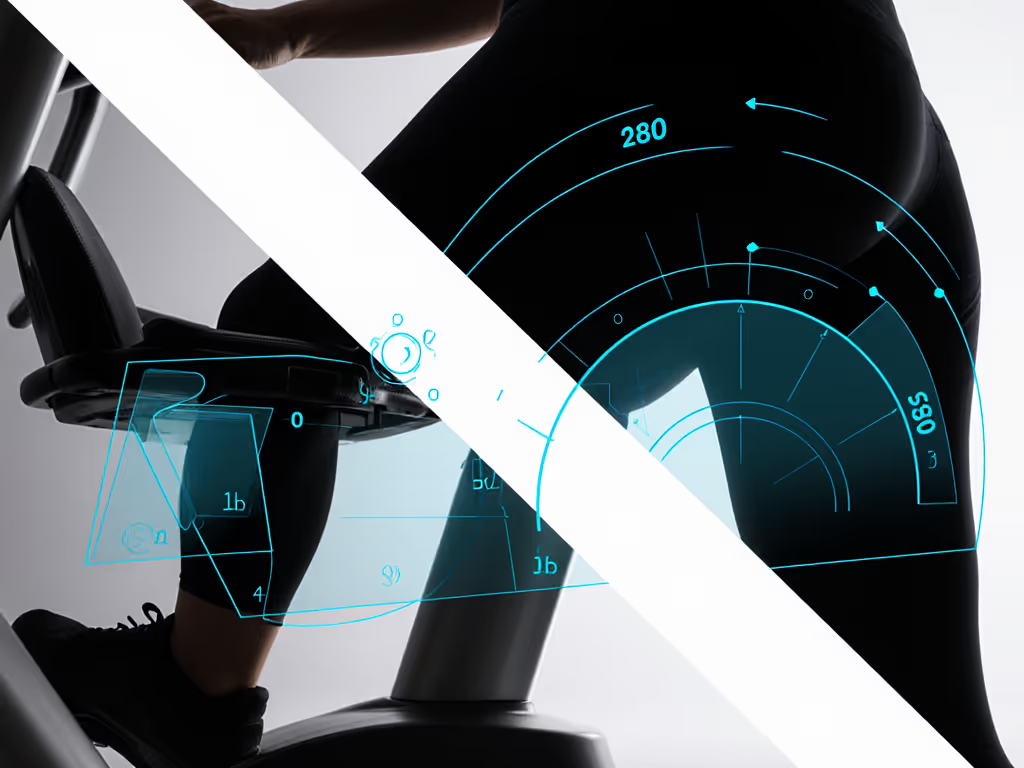
Q-factor is the perpendicular distance between the centers of the pedals, measured in millimeters. A narrower Q-factor (typically 110-130 mm) aligns your knees more vertically during pedaling, reducing lateral stress on the knee joint. A wider Q-factor (140+ mm) spreads your feet farther apart, which some users find more stable but can push knees outward.
After a winter of knee twinges on a machine with poor pedal geometry, I tested a narrower setup (swapping to a 20-inch stride paired with a Q-factor around 115 mm) and the pinch disappeared within days. That one adjustment shifted my entire winter routine from limping through sessions to logging four solid workouts weekly.
When comparing hybrid ellipticals, Q-factor often goes unmentioned in marketing specs. Here's why you should ask:
- Narrow Q (110-125 mm): Better for users with narrow hips or a history of knee issues. Feels "locked in."
- Medium Q (126-140 mm): Neutral stance; suits most users.
- Wide Q (140+ mm): Comfort for users with wider hips; may feel less precise to those with narrow frames.
If the retailer or manual doesn't list Q-factor, contact customer service or check the brand's tech specs sheet. If they can't provide it, that's a red flag. It means the brand may not have optimized pedal geometry for precision.
How does a hybrid elliptical reduce noise and vibration compared to traditional models?
A recumbent position naturally lowers your center of mass and distributes your weight across a broader seat base, reducing sudden impact impulses that cause vibration. The trade-off is that you'll hear the drive mechanism (flywheel and resistance system) more clearly because your body isn't creating dynamic motion noise.
Hybrid ellipticals typically use either: For a deeper comparison of front-, rear-, and center-drive designs and how they affect stride feel, see our detailed guide.
- Front-drive systems: Flywheel sits in front of your feet. Pros: stable, compact footprint. Cons: can feel "top-heavy" if not braced properly.
- Center-drive systems: Flywheel sits beneath your feet. Pros: even weight distribution, smooth feel. Cons: larger footprint.
- Rear-drive systems: Flywheel sits behind the pedals. Pros: natural stride arc. Cons: noisier if not well-damped.
For apartment dwellers or shared spaces, a center- or rear-drive hybrid with a cushioned base mat and proper leveling will keep vibration transmission to floors below minimal. Many users find hybrid ellipticals quieter than recumbent bikes because the elliptical pedal arc is smoother and creates less mechanical noise.
What's the real difference between a hybrid elliptical and an elliptical stair climber hybrid?
The terms are sometimes used interchangeably, but there's a technical distinction:
- Hybrid Elliptical: Recumbent bike + elliptical (seated, smooth pedal arc).
- Elliptical Stair Climber Hybrid: Elliptical + stair climber (usually standing or semi-reclined, with pedals that move vertically as well as horizontally).
The stair-climber variant demands more glute and quad activation because you're lifting your body weight with each stroke. It's more intense but also higher-impact. If joint comfort and injury recovery are priorities, a hybrid elliptical with convertible elliptical functionality (meaning you can toggle between standard elliptical motion and recumbent mode) is the safer choice.
FAQ: Performance and Comfort Considerations
Can a hybrid elliptical give me a full-body cardio workout?
Yes, if it has moving handlebars. Recumbent ellipticals with full-motion arms allow you to work your upper and lower body together, adding intensity and engaging more muscle groups in one session. Studies confirm that coordinated upper-lower limb movements enhance neuromuscular control and cardiovascular demand.
However, compare the handlebar options:
- Moving handlebars: Higher upper-body engagement; calorie burn increases 5-10%.
- Fixed handlebars: Lower-body focus; steadier for users with balance concerns or shoulder issues.
- Dual-option (moving or fixed): Best flexibility. Some hybrids let you toggle, like the ProForm Hybrid Trainer XT, which offers both moving and fixed handlebars.
If you're short on time, moving handlebars maximize return per session. If you have shoulder instability or are recovering from an upper-body injury, fixed handlebars keep the workout lower-body focused without compensation.
How do hybrid ellipticals support injury recovery and long-term joint health?
Ellipticals place minimal stress, weight, or impact on joints, and hybrid models enhance this benefit by distributing your weight across a padded, reclined seat. Research shows that elliptical trainers caused less long-term joint and cartilage degeneration in the knee than cycling, running, and swimming, a finding supported by biomechanics research.
In recumbent form, you also eliminate impact shock that accumulates during standing cardio, meaning you can build endurance without the micro-trauma that sidelines runners and traditional elliptical users.
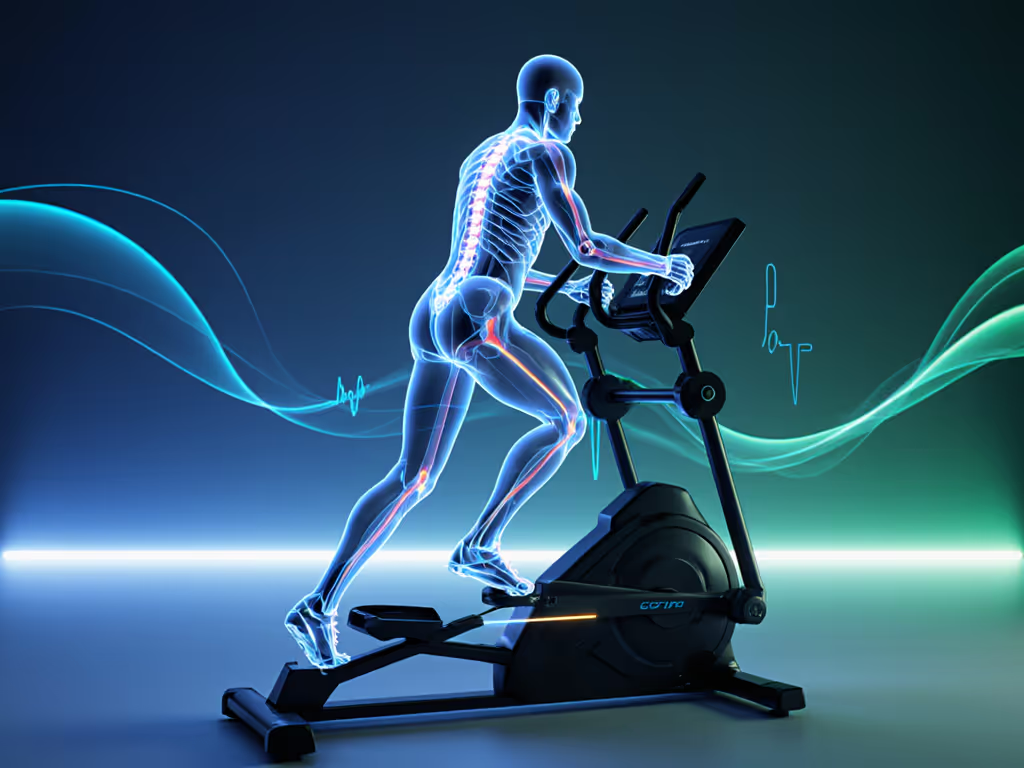
The key for injury prevention is proper alignment from day one. A machine that fits your stride length and Q-factor feels effortless; one that doesn't will create subtle compensation patterns in your hips, ankles, or lower back, patterns that surface as soreness weeks later.
What cadence should I target, and does hybrid elliptical design affect it?
Most users find a natural cadence of 80-100 revolutions per minute (RPM) on a hybrid elliptical. This pace is sustainable for 20-45 minute sessions and keeps heart rate in a moderate cardio zone.
Hybrids with adjustable resistance levels and user customization let you dial in intensity without forcing an unnatural cadence. If a machine feels choppy or you're tempted to speed up to 120+ RPM just to make it feel smooth, that's a signal: the stride length or pedal geometry isn't matching your body proportions. Forcing cadence to compensate will fatigue your hip flexors and create the kind of joint pinch that stops workouts mid-week.
FAQ: Space, Setup, and Practical Concerns
How much floor space and ceiling clearance do hybrid ellipticals actually require?
A typical hybrid elliptical footprint ranges from 72-82 inches long by 32-40 inches wide by 48-54 inches tall. This is more compact than two separate machines (elliptical + recumbent bike) but requires honest measurement before purchase.
Critical measurements to take in your space:
- Length: Measure the cleared floor area. Account for a 6-inch safety buffer on each end so the machine doesn't jam against a wall during pedaling.
- Width: Ensure at least 2 feet of clearance on the side, so you can step on/off and clean underneath.
- Ceiling height: Most hybrids are 50-54 inches tall. If your ceiling is 8 feet and the machine is 54 inches, you have 42 inches of overhead clearance, plenty for seated use but note it if basements have overhead ducts or beams.
- Doorway transit: Hybrid ellipticals typically arrive in a large box. Measure doorways and hallways; some models require angled entry or partial assembly outside the room.
If you're placing the machine in a spare bedroom or office, take a photo of the intended spot, overlay the machine's dimensions, and physically walk the pedal motion with your arm extended to simulate handlebar movement. If it feels tight, it probably is.
What assembly and maintenance should I expect?
Most hybrid ellipticals require 60-120 minutes of assembly with basic tools (wrench, Allen keys). For step-by-step upkeep that prevents squeaks and extends lifespan, follow our elliptical maintenance guide. The critical steps:
- Attach the seat frame and rails (usually bolted).
- Install pedals (ensure left/right threading is correct to avoid cross-threading).
- Connect resistance and handlebars via cables or electrical connections.
- Test all movement planes before use.
Maintenance tips for long-term reliability:
- Lubricate the pedal rails and seat tracks every 3-6 months with silicone-based lubricant (not WD-40, which attracts dust).
- Check all bolts and frame connections quarterly; vibration can loosen fasteners over time.
- Keep the seat clean and dry; salt from sweat corrodes metal bushings.
- If the machine develops squeaks or grinding sounds, stop using it and identify the source, squeaks often signal worn bushings or loose bolts, both fixable if caught early.
Warranty varies by brand, but reputable hybrid models offer 2-5 year frame warranties and 1-2 year parts warranties. Ask whether the brand stocks replacement seats, pedals, and handlebars, some European brands have longer lead times for parts.
Can I use a hybrid elliptical in a low-ceiling basement or upstairs apartment?
Yes, but with caveats.
For low ceilings (under 8 feet): Most hybrid ellipticals fit, since you're seated and not extending your full height. Confirm the machine's overall height and test pedaling motion with an arm extended to simulate handlebar reach. If you have 6 feet 4 inches of ceiling and the machine sits at 54 inches, you have 22 inches of clearance, safe for seated use.
For upstairs apartments or bedrooms above living areas: Hybrid ellipticals reduce vibration transmission compared to running treadmills, but they're not silent. Use a thick exercise mat (0.5-1 inch), ensure the machine is level (use a bubble level on the frame), and avoid peak quiet hours (early morning, late evening) for high-intensity sessions. Most neighbors tolerate 30-45 minute steady-state sessions without complaint; it's the start-and-stop of HIIT that carries through floors.
FAQ: Decision-Making and Value
How do I choose between a hybrid elliptical and buying two separate machines?
One hybrid elliptical costs $1,200-$2,500. Two separate machines (a quality elliptical + recumbent bike) cost $2,000-$4,500. Beyond price:
- Space: One footprint vs. two; a hybrid is ideal for apartments, offices, or spare bedrooms.
- Setup ritual: One machine to maintain vs. two; cleaner workflow for daily use.
- Multi-user fit: Shared machine with adjustable geometry vs. each person choosing their preferred style.
- Workout variety: Switching between modes within one session vs. committing to one machine per day.
If your space is under 200 square feet for the gym area and your household has mixed fitness backgrounds (one user recovered from injury, the other seeking endurance training), a hybrid elliptical with convertible elliptical functionality offers the best balance of efficiency and adaptability.
What metrics should I track to ensure the machine is truly working for me?
Ignore calorie estimates, they're algorithmically inflated and rarely accurate. Instead, track:
- Session duration and consistency: Can you sustain 30-45 minutes at a steady, conversational pace 3-4 times weekly?
- Cadence stability: Does your RPM hold steady, or are you compensating by speeding up when fatigue sets in?
- Heart rate zone: Are you hitting 50-75% of max heart rate for moderate cardio, or 75-85% for higher intensity?
- Joint feedback: Any knee, hip, or lower-back discomfort during or after workouts? If yes, return to setup diagnostics (stride match, Q-factor, seat position).
- Habit formation: Are you reaching for the machine four days a week, or is it becoming a clothes rack?
The best metric is whether the machine feels natural from your first session. A well-fitted hybrid elliptical should feel effortless for the first 10 minutes, no tweaking, no pinching, no compensatory tension.
What red flags should I watch for in reviews or product specs?
Skip machines with these markers:
- No stride length listed: If the brand won't publish this spec, they haven't optimized pedal geometry.
- "Fits all heights": No single machine fits all heights equally well. Adjustable seats help, but fundamental stride differences require stride-length options.
- Vague flywheel weight: A smooth, consistent feel depends on flywheel mass and drive type. Specs under 20 lbs often feel choppy. Learn why a 20 lb+ flywheel is a key marker of smoothness and durability.
- No Q-factor disclosure: Without this, you're gambling on pedal geometry.
- Overwhelmingly positive reviews from influencers: Influencer reviews often omit real-use feedback (e.g., noise after 6 months, maintenance hassles, buyer's remorse after three weeks).
- No trial period or return policy: A 30-day in-home trial or full refund policy signals brand confidence. Rigid 14-day returns suggest they know some buyers will have fit issues.
Actionable Next Steps: Finding Your Fit
Step 1: Measure Your Body
Before comparing any machine, take these measurements in bare feet:
- Inseam: Standing against a wall, measure from the floor to the crease where your leg meets your torso. Record in inches.
- Height: Baseline reference.
- Knee-to-ankle length: Sit in a chair, measure from the inside of your knee to your inner ankle bone. This helps assess Q-factor comfort.
Step 2: List Your Space Constraints
- Available floor length, width, height (in feet and inches).
- Doorway width and nearest wall obstacles.
- Noise sensitivity (shared walls, sleeping children, home office above/below).
- Typical time of day you'd use the machine.
Step 3: Research Hybrid Models Against Your Specs
For each candidate machine, confirm:
- Stride length range (does it include your inseam ± 1 inch?).
- Q-factor (is it in the 110-140 mm range you need?).
- Seat adjustment travel (forward/backward, in inches).
- Overall footprint and ceiling clearance.
- Drive type and real-world noise reports.
- Warranty, parts availability, and return policy.
Step 4: Test at Retail or Request a Trial
If possible, visit a retail showroom and spend 10 minutes on the machine:
- Pedal at a moderate pace (80 RPM); does it feel smooth or choppy?
- Push the seat adjustment to its full range; does the change feel significant for your body?
- Feel for vibration; does it seem stable and controlled?
- Check the resistance scale; does it increase smoothly or in jumps?
If retail is unavailable, buy from a retailer with a 30-day trial or 60-day return policy. The small upfront investment in returns (often paid by the retailer) is worth the certainty.
Step 5: Set a Monthly Consistency Benchmark
After two weeks of use, commit to a target: 3-4 sessions of 30-45 minutes per week. If you're hitting that consistently and the machine feels natural, you've found your fit. If you're struggling or experiencing discomfort, troubleshoot alignment before giving up.
Hybrid ellipticals offer genuine value for time-conscious, space-aware users who prioritize comfort and longevity over trends. The key to avoiding buyer's remorse is matching the machine's geometry to your body before purchase, not after. Measure, compare specs against your measurements, and test if possible. A machine that feels right on day one will still feel right on day 300, and that's when a good investment truly pays off.
Related Articles