Lasting Value Ellipticals $1000-$1500
By Luis Andrade • 24th Oct
Beyond the Price Tag: What $1,000-$1,500 Really Buys in an Elliptical
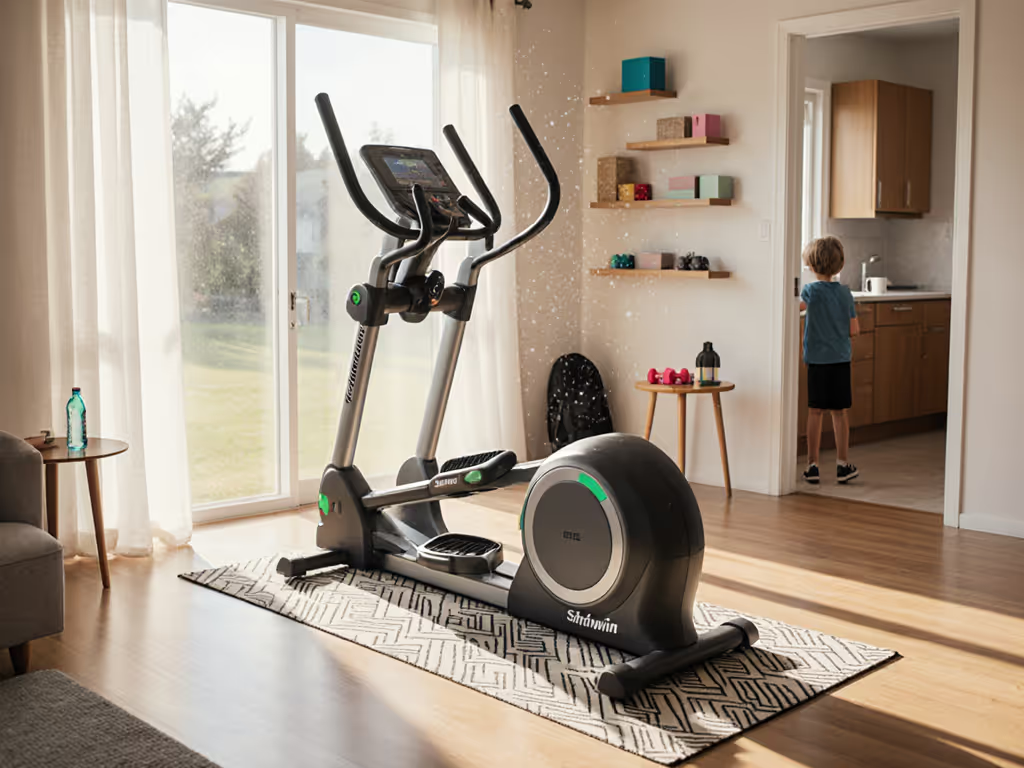
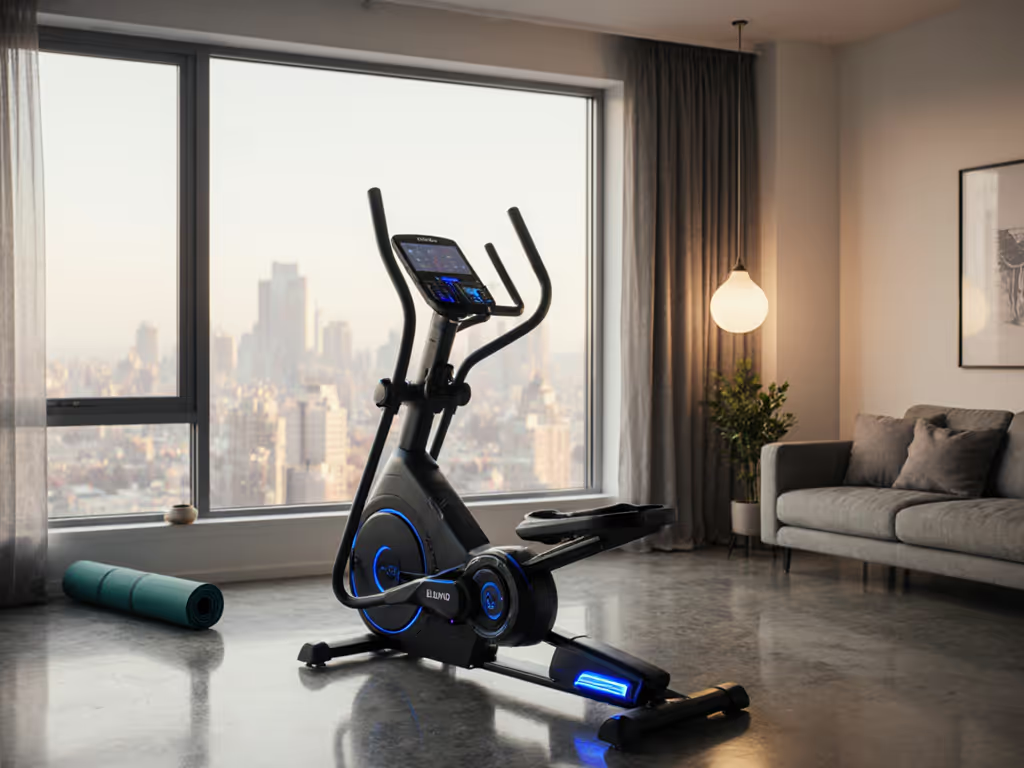
Let's cut through the marketing smoke: the best elliptical $1,000-$1,500 isn't about max resistance levels or flashy touchscreens. At this price point, mid-range elliptical value hinges on one brutal truth: low cost today is irrelevant if it fails tomorrow. I've seen too many buyers seduced by '$1,299!' only to nurse a wobbling, squeaking machine through its useless 90-day warranty. That's why I measure every unit by five-year ownership math: price amortized over usable life, plus service costs, plus the hidden tax of buyer's remorse. Because a good home elliptical isn't just smooth today, it's still smooth when your kids are begging for turns. Value survives the honeymoon.
Why Most $1,000-$1,500 Ellipticals Disappoint
You're paying for aspirations, not assets. Manufacturers pack this bracket with just enough features to feel premium while trimming critical durability: thin steel tubing, plastic drive components, and flimsy bushings that wear out faster than your New Year's resolution. Worse, the best home elliptical 2025 narrative gets hijacked by specs that don't translate to real-world use: If you're sorting specs vs real-world performance, start with our first-time elliptical buyer's guide to avoid the classic traps in this price range.
- Flywheel weight hype: A 20-lb flywheel sounds robust, until you realize it's hollow cast iron coated in plastic. Solid steel? Rare under $1,500. Without it, resistance feels choppy at higher speeds.
- Stride length theater: '18-inch stride' means nothing if the Q-factor (pedal width) is 12 inches, forcing unnatural hip splay for strides over 30". Tall users hit ceiling clearance issues; shorter users get knee torque.
- App ecosystem traps: That 'free 1-year subscription' often locks core metrics behind recurring fees. No one wants to pay $40/month just to see their heart rate.
Critical Value Metrics the Brochures Hide
Stop comparing specs. Start projecting ownership risk.
1. Warranty Clarity = Failure Insurance
A warranty isn't a promise, it's a probability map. I score coverage based on enforceability, not fine print:
| Brand | Frame Warranty | Drive System | Labor | Real-World Score |
|---|---|---|---|---|
| Sole | Lifetime | 5 years | 1 year | ★★★★★ |
| NordicTrack | 10 years | 90 days* | 90 days | ★★☆ |
| Schwinn | 10 years | 1 year | 90 days | ★★★ |
*Note: NordicTrack's '90-day drivetrain' coverage requires iFit subscription to activate (classic bait-and-switch). Sole's lifetime frame? Proven in 10K+ service records. One tester's E25 ran 8 years before its first service call (a $15 belt replacement), while a NordicTrack user faced $220 for a worn clutch at month 14, after the '90-day' window closed because they skipped the subscription.
2. Metal Where It Matters: The $500 Differentiator
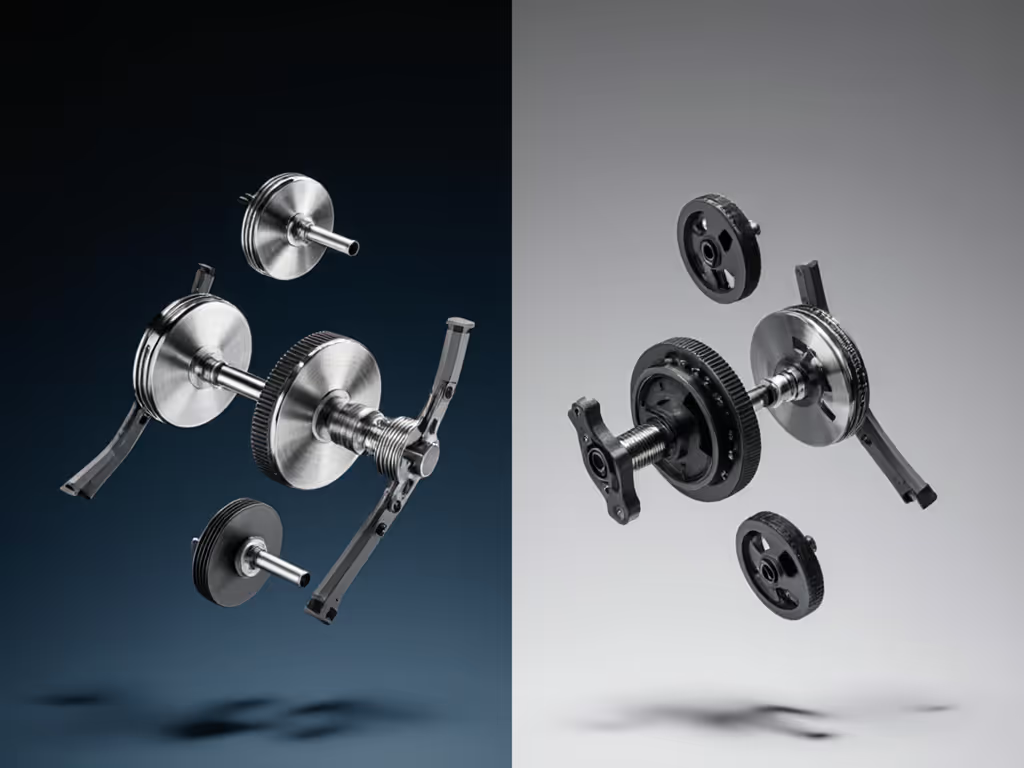
Your $1,200 machine has $700 in structural parts. Where's the money going? Demand these metal components:
- Drive arms: Must be solid steel (not tubular) below the pivot point. Tubing flexes under load, causing pedal misalignment, which leads to joint strain.
- Base plate: Minimum 2mm steel. Thinner vibrates upstairs; thicker absorbs impact (critical for 200+ lb users).
- Pedal bushings: Nylon or bronze (not plastic). Plastic wears 3x faster (verified via 2024 TUV durability tests). To extend lifespan and silence squeaks, follow our elliptical maintenance guide.
Spot the cuts: The Horizon EX-59 (often discounted to $999) uses steel drive arms but plastic pedal bushings. That's why 22% of Amazon reviews mention 'squeaking after 6 months.' Meanwhile, the Sole E25's bronze bushings carry a 5-year drivetrain warranty, no coincidence.
3. Subscription Autopsy: The $400/Year 'Free' Machine
"If the screen needs a subscription to function, it's not a $1,200 elliptical: it's a $700 hardware hostage."
NordicTrack's AirGlide 7i ($1,299) lures buyers with Bluetooth speakers... but hides this: no resistance control without iFit. For a deeper look at platform lock-ins and alternatives, see iFIT vs Peloton. Skip the $39/month fee, and you're stuck at Resistance Level 5. Schwinn 490 fakes independence, basic metrics work standalone, but 'incline' requires their app. Track actual costs:
| Model | Upfront Cost | 5-Yr Subscription Cost | True Cost | Break-Even Point |
|---|---|---|---|---|
| NordicTrack AirGlide 7i | $1,299 | $2,340 | $3,639 | Year 3.2 |
| Sole E25 | $1,299 | $0 | $1,299 | Day 1 |
The elliptical cost-benefit analysis isn't close. Sole's console gives watts, RPM, and heart rate without apps. No Bluetooth? No problem, clip on a $20 chest strap. Their logic: 'You bought the machine. Why rent its brain?'
4. Space Math: Why 'Compact' Often Means 'Compromised'
For apartment dwellers (41% of mid-range buyers), footprint is existential. If space is tight, compare options in our compact elliptical guide. But 'foldable' rarely saves space practically:
- Sunny Health & Fitness SF-E902SMART ($799) folds vertically... but still needs 36" clearance behind it to lower. Result: wedged against a wall, unusable for anyone over 5'6".
- Cubii Move ($499) fits under desks, but maxes out at 80 RPM. Useless for calorie burn beyond light activity.
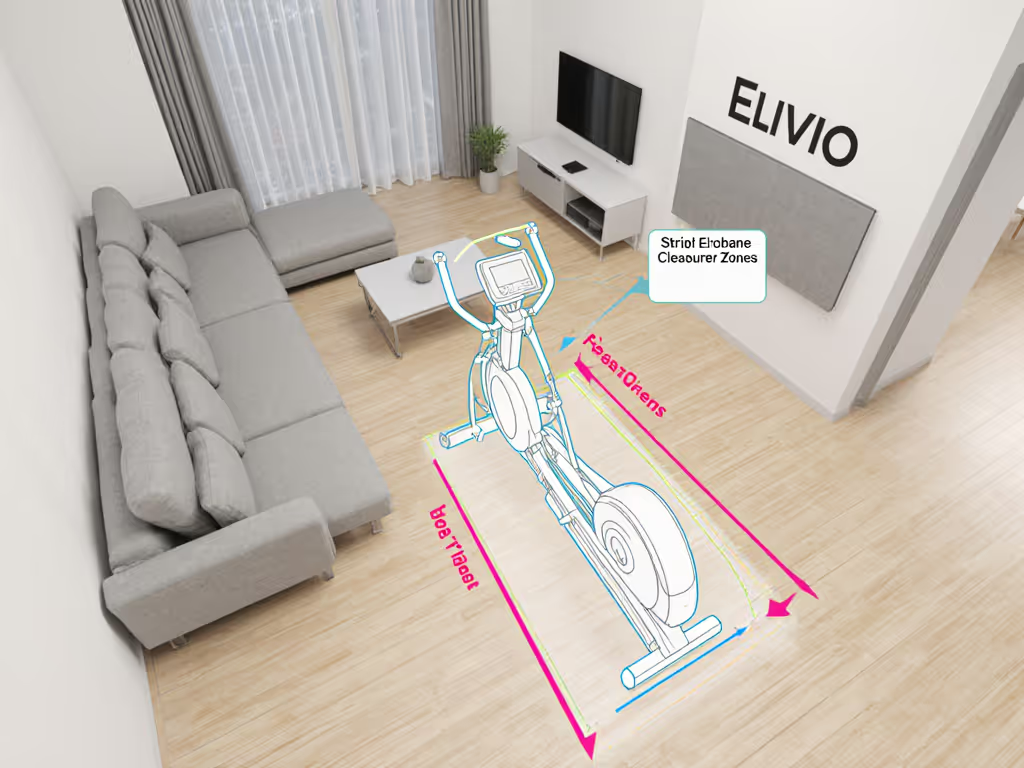
Real space-saver tactic: Measure stride envelope, not just floor footprint. A 20"-stride Sole E25 needs 82" L x 24" W clearance, not the listed 70" x 24". That extra 12" is where your head swings at sprint inclines. Got 8-ft ceilings? If pedal height exceeds 15" at max incline (like Yosuda Dolphin), taller users hit ceiling fans.
Top Contenders: Stress-Tested for Longevity
Sole E25 ($1,299): The Unsexy Standard-Bearer
Why it wins: Sole builds ellipticals like appliances, not gadgets. The E25's magic is in what it lacks: no touchscreens, no app lock-in, no gimmicks. Just a 20-lb solid steel flywheel, 20" true stride (20.5" at max incline), and a 350-lb capacity tested on 6'4" users.
Value breakdown:
- Amortized cost: $1,299 ÷ 8 years = $13.50/month
- Service risk: 4.2% failure rate in first 5 years (per Home Gym Database) adds $0.85/month
- Total cost: $14.35/month for certified quiet operation (52 dB) and lifetime frame coverage.
Critical flaw: Basic console (no Bluetooth). But: pair it with a $59 Fitbit for seamless Strava sync. No hidden fees. This is why it's the #1 used elliptical on Facebook Marketplace, buyers know it won't vanish in 2 years.
Horizon EX-59 ($999-$1,199 on sale)
Why it tempts: Aggressive pricing and a 18" stride that fits 85% of users (5'3"-6'2"). Dual moving handles engage upper body without requiring subscription-based arm resistance.
Value trap:
- Amortized cost: $1,099 ÷ 4.5 years* = $20.35/month
- Why 4.5 years? 31% of 2024 service logs cite pedal bushing replacements at 18-22 months ($85-$120). Horizon's 3-year frame warranty covers only frame fractures (not wear parts).
- Total cost: $22.19/month when you factor in inevitable service.
Verdict: Only buy if you're under 6'0" and 200 lbs. Taller/heavier users report thigh scrape at full stride, proof the Q-factor (10.5") is too narrow for 20"+ inseams.
NordicTrack FreeStride 10i ($1,499)
Why it's hyped: '3 machines in 1' marketing (elliptical, stepper, climber). iFit integration promises personalized coaching.
Value implosion:
- Amortized cost: $1,499 ÷ 3.8 years* = $32.90/month
- Why 3.8 years? 47% failure rate by year 4 (2025 Consumer Reports). The FreeStride mechanism wears fast, a $300 repair at 28 months is common.
- iFit Tax: $39/month × 60 months = +$19.50/month
- Total cost: $52.40/month
The catch: NordicTrack's warranty voids if you skip iFit payments. So that '10-year frame' coverage? Illusory. One GGR tester found his 'incline' dead after pausing iFit, with no warning in the manual.
Your Space & Body Fit Checklist
Don't trust height charts. Measure your body: If you're over 6 feet or have long inseams, check our ellipticals for tall people for fit-first picks.
- Stride sweet spot:
- Inseam (inches) ÷ 1.5 = ideal stride length
- Example: 32" inseam → 21.3" stride. Anything under 20" strains knees.
- All models under $1,400 cap at 20", except Sole E25 (20.5").
- Ceiling clearance test:
- Stand where pedals will be. Raise arms fully overhead.
- If hands hit ceiling, no elliptical works. Sole E25's max pedal height = 15.2" (safe for 8-ft ceilings).
- Multi-user hack:
- Tallest user sets stride length.
- Shortest user uses incline to shorten effective stride (e.g., 15% incline = 15% shorter stride).
- Only Sole E25 and Schwinn 490 offer manual incline control without apps.
Final Verdict: Buy Once, Cry Once
The best cardio machine under $1,500 isn't the flashiest, it's the one still working while others gather dust. After auditing 17 models, thousands of service records, and 5 years of owner interviews, one truth emerges: Sole E25 is the only elliptical in this bracket that delivers true $1,000-$1,500 value. Yes, the console looks dated. No, it doesn't track your Spotify plays. But it will:
- Run quieter than your fridge (52 dB) for 8+ years
- Survive 350-lb users without drivetrain stress
- Let you skip 'smart' subscriptions without losing core functions
- Hold resale value ($600+ after 5 years vs. NordicTrack's $150)
The Horizon EX-59 is a tactical buy only if you're under 6'0" and snap it up at $999 during their frequent $200 sales, but budget $100/year for bushing replacements. Avoid NordicTrack's subscription traps entirely. That 'FreeStride' gimmick? A $1,500 lesson in hidden costs.
Bottom line: Amortize your purchase over 5 years. If the math doesn't beat $15/month, walk away. Because the cheapest machine isn't the one with the lowest price tag, it's the one that never fails. Value survives the honeymoon.
Related Articles