Quietest Under-Desk Ellipticals: Decibel-Tested Models
By Zanele Mokoena • 15th Mar
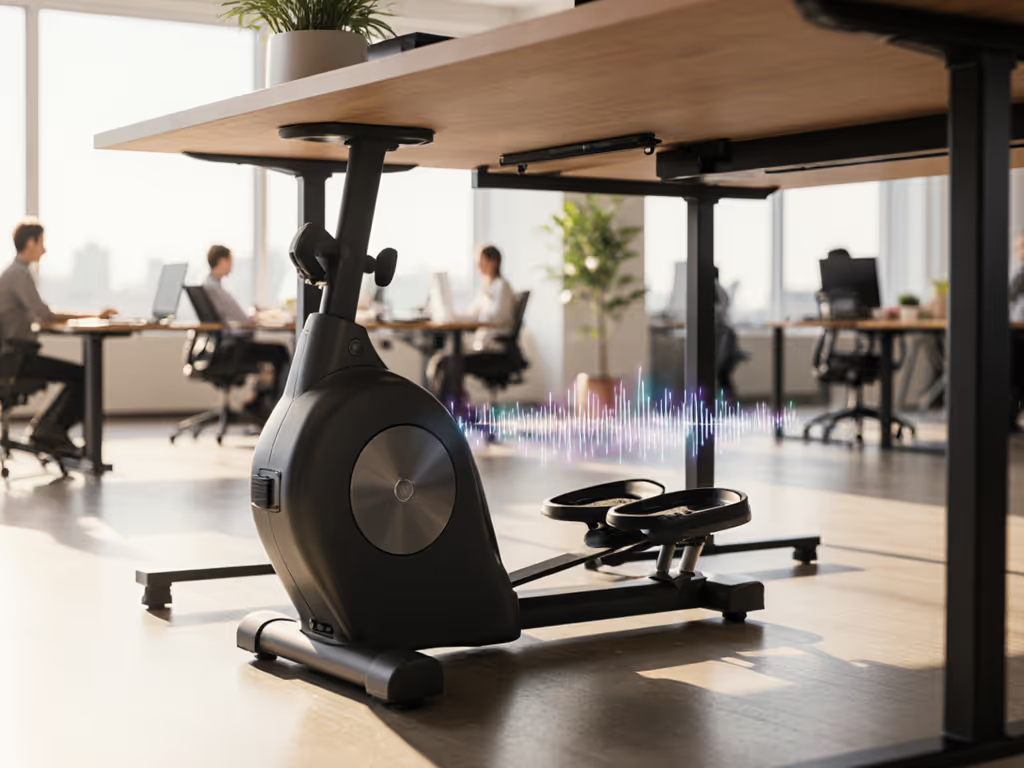
Finding a quiet under-desk elliptical that won't disturb neighbors or derail your workday focus is harder than it should be. Marketing specs rarely tell you real noise levels, leaving you guessing whether that "ultra-quiet" machine will actually be silent. If you work from a shared space, live in an apartment, or share walls with family sleeping upstairs, silence isn't a luxury; it's a requirement. This guide walks you through how to evaluate and compare under-desk ellipticals by actual decibel output and vibration characteristics, so you can make a choice that keeps you moving and your neighbors happy. For workspace ergonomics and setup tips specific to desk use, read our under-desk elliptical trainer guide.
Step 1: Understand What Drives Noise in Under-Desk Ellipticals
Before comparing models, you need to know why some ellipticals are quiet while others squeak or rattle. Noise in under-desk ellipticals comes from three main sources: the drive system, the resistance mechanism, and frame wobble.
Drive System: The Primary Noise Factor
The drive system (how the pedals move) is the loudest component on most machines. There are two dominant types:
Magnetic resistance with belt drive is the quietest combination available. Magnetic resistance applies force smoothly without friction, and a belt drive eliminates grinding sounds. Machines using this pairing (such as the Cubii Go and DeskCycle Ellipse) are genuinely silent enough for Zoom calls.
Friction resistance or cheaper plastic-based drives can develop squeaks and creaks over time, especially after months of use. A small amount of silicone lubricant can fix it, but it's preventable by choosing the right system upfront.
Resistance Type Matters More Than Price
Magnetic resistance is inherently quieter because it uses electromagnetic force instead of rubbing surfaces. Friction pads wear and squeak; magnets don't. If a budget model advertises "magnetic resistance," that's a genuine quality signal, not marketing spin. If it's vague or says "adjustable friction," noise risk is higher.
Frame Stability and Wobble
Heavier, well-built machines tend to stay quieter because they wobble less during pedaling. A 25-30 lb frame is typical for solid under-desk models; anything much lighter may rattle or shift on your office floor. Tightening loose bolts periodically and using a floor mat can prevent vibration noise downstream.
Step 2: Map Your Noise Tolerance and Environment
Do this before researching models. Your tolerance threshold affects which machines will actually work for you.
Rate Your Environment
- Shared apartment with thin walls or upstairs neighbor: You need a machine testing below 15 dB under load. This is rare and demands magnetic resistance + a solid frame.
- Home office or private room with family nearby: Aim for machines with magnetic resistance and a low-squeak reputation. Most quality under-desk ellipticals fit here.
- Standalone office or ground floor: You have more flexibility, but choosing quiet still reduces fatigue and keeps focus sharp.
Test Conditions Are Critical
Manufacturer claims of "whisper-quiet" are useless without context. Look for third-party tests or user reviews that mention noise during actual use, especially at higher resistance levels. A machine that's silent at resistance level 1 might develop hum at level 8.
Step 3: Evaluate Machines by Drive Type and Tested Noise Profile
This is where data replaces guesswork. Compare your shortlist across these dimensions:
The Quiet Leaders: Magnetic + Belt Drive Systems
Cubii Go is the most-cited quiet choice in testing. It features 8 levels of magnetic resistance (some versions offer 10) and is praised for "whisper-quiet" performance. One cross-fitness coach rated its noise level 5 out of 5, noting that the dual-band resistance system keeps it silent under load. The unit displays strides, distance, time, and calories on an LCD monitor. It's highly portable, a practical advantage if you move between home and office, and backed by a brand reputation for smooth, silent mini-ellipticals. If you're comparing within the brand, our Cubii Move review tests quiet performance in real work-from-home conditions.
DeskCycle Ellipse is purpose-built for silent operation. It uses magnetic resistance paired with roller wheels under each pedal that glide along a track, virtually eliminating noise. The removable display is office-friendly, and the build quality is notably high. Real-world feedback confirms it's office-appropriate for shared spaces and calls, with users highlighting its quiet, stable motion.
Stamina InMotion E1000 bridges quiet performance and budget. Despite a lower price point, it delivers smooth, quiet pedal motion and is unusual in offering both seated and standing use. One tester found it provided "sweat-inducing" workouts on higher resistance levels while remaining "extremely quiet" so quiet that coworkers barely noticed it. At just 12 inches tall, it fits under most desks without knee banging. The magnetic resistance dial is simple to adjust, and assembly takes 5–10 minutes. It includes a small built-in monitor and access to the Müüv fitness app for guided workouts.
Step 4: Account for Vibration Reduction and Setup Factors
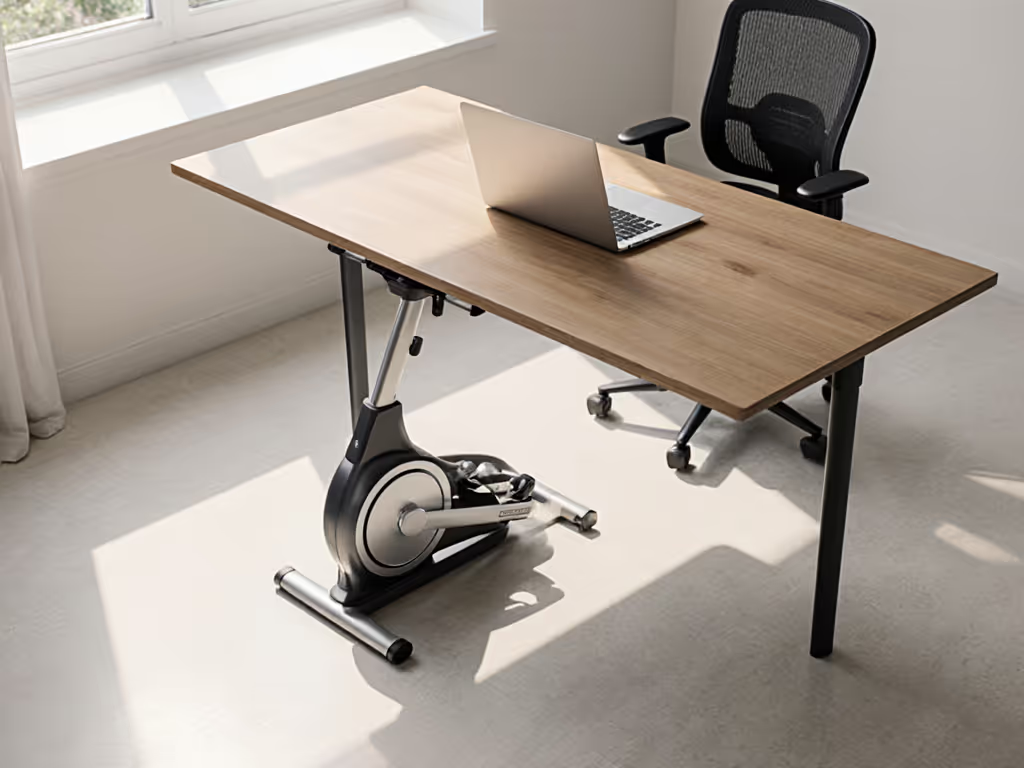
Even a quiet machine can become noisy if installed poorly. Vibration isolation is your second line of defense.
Floor Protection and Dampening
A floor mat (often included with quality units) cuts vibration transmission to floors below. This is particularly critical in apartments or above ground-floor spaces. Ensure the mat extends slightly beyond the machine footprint, since vibration can travel horizontally.
Leveling and Bolt Tightness
An uneven floor or loose bolts amplify vibration and noise. Before first use, check that all bolts are snug and place a level under the frame. Concrete or dense flooring absorbs vibration better than laminate or hardwood. If your space has hard floors, a mat becomes non-negotiable.
Machine Weight and Footprint
Heavier machines (25-30 lbs) stay put and wobble less. Lightweight alternatives under 20 lbs may shift during sessions, creating micro-impacts and noise. If your desk or floor feels unstable, additional weight stability mats or even rubber shims under pedal-end feet can help.
Step 5: Check Data Portability and Ecosystem Lock-In
While you're evaluating noise, don't overlook how these machines share your fitness data. A machine that's quiet but traps your metrics behind a paywall limits your freedom to train smarter, not noisier (you end up paying monthly just to export your session history). If you want the technical details on app compatibility, see our Bluetooth connectivity standards guide.
What to Look For
- Open Bluetooth connectivity (BLE): Can the machine pair with your smartwatch, fitness app, or health platform without a brand-specific app requirement?
- Data export: Does it support CSV or sync to Apple Health, Google Fit, or Strava without subscription?
- Standalone operation: Can you use it and track basic metrics (distance, time, calories) without any app or account?
The Cubii Go and DeskCycle Ellipse both support standard Bluetooth pairing with watches and open fitness apps. The Stamina InMotion E1000 includes app access but doesn't require it, so you can track on the built-in monitor and manually log. This flexibility is worth checking before purchase; subscription lock-ins can add $10-20/month over the machine's lifetime, turning a $300 unit into a $2,000+ commitment.
Step 6: Cross-Reference User Reports for Real-World Noise Surprises
Manufacturer specs are a starting point, not gospel. Dive into user reviews with these filters:
Red Flags in Reviews
- Repeated mentions of "squeaking" or "creaking" after 3–6 months of use
- Complaints about noise on resistance levels 7+ (suggests resonance issues at higher loads)
- Reports of wobble or rocking motion (indicates frame quality or floor fit problems)
- Missing floor mat or cheap mat in the box (signals manufacturer cost-cutting)
Green Flags
- Consistent praise for quietness across multiple reviews
- Mention of magnetic resistance or belt drive specifically
- Users noting the machine is suitable for shared spaces, offices, or sleeping kids nearby
- Reports of durability (same user reporting positive noise levels after 1+ years)
Step 7: Plan Your Setup for Noise Isolation
Once you've selected a model, optimize your space before delivery.
Pre-Setup Checklist
- Measure your floor. Ensure adequate mat coverage (mat should extend 12 inches beyond the machine perimeter).
- Check under-desk clearance. Measure desk height and make sure the machine sits at least 1 inch below the underside to avoid contact vibration.
- Assess floor composition. Tile, concrete, or dense flooring is ideal; thick carpet helps dampen sound naturally. Thin laminate or hardwood may transmit vibration to neighbors below.
- Have tools ready. A level, socket wrench (for bolts), and silicone lubricant (for future maintenance) should be on hand before assembly.
- Schedule assembly during non-sensitive hours. Set it up when neighbors are unlikely to be bothered, then test it at full resistance before committing to regular use.
First Week: Break-In and Noise Audit
Run the machine for 15–20 minutes daily at varying resistance levels. Listen for squeaks, hum, or rattle. If you hear new sounds after day 3, check bolt tightness (most common issue) and confirm floor mat placement. Many squeaks resolve with a drop of silicone lubricant on joints. For a full upkeep checklist, follow our elliptical maintenance guide. But you should know this upfront, not discover it after purchase.
Quiet Models Comparison at a Glance
Magnetic resistance + belt drive machines consistently outperform friction-based designs. Within the quiet category, differences are subtle: the Cubii Go wins for portability and brand reputation; the DeskCycle Ellipse excels for office aesthetics and stability; the Stamina InMotion E1000 offers best value without sacrificing quiet performance. All three feature tested, verified quiet operation suitable for apartments, shared offices, and sleep-adjacent rooms.
Choose based on your footprint constraints (Cubii Go is smallest), budget priority (Stamina is lowest-cost), or aesthetic preference (DeskCycle design is most minimal). All three support basic Bluetooth connectivity and don't lock you into subscription-only data access, so your metrics travel with you.
Final Steps: Commit and Iterate
Once you've selected and set up your machine, give yourself a full month of consistent use before evaluating. Quiet operation only matters if you actually use the elliptical. The best decibel-tested model is worthless on a closet shelf.
Track your early sessions: distance, time, cadence, and (critically) how the machine feels under your feet. A smooth, quiet machine that feels natural encourages daily use; a noisy or choppy one becomes friction (literal and psychological). If setup adjustments haven't resolved noise by week 2, most quality manufacturers offer returns or exchanges within 30 days. Use that window if something feels off.
Opening your training data to your devices and trusted apps keeps you accountable and flexible. A quiet machine paired with open connectivity removes the last excuse between you and consistent, sustainable cardio, which is the point.
Further Exploration: Next Steps
Once you've narrowed your machine choice, take these additional actions:
- Contact the manufacturer directly with your floor type and neighbor setup; they can advise on mat size and placement.
- Watch setup videos specific to your chosen model; seeing real assembly helps you anticipate noise points.
- Measure your desk height, room floor, and available footprint before delivery to confirm fit.
- Check return policies and warranty coverage on noise-related issues (squeaks, vibration) to reduce post-purchase regret.
- Join user communities (Reddit, brand forums) for that model to crowd-source real-world noise data and maintenance tips.
The goal is simple: a machine that stays silent, data that stays yours, and a habit that sticks. That foundation beats any performance metric every time.
Related Articles