Water vs Magnetic Elliptical: Find Your Natural Motion
By Priya Natarajan • 16th Dec
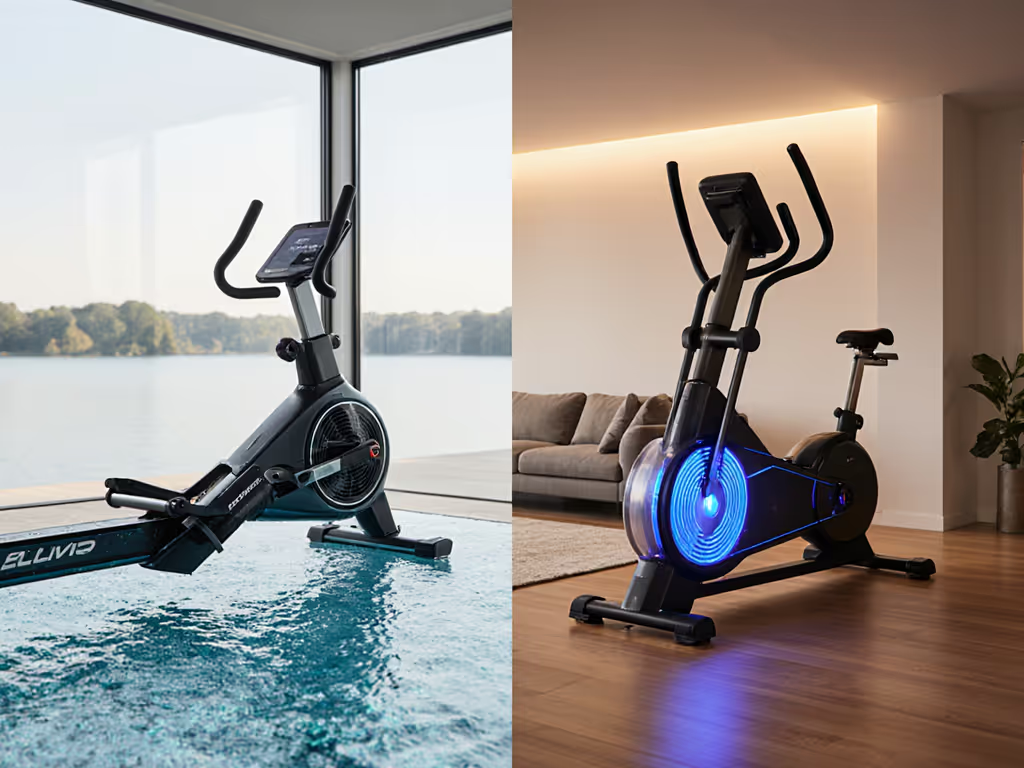
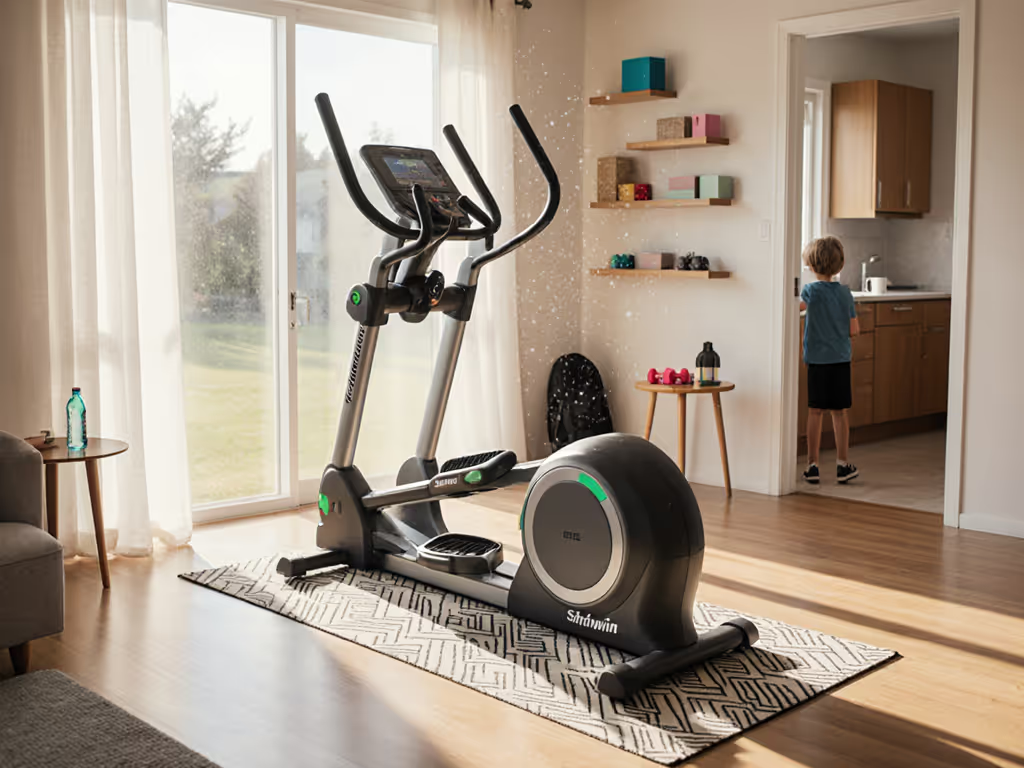
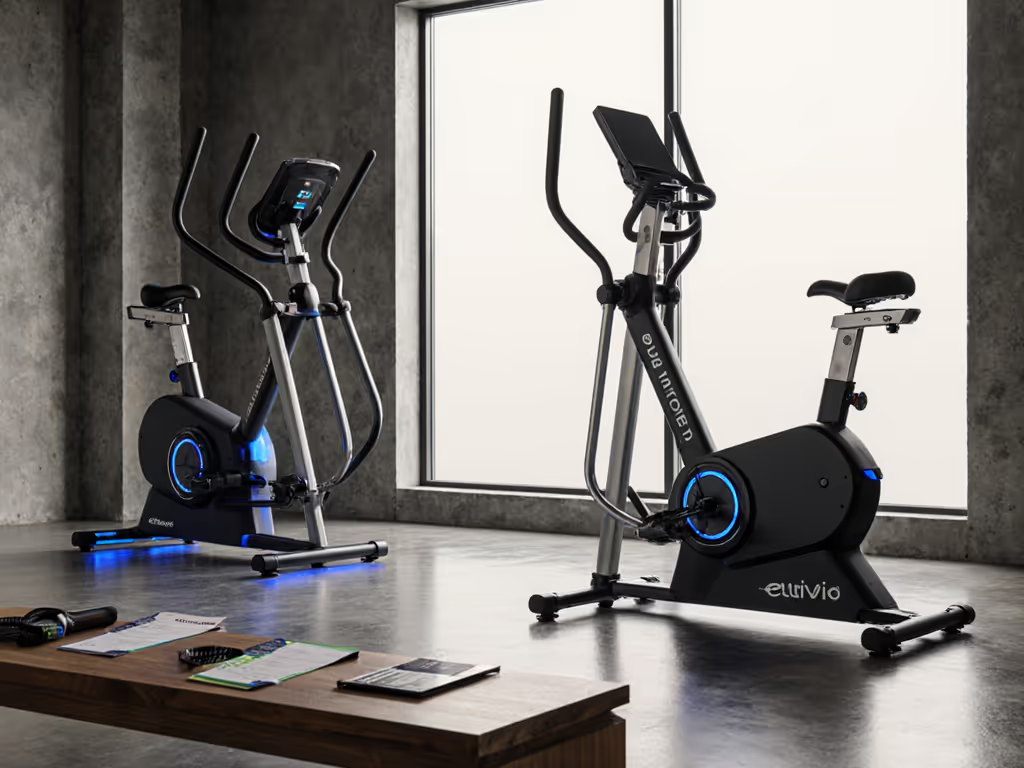
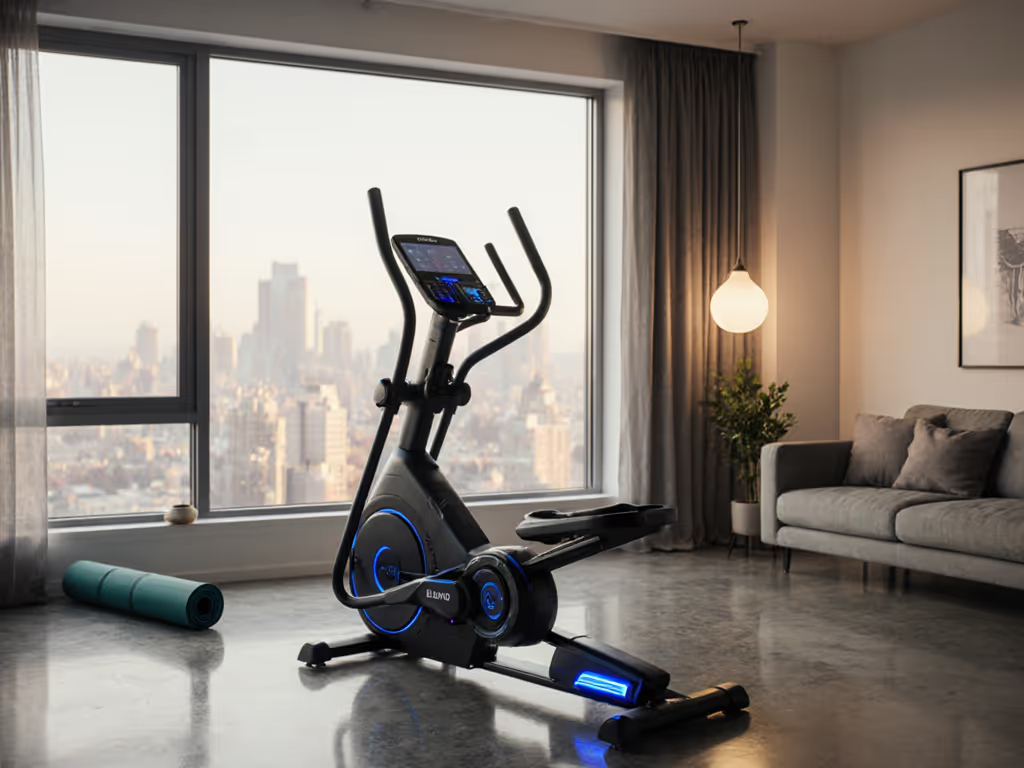
If you're searching for a water resistance elliptical vs magnetic comparison, I need to share something important upfront: water resistance technology isn't actually used in ellipticals. It's a common point of confusion! Water resistance is almost exclusively found in rowing machines, while ellipticals typically use magnetic or air resistance or electromagnetic resistance systems. This elliptical resistance technology comparison mistake sends many time-crunched buyers down the wrong path, wasting precious decision energy you could spend building your routine. Let's clarify what actually matters when choosing between water rowers and magnetic rowers, as this is likely what you're truly researching for your home fitness space.
The Real Confusion: Water Rowers vs Magnetic Rowers
Before we dive in, let's get terminology straight. When you see "water resistance elliptical," it's almost certainly a mislabeling. The water resistance technology you're reading about belongs to rowing machines (not ellipticals). Both are excellent low-impact cardio options, but they operate very differently. If you're actually considering an elliptical, start with our elliptical machine types guide. As someone who rebuilt my fitness routine after a wrist injury (more on that soon), I know how overwhelming equipment choices can feel when you're time-crunched and space-limited.
Small, repeatable wins turn cardio into a lifelong habit.
Why This Matters for Your Home Routine
Your confusion likely stems from genuine concerns:
- Will this machine fit in my small apartment without disturbing neighbors?
- Can I actually use it consistently without dreading the setup?
- Will it feel comfortable enough to use daily without joint pain?
These aren't just shopping questions; they're habit sustainability questions. When I tore a wrist tendon three years ago, I had to rebuild my cardio routine from scratch in my 650-square-foot apartment. I made two non-negotiables: zero setup friction and sessions short enough to finish before my morning coffee. The right equipment choice made all the difference in maintaining momentum. Let's help you make that same smart choice.
Water Rowers: The Fluid Experience
What Makes Water Resistance Unique
Water rowers (like the beautifully crafted WaterRower models) use a paddle spinning through water to create resistance. The harder you pull, the more resistance you feel, mimicking the natural physics of rowing on water. This "quadratic resistance" pattern means resistance increases exponentially with your effort level.
Key aspects of water resistance benefits (properly applied to rowers):
- Self-regulating resistance: No manual adjustments needed, you naturally control intensity through effort
- Smooth stroke profile: Gentle catch, powerful drive, and fluid finish that many find more organic
- Sensory engagement: The rhythmic "whoosh" of water provides natural biofeedback
- Joint-friendly: No jerking or jarring, with inherent "give" that accommodates developing technique
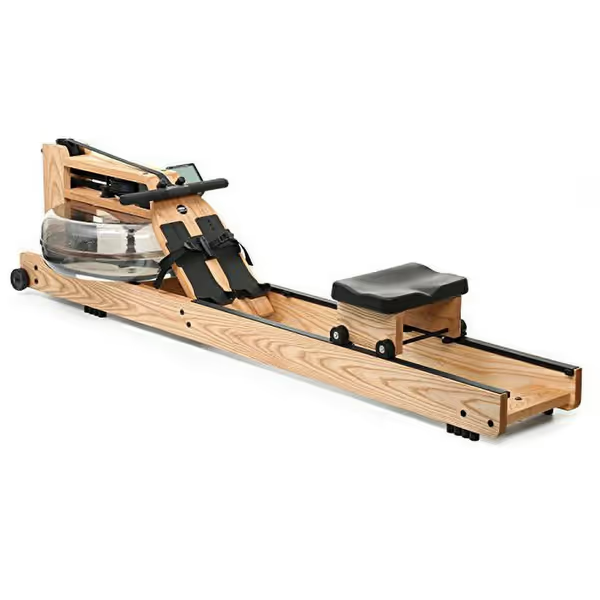
WaterRower Ash Rowing Machine
Natural water resistance provides a smooth, full-body workout experience.
$1179
Resistance TypeWaterFlywheel
Resistance TypeWaterFlywheel
Pros
Smooth, natural rowing feel
Beautifully handcrafted, solid ash wood design
Engages 84% of muscle mass, low-impact
Cons
Higher initial cost
Requires floor space; stores upright
It is beautiful to look at, easy to assemble (largely preassembled actually), and sounds like I am on the lake. Perfect for shoulder strengthening.
It is beautiful to look at, easy to assemble (largely preassembled actually), and sounds like I am on the lake. Perfect for shoulder strengthening.
Practical Considerations for Home Use
Water rowers excel in specific scenarios but require thoughtful planning:
- Space requirements: Generally longer (80+ inches) but can stand vertically for storage
- Maintenance routine: Requires occasional water treatment (algaecide) and tank cleaning
- Sound profile: 60-75 dB (comparable to a shower, with pleasant water sounds rather than mechanical noise)
- Footprint: Heavier when filled with water (70-110+ lbs), but wheels facilitate movement
For apartment dwellers or those with shared walls, water rowers provide a more immersive sound experience than total silence, and many users find the water sounds less disruptive to others than mechanical noises. Prefer an elliptical in a small space? See our compact elliptical guide.
Magnetic Rowers: Controlled Precision
Understanding Magnetic Resistance
Magnetic rowers use the interaction between magnets and a metal flywheel to create resistance. Unlike water systems, magnetic resistance remains consistent regardless of your pulling force, and you adjust resistance manually through preset levels (typically 8-32 levels).
Key advantages of magnetic resistance benefits (again, properly applied to rowers):
- Precise control: Exact resistance levels for structured interval training
- Near-silent operation: 50-65 dB, making them ideal for early morning/late night use
- Minimal maintenance: No fluids to monitor, just occasional rail lubrication
- Consistent metrics: More precise performance tracking across sessions
Practical Home Integration
Magnetic rowers solve specific pain points for urban professionals:
- Space efficiency: Often more compact with folding options for small spaces
- Tech integration: Typically feature advanced digital monitors with preset programs
- Multi-user friendliness: Easy resistance switching between household members
- Floor compatibility: Lighter weight reduces concerns about floor loading
If noise sensitivity is your primary concern (upstairs apartments, sleeping children), magnetic rowers generally provide the quietest operation, though quality water rowers are surprisingly neighbor-friendly with their rhythmic sounds. If you end up choosing an elliptical instead, our first-time buyer's guide walks you through features, budgets, and common pitfalls.
Making Your Choice: Which Fits Your Life?
The Habit Sustainability Test
After helping hundreds of time-crunched professionals choose home cardio equipment, I've learned that the "best" machine is the one you'll actually use consistently. Let's cut through the marketing noise with this practical checklist:
Water Rower Might Be Right If You...
- Prioritize authentic rowing feel and sensory experience
- Have adequate floor space (80+ inches length)
- Appreciate natural resistance that adjusts to your effort
- Don't mind occasional water tank maintenance
- Enjoy the psychological benefit of water sounds
- Want a machine that doubles as attractive furniture
Magnetic Rower Might Be Right If You...
- Need near-silent operation for shared living spaces
- Prefer precise resistance levels for structured training
- Want minimal maintenance ("set it and forget it")
- Value integrated tech features and workout programs
- Have limited floor space requiring compact storage
- Track metrics rigorously across training sessions
Remember my wrist recovery story? I chose a low-impact rower with minimal setup requirements because I knew I'd only stick with it if starting took less than 30 seconds. Consistency over intensity became my mantra, and yours should be too.
The Smart Decision Framework
Stop trying to find the "perfect" machine. Instead, focus on what will make your routine stick: For long-term ownership if you choose an elliptical, use our elliptical maintenance guide to keep it running smoothly.
Step 1: Map to Your Space Reality
- Measure your available footprint (length × width) and ceiling height
- Consider traffic patterns (will this block doorways or walking paths?)
- Test noise levels in your building (ask neighbors about sensitivity)
Step 2: Match to Your Motivation Style
- Do you thrive on natural biofeedback (water) or structured precision (magnetic)?
- Will you value the ritual of maintaining your machine or prefer zero-maintenance?
- How important is data tracking versus intuitive effort regulation?
Step 3: Design Your Onboarding Ritual
This is where most routines fail. Create a frictionless starting sequence:
- Remove any required assembly steps from your daily routine
- Position your machine where you'll see it regularly
- Set a specific trigger (e.g., "after morning coffee")
- Start with sessions shorter than you think you need (5-10 minutes)
Sustainable comfort is the shortest path to consistency.
Your Actionable Next Step
Don't get stuck in endless comparison paralysis. Today:
- Measure your space with a tape measure: know your exact constraints
- Identify your non-negotiable (noise level? maintenance tolerance? space?)
- Schedule a 10-minute test session: visit a local fitness store or arrange a home trial
Try both types back-to-back if possible. Pay attention to how each feels after just 5 minutes of rowing. Which one makes you think "I could do this daily"? That's your answer, regardless of spec sheets or influencer reviews.
The right rower isn't about specs: it's about sustainable habit design. When your equipment disappears into your routine rather than dominating it, you've found the perfect match. As someone who transformed a one-bedroom apartment into a consistent fitness space, I know that small, repeatable wins build lifelong habits. Your cardio journey starts not with the perfect machine, but with the one that fits your life today.
Related Articles