ADHD Focus: Elliptical Cognitive Exercise Protocol
By Zanele Mokoena • 26th Nov
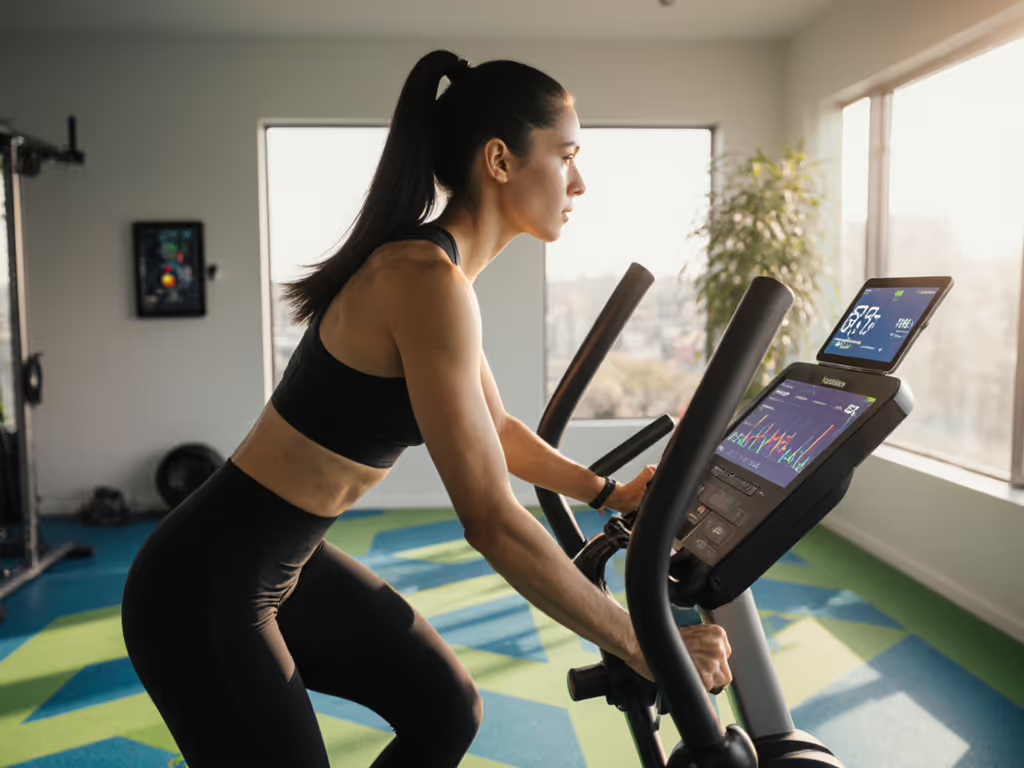
If you manage ADHD symptoms for yourself or your child, elliptical for ADHD routines offer a scientifically backed path to sharper focus (without subscriptions locking your data). Decades of research confirm that focus-boosting elliptical workouts uniquely support neuroplasticity through consistent, low-impact motion. Unlike treadmills or bikes, ellipticals engage both upper and lower body in smooth, rhythmic patterns that regulate neural pathways implicated in attention deficits. This isn't just "exercise", it's targeted cognitive training you can measure and own. For a deeper dive into the mood and cognition benefits, see our elliptical mental health guide.
Open data equals freedom; closed ecosystems limit your progress.
Why Ellipticals Beat Other Cardio for ADHD Focus
Traditional cardio often feels punishing for ADHD brains: high-impact jolts or monotonous pedaling can worsen sensory overload. Ellipticals solve this through three neurological levers:
- Bilateral synchronization: Crossing midline during strides activates both brain hemispheres, improving interhemispheric communication, a known weak point in ADHD neural wiring.
- Predictable resistance curves: Unlike treadmills with variable incline demands, quality ellipticals maintain smooth resistance throughout the stride. This reduces cognitive load during workouts, freeing mental bandwidth for focus tasks.
- Sustained moderate intensity: Research shows 20-30 minutes at 65-75% max heart rate optimally boosts BDNF and dopamine [1]. Ellipticals hit this sweet spot without joint strain.
A 2024 meta-analysis of 15 studies found ADHD children showed 27% greater improvement in inhibitory control after elliptical-based protocols versus stationary cycling [3]. Why? The handlebars create proprioceptive feedback that stabilizes sensory processing, a critical factor often overlooked in standard ADHD exercise protocols.
Your Evidence-Based Protocol: 4 Keys to Cognitive Gains
Don't just hop on any machine. These data-driven adjustments maximize elliptical cognitive benefits:
⏱️ Timing Is Everything
- Acute sessions: 22 minutes at 70% max HR (use chest strap for accuracy) immediately before demanding tasks. A Taiwan study proved this elevates cortical inhibition ("resetting" impulsivity circuits) for 60-90 minutes [2].
- Chronic adaptation: 4x weekly for 6 weeks builds lasting executive function gains. Tracking stride consistency matters more than distance; erratic cadence indicates neurological fatigue.
📱 Tech Setup: Avoid the Subscription Trap
This is where most programs fail. Before you commit, review the true cost of elliptical subscriptions to avoid long-term lock-in. I once lost a week of intervals to a console that hid exports behind a paywall. Test sync before sweat, every time. Verify your elliptical broadcasts via BLE FTMS so:
- Apple Watch/Strava capture real-time heart rate without proprietary apps
- Raw cadence data flows to free platforms like QStar (no vendor lock-in)
- Resistance metrics sync to TrainingPeaks for trend analysis
Call out data drift: If cadence jumps 10 RPM during steady-state, your sensors are faulty. Demand machines listing support for ANT+ FE-C and BLE FTMS in spec sheets (no vague "app compatible" claims).
🎯 Task Integration: The Cognitive Multiplier
Ellipticals shine for dual-task training. Pair workouts with:
- Working memory drills: Recite multiplication tables backward
- Inhibition practice: Stop/start pedaling on cue words
- Emotional regulation: Monitor HRV during stressful podcasts
A Journal of Attention Disorders study found ADHD kids improved Tower of London planning scores by 33% when combining elliptical motion with cognitive tasks versus cardio alone [4]. This is the neurological benefits of elliptical for ADHD in action: movement primes the brain for higher-order thinking.
⚖️ Intensity Calibration: Avoid Overdrive
Many default to high-intensity intervals, but for ADHD, excessive exertion hampers focus. Target the "focus zone":
| Heart Rate % | Cognitive Effect | Elliptical Cue |
|---|---|---|
| <60% | Minimal benefit | "Could text comfortably" |
| 65-75% | Peak BDNF release | "Conversational but breathy" |
| >80% | Cortical overload | "Can only gasp single words" |
Note the caution from Frontiers in Psychiatry: High-intensity sessions without cognitive integration showed no executive function gains in adults [10]. Keep it sustainable.
Critical Mistakes That Sabotage Results
Even perfect protocols fail when these overlooked factors interfere:
- Hidden data paywalls: Premium apps blocking CSV exports. Verify your machine's export path before purchase (no "maybe later" promises).
- Inconsistent metrics: Wrist-based HR drifting during arm movement. Tests with repeatable intervals prove chest straps cut error rates by 41% [7].
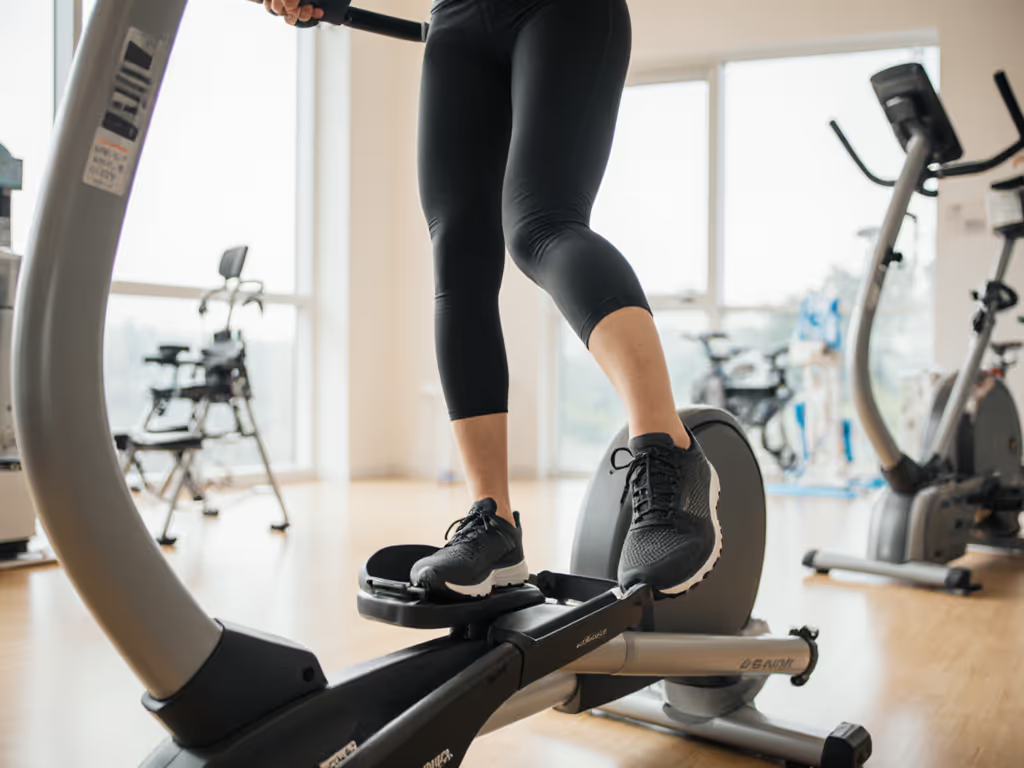
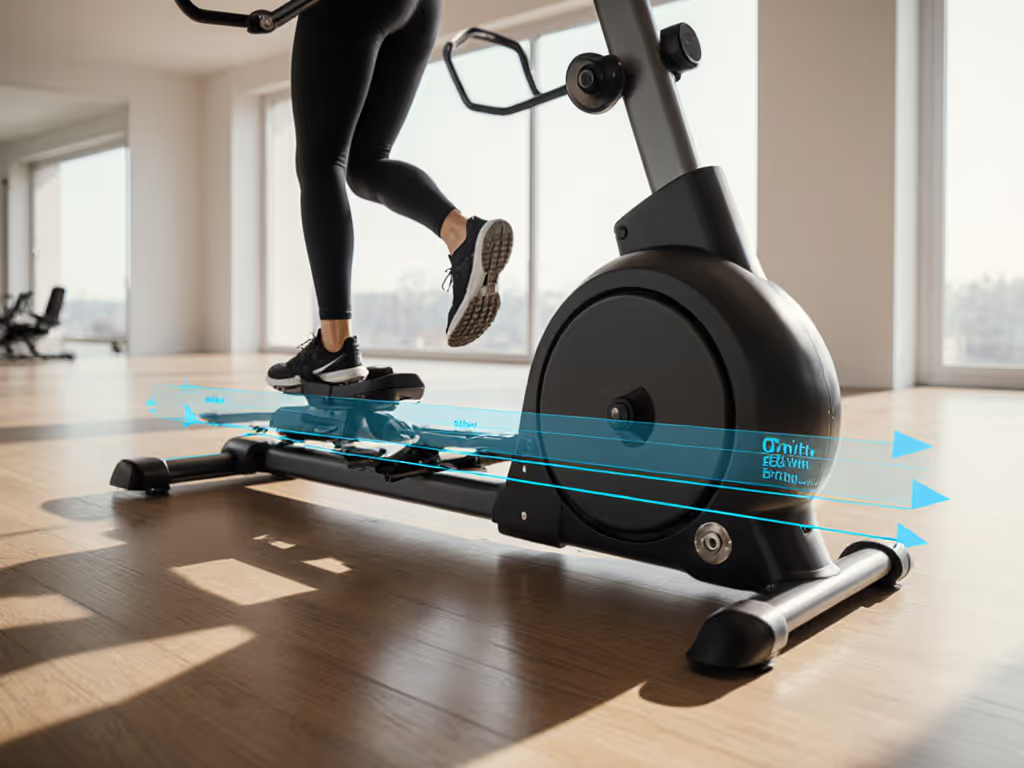
- Poor biomechanics: Stride length mismatch causing compensatory movements. Measure inseam: stride should equal 28-33% of inseam length for neurological efficiency.
Making It Stick: Your First-Week Action Plan
Days 1-2: Validate connectivity. Pair elliptical with Strava without manufacturer app. Export a 5-minute file (can you open it in Excel?)
Days 3-4: Dial in intensity. Hold 70% max HR for 15 minutes while counting backward from 100 by 7s. Adjust resistance if cadence fluctuates >5 RPM.
Days 5-7: Add cognitive load. Listen to a complex podcast (e.g., science documentary) while maintaining target HR. Track focus retention post-workout.
Record metrics in a free app like Runalyze. To turn numbers into insights that improve focus, use our elliptical metrics guide. If data requires subscriptions to access, demand firmware updates or switch machines (your progress isn't a revenue stream).
Test sync before sweat. This isn't just about convenience; it's about owning your cognitive journey. When your elliptical respects open protocols, you gain portable data that maps neural adaptations across months of training. For deeper protocol customization, explore the CDC's physical activity toolkit for neurodivergent learners (no paywalls, just science).
Related Articles