Build Endurance on the Elliptical: Complete Protocols
By Amir Qureshi • 19th Feb
Building endurance on an elliptical trainer doesn't require chasing flashy metrics or maximal resistance. It requires matching your machine's mechanics (stride length, cadence range, and foot position) to your body, then committing to a repeatable routine. I learned this the hard way. After a winter of knee twinges from a mismatched stride, I taped my living room floor and tested stride reach with a simple wall-to-toe drill. Swapping to a 20-inch stride with a narrower Q-factor eliminated the pinch within a week. Since then, I measure first. Here's how to build sustainable endurance on any elliptical trainer without the guesswork.
FAQ: Building Elliptical Endurance
How Do I Know If My Elliptical Stride Matches My Body?
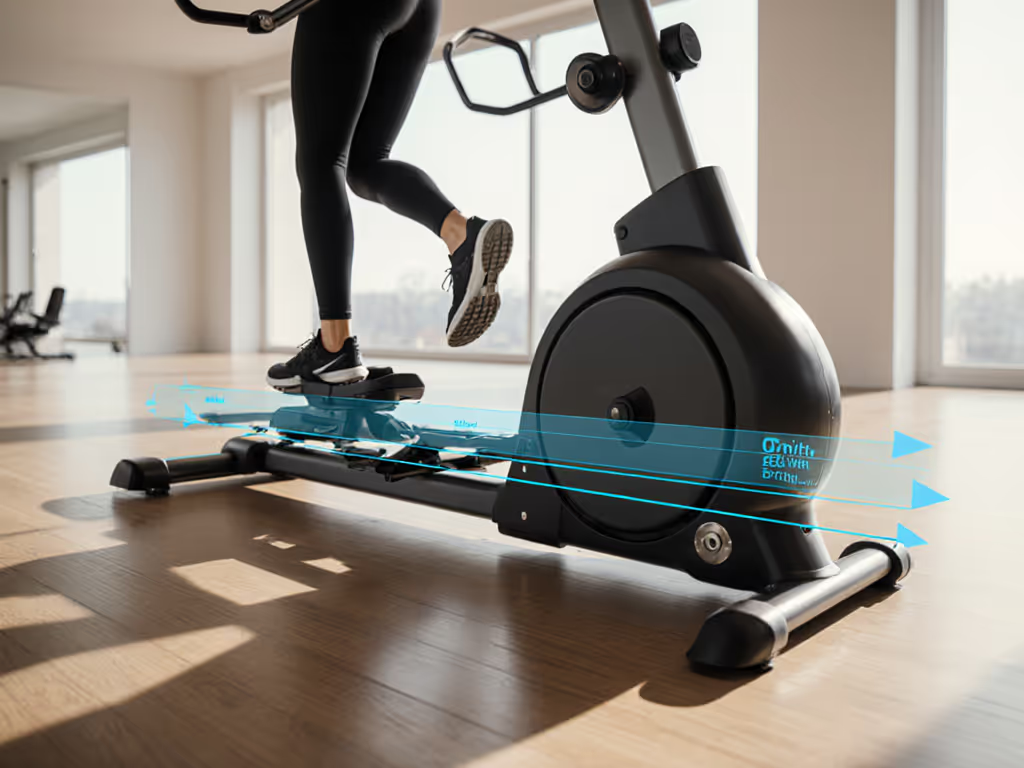
Your stride should let your leg extend to about 80 percent of full stretch at the furthest point of the pedal cycle. To test this at home, stand barefoot and measure the distance from wall to your longest toe when you reach forward with your leg fully extended but not locked. Most adults measure 18-22 inches; that's your target stride range.[1] If you need equipment that adapts, see our adjustable stride guide for who benefits and how to use it.
If your machine's stride feels choppy, stopping short of where your leg naturally wants to go, your hip flexors and quads will tire faster, crushing endurance. If it's too long, your knees bend excessively at the top of the pedal arc, adding strain.[1] The Q-factor (distance between pedals, typically 140-165 mm) also matters. Narrower pedals (140-155 mm) reduce inward knee drift for joint-conscious users; wider settings (160-165 mm) suit taller athletes with longer tibias. Fit beats features every time. Even a budget elliptical trainer with correct stroke length can outperform luxury models that do not fit your proportions.
What's the Right Starting Point for Endurance Training?
Beginners often jump on and dial up resistance immediately. That's the fastest way to quit. Start with resistance at level 2-3, and focus on duration before intensity.[1] Your first goal is to find a rhythm that keeps your heart rate in the lower half of your target zone, roughly 50-70 percent of your max heart rate.[1] For evidence-based zones and weekly plans, follow our elliptical heart health guide. To calculate: subtract your age from 200 (men) or from 206 minus 88 percent of your age (women). If you're 45, your max is roughly 155 bpm; your starting zone is 77-109 bpm. This feels conversational... you could talk if you needed to.
Commit to 30 minutes per session, 3 days per week.[1] That's the foundational threshold. It doesn't sound like much until you realize the compounding effect over 8-12 weeks: your VO₂ max climbs, your cadence steadies, and your knees stop sending alarm signals. Measure your stride once; choose comfort for every workout.
Which Resistance and Incline Levels Build Endurance Fastest?
There's no single answer, it depends on your current fitness and your machine's resistance curve. Here's a practical protocol for home use:[3] If your model offers incline, learn to use incline safely without aggravating your joints.
Beginner (Weeks 1-4): Gradient Climber
- Warm up 2 minutes at resistance 1, incline 1
- 3-minute blocks, stepping up: resistance 2, 3, 4, back to 2
- Repeat for 20-26 minutes
- Cool down 1 minute at resistance 1
This pattern trains your nervous system to handle resistance changes without blowing up your glycogen stores. Your legs stay engaged; your heart doesn't spike.
Intermediate (Weeks 5-8): Steady Endurance
- Warm up 2 minutes at resistance 2, incline 1
- Hold resistance 8, incline 4 for 26 minutes at a steady cadence (80-90 rpm)
- Cool down 2 minutes at resistance 1
At this level, you're teaching your aerobic engine to sustain effort. Resistance 8 should feel challenging but manageable, not a sprint, not a coast.[3] If you're gasping, dial it back to 6-7. Endurance isn't built by suffering; it's built by repetition at a sustainable threshold.
Advanced (Week 9+): Tempo and Interval Fusion
- 10-15 minutes easy (resistance 3-4, incline 1)
- 10 intervals of 2 minutes fast (90+ rpm, resistance 6-8) with 2-minute float recovery
- 10-15 minutes easy
This trains your lactate threshold (the point where your body shifts from aerobic to anaerobic metabolism). Sprinters need this; endurance athletes need it more. Elite distance runners add 2-4 elliptical sessions per week specifically to build aerobic volume safely without pounding their joints.[4]
How Do I Stay Consistent Without Boredom?
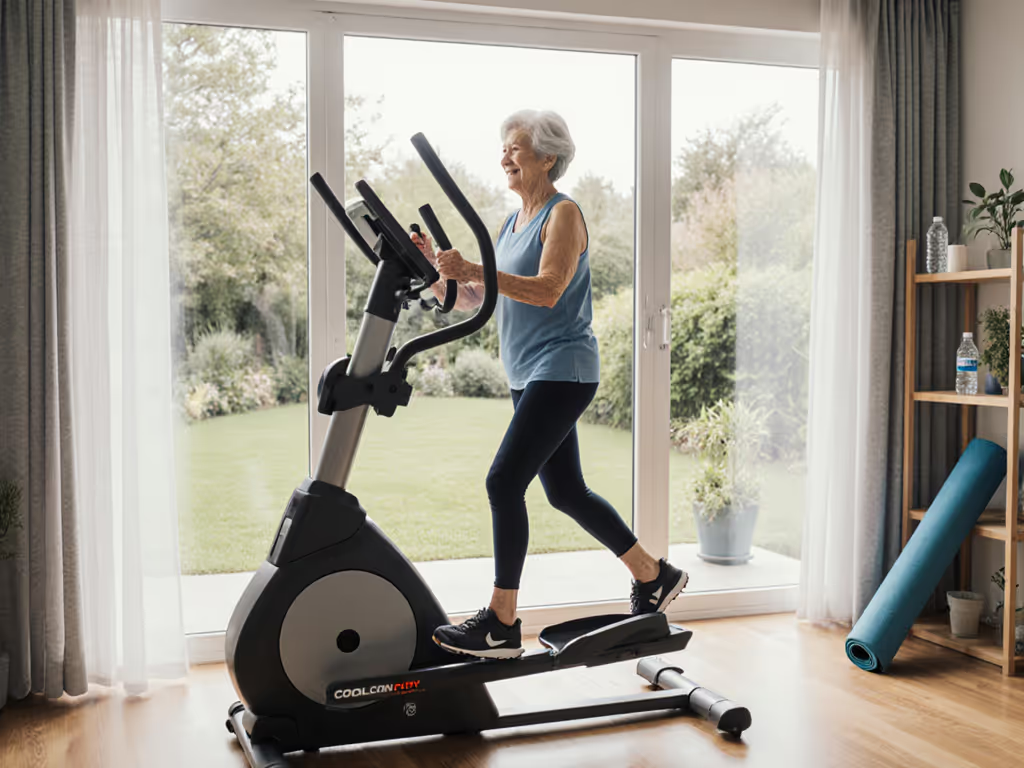
Consistency is where programs fail. Vary your environment: listen to podcasts, watch a series, or place the machine near a window. Find a workout buddy who commits alongside you; accountability beats willpower.[1] Many machines now include pre-programmed routines that auto-adjust resistance and cadence for you, removing the mental load.[1] This is genuinely helpful if the presets match your stride and do not force awkward cadence ranges.
One practical win: log your sessions. Here's how to use elliptical metrics to track progress without overcomplicating things. Not for vanity, for feedback. After four weeks, you'll notice that resistance 8 felt hard in week 2 but feels normal in week 4. That's measurable progress, and it sticks.
What If My Knees or Hips Start Pinching?
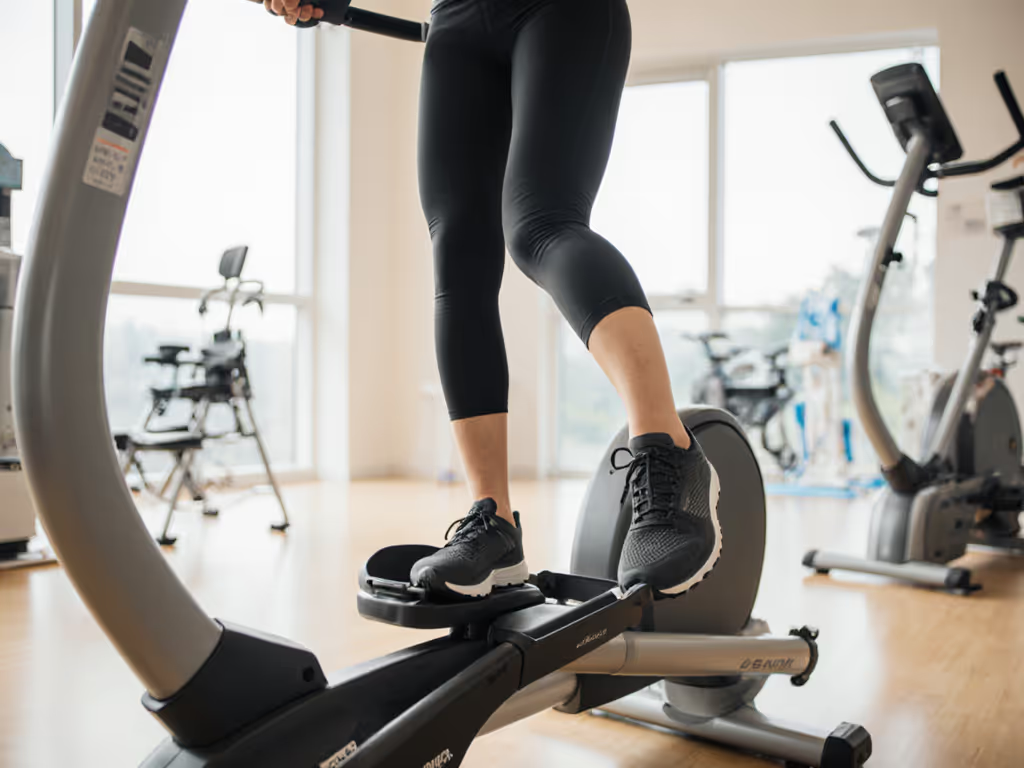
Stop and reset. Pinching signals misalignment, usually stride length, foot angle, or Q-factor mismatch. Before adjusting the machine, check your form: feet flat, ankles neutral, knees tracking over toes, not caving inward.[2] For a complete technique tune-up, see our elliptical form guide. If form is locked and pinching persists, the machine isn't adapted to your body. This isn't a weakness; it's a data point. Endurance programming elliptical sessions on a misfit machine teaches your joints pain, not durability. A machine should adapt to your body, not the other way around. If your current elliptical for home use cannot be adjusted to match your measurements, it's worth exploring options that do. Many mid-range models offer stride-length and pedal-width adjustments that let taller, shorter, and differently proportioned users find their fit.
How Long Until I Notice Endurance Gains?
Your cardiovascular system adapts faster than you'd expect. After 2-3 weeks of consistent 30-minute sessions, you'll notice your recovery time dropping, what was breathless at minute 20 feels manageable by minute 25. After 4-6 weeks, your resting heart rate may drop 2-5 bpm, a sign your heart's becoming more efficient.[1] After 8-12 weeks of joint-friendly stamina training, you'll handle 45-60 minute sessions without thought.
The timeline is individual. Age, prior fitness, and genetics matter. What's universal: consistency beats intensity at the start. Three solid months of 30-minute sessions at a sustainable effort out-builds sporadic 45-minute sprints.
Summary and Final Verdict
Endurance on the elliptical trainer is built through three levers: proper machine fit (stride, Q-factor, incline range), rational progression (start low, raise resistance gradually), and habit (30 min/3x weekly, non-negotiable). Skip any of these and you'll plateau or risk injury.
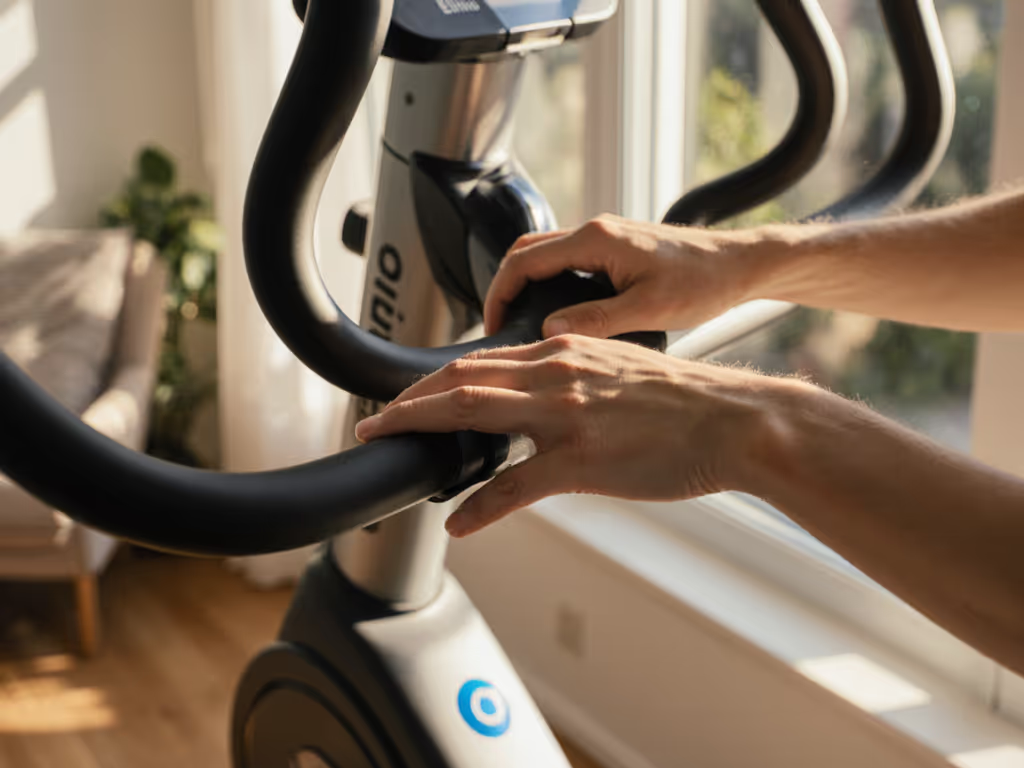
Your next step: measure your stride at home using the wall-to-toe test, then verify your machine's stride length against that number. Adjust handle reach and pedal settings so your legs and arms can move freely without pinching. Start with a beginner protocol (resistance 2-4, duration 20-30 minutes) and spend 4 weeks there. Only after 12 consistent sessions should you touch the incline or resistance dial again.
Measure your stride once; choose comfort for every workout. Fit beats features every time. Stick to that, and endurance follows.
Related Articles