Your Drive Type: Muscle Goals Matched
By Priya Natarajan • 30th Jan
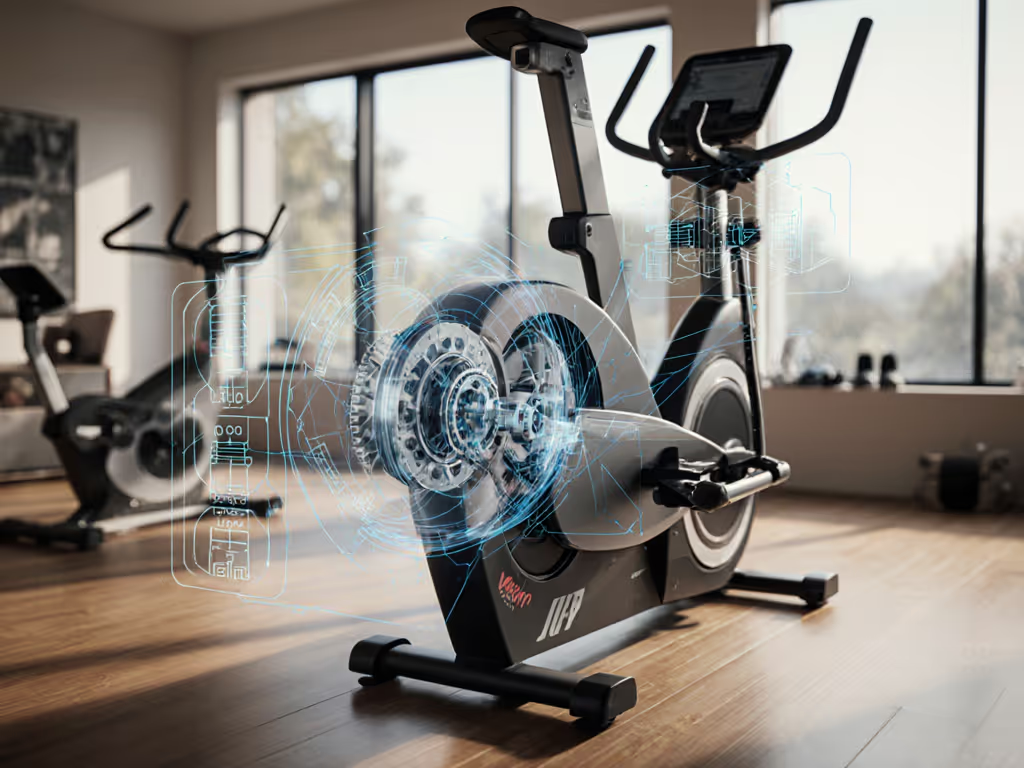
When you're choosing between elliptical drive mechanics impact and drive system workout effects, you're not just picking hardware, you're selecting the foundation for daily movement that could last years. Most buyers focus on specs like resistance levels or screen size, but the drive system shapes everything from joint comfort to whether you'll actually use the machine when life gets busy. For a deeper comparison of how front-, rear-, and center-drive designs feel in real use, see our front vs rear vs center drive comparison. After testing dozens of models for time-crunched adults, I've found the right drive type transforms cardio from "should" to "want."
The Hidden Hurdle of Drive Types
Ellipticals aren't one-size-fits-all machines, yet most shoppers overlook how drive systems affect their actual experience. You've probably felt this frustration: scrolling through specs like "Q-factor" or "flywheel weight" without understanding what they mean for your body in your living room.
This confusion leads to real consequences:
- Wasted investment: That $1,200 elliptical becomes a clothes rack because the stride felt unnatural.
- Consistency killer: Discomfort or awkward transitions derail routines before they stick.
- Space anxiety: Buying a rear-drive model for your 10x12 ft home gym, only to realize it blocks the door.
I saw this firsthand when working with a client whose petite frame got lost in a long-stride rear-drive machine. She'd stop mid-workout, frustrated by the "choppy" motion. Switching to a center-drive model with a narrower Q-factor changed everything (suddenly she was doing 20-minute sessions without thinking).
Why Drive Systems Shape Your Success More Than You Think
What Actually Happens When You Step On?
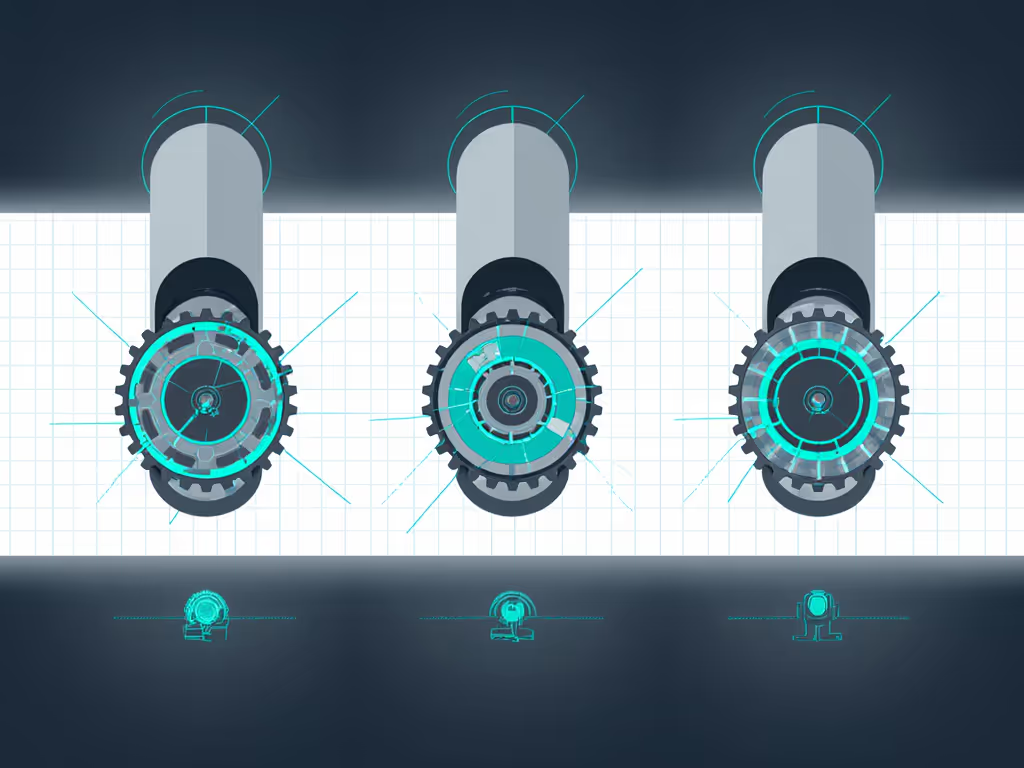
Your elliptical's drive system determines three invisible factors that make or break daily use:
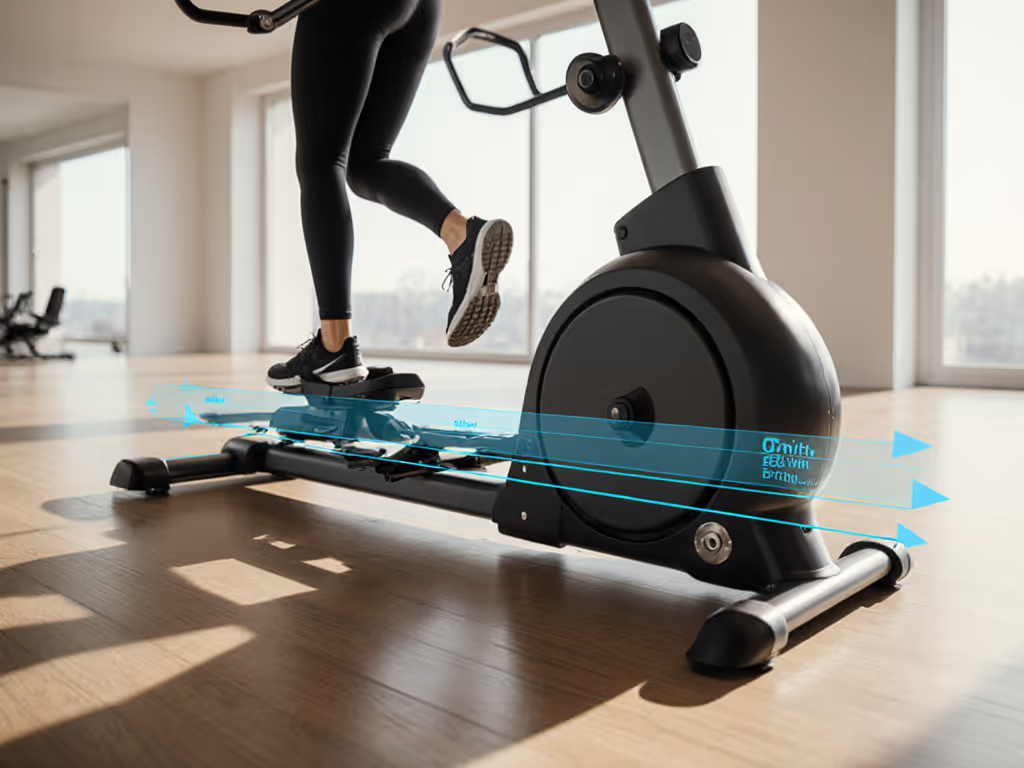
- Path of motion: How your feet move through space (more circular vs. more vertical)
- Joint loading: Where force distributes across knees, hips, and ankles
- Stability at cadence: Whether the machine rocks during faster intervals
These details directly impact your ability to build sustainable comfort (the shortest path to consistency). When your machine feels natural, you eliminate the mental friction that stops most routines before month two.
Front-Drive: Compact Powerhouse
Front-drive models position the flywheel ahead of you, creating a more vertical motion path. This design shines if:
- Space is tight (they're typically 6-12 inches shorter than rear-drive)
- You prefer stair-climber-like intensity
- Your routine includes seated upper-body focus
The front drive calorie burn analysis shows similar total expenditure to rear-drive models, but with higher quad engagement during incline settings. However, be mindful of elliptical drive joint loading (some users report more ankle strain during long sessions due to the steeper motion path).
Rear-Drive: Smooth Strider
Rear-drive systems place the flywheel behind you, delivering longer, more natural strides (see our stride length guide for tall users). Ideal for:
- Taller users (5'10"+)
- Those prioritizing hip mobility
- Multi-user households with height variation
Rear drive muscle activation patterns emphasize glutes and hamstrings through the full stride extension. But remember: longer footprints demand more floor space, so measure twice before assuming it fits your bonus room!
Center-Drive: The Habit Builder
This modern design mounts the flywheel centrally between pedals. Its superpower is center drive workout efficiency through:
- Narrowest Q-factor (pedal width closest to natural hip stance)
- Most rounded motion path (gentlest on joints)
- Smallest footprint (often under 4x2 ft)
I've recommended center-drive models to clients recovering from knee discomfort (the reduced joint loading lets them build duration without pain). One client with previous wrist injury (sound familiar?) rebuilt her routine on a center-drive machine because the natural motion didn't strain her healing joints.
Your Drive Selection Checklist
Forget decoding spec sheets. Answer these three questions to find your match:
- "What's my non-negotiable?"
- Space: <50 sq ft? → Prioritize center or front-drive
- Height: <5'6"? → Avoid long-stride rear-drive
- Goals: Joint-friendly cardio? → Center-drive first
-
"What's my starting ritual?" Can you finish a session before your coffee gets cold? Shorter front-drive strides often allow quicker warm-ups (crucial for habit formation).
-
"What tiny win matters most?"
- "No setup friction" → Choose intuitive console layouts
- "Pain-free mornings" → Prioritize smooth motion paths
- "Daily consistency" → Pick the drive type that fits your natural gait
When my own wrist tweak sidelined kettlebell training, I rebuilt momentum on an elliptical that cleared both my one-bedroom space limits and my "zero setup" rule. Two non-negotiables kept me moving: a low step-up height I could clear without thought, and a single preset that felt effortless. The habit stuck long after healing because sustainable comfort guided my choice, not just the specs sheet.
Final Verdict: Match Drive to Daily Life
Your perfect elliptical isn't about having the most features, it's about having the right movement pattern for your body and space.
- Choose front-drive if compact design and vertical motion fit your space and goals
- Choose rear-drive for natural gait simulation and longer strides (if space allows)
- Choose center-drive for maximum joint comfort and smallest footprint
Remember: Small, repeatable wins turn cardio into a lifelong habit. Forget "no pain, no gain." Focus instead on finding the drive system that makes you think, "I could do this every day."
When you're ready to shortlist models, use our first-time buyer's guide to avoid common pitfalls. Make it easy, make it daily.
Related Articles