Elliptical Vestibular Rehab: Gentle Balance Improvement Protocols
By Priya Natarajan • 16th Jan
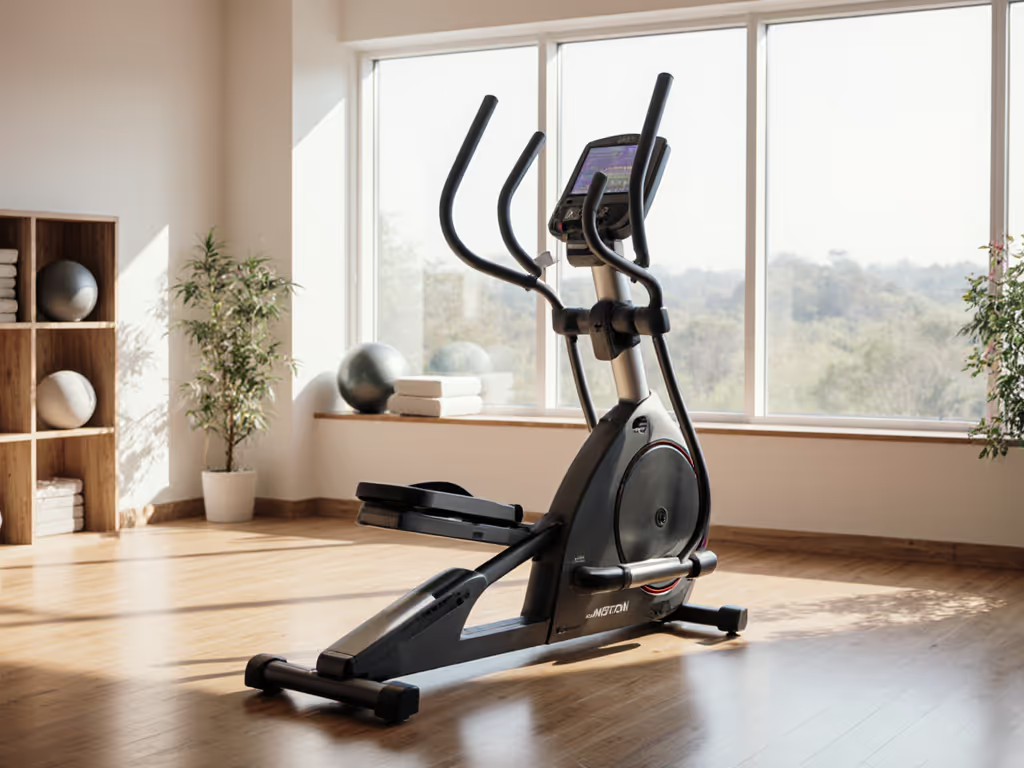
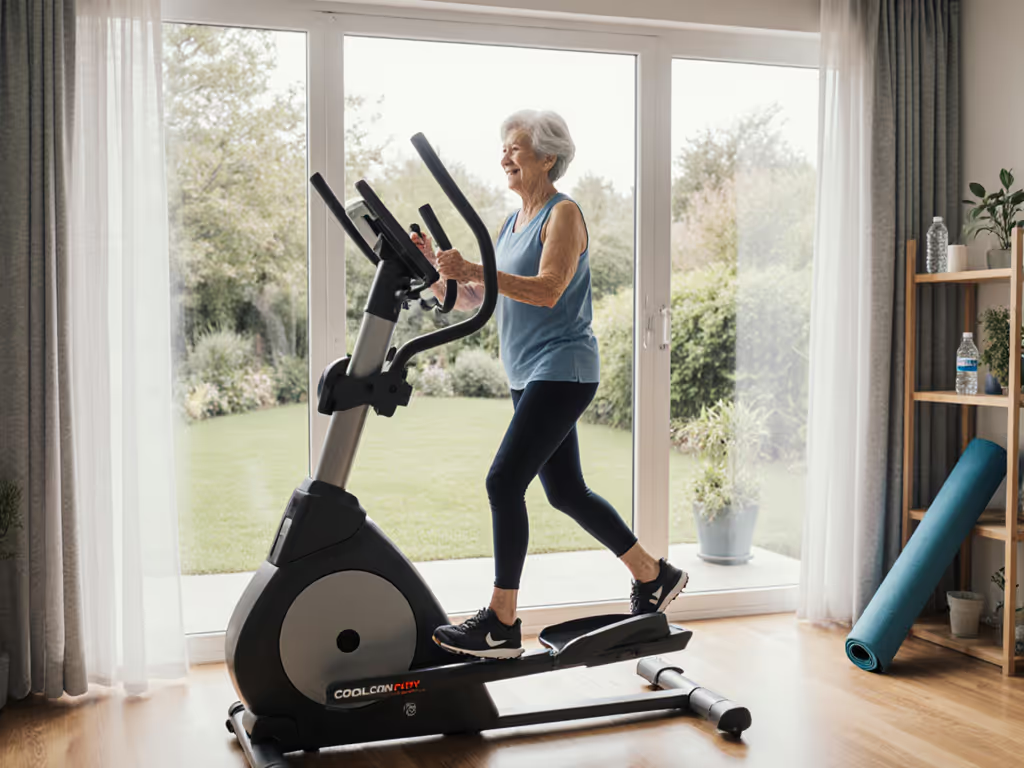
If you're navigating dizziness or balance challenges, you've likely discovered that conventional cardio can feel overwhelming. That's where elliptical vestibular rehabilitation enters the picture (a gentle approach to building stability that works with your body rather than against it). Unlike high-impact exercises that can trigger vertigo symptoms, the elliptical's smooth, predictable motion makes balance improvement elliptical protocols accessible even when you're feeling fragile. This isn't about intense workouts; it's about creating sustainable movement patterns that rebuild your confidence with every stride. For a medical overview of safe progressions, see our elliptical rehabilitation protocols.
As someone who specializes in low-friction fitness routines, I've seen how small, repeatable wins turn cardio into a lifelong habit. When my own wrist injury sidelined my kettlebell practice, I turned to short elliptical sessions that fit seamlessly into my morning routine (before coffee, with zero setup time). What started as recovery became a lasting habit because it respected my limits while still delivering tangible results.
Why the Elliptical Works for Vestibular Challenges
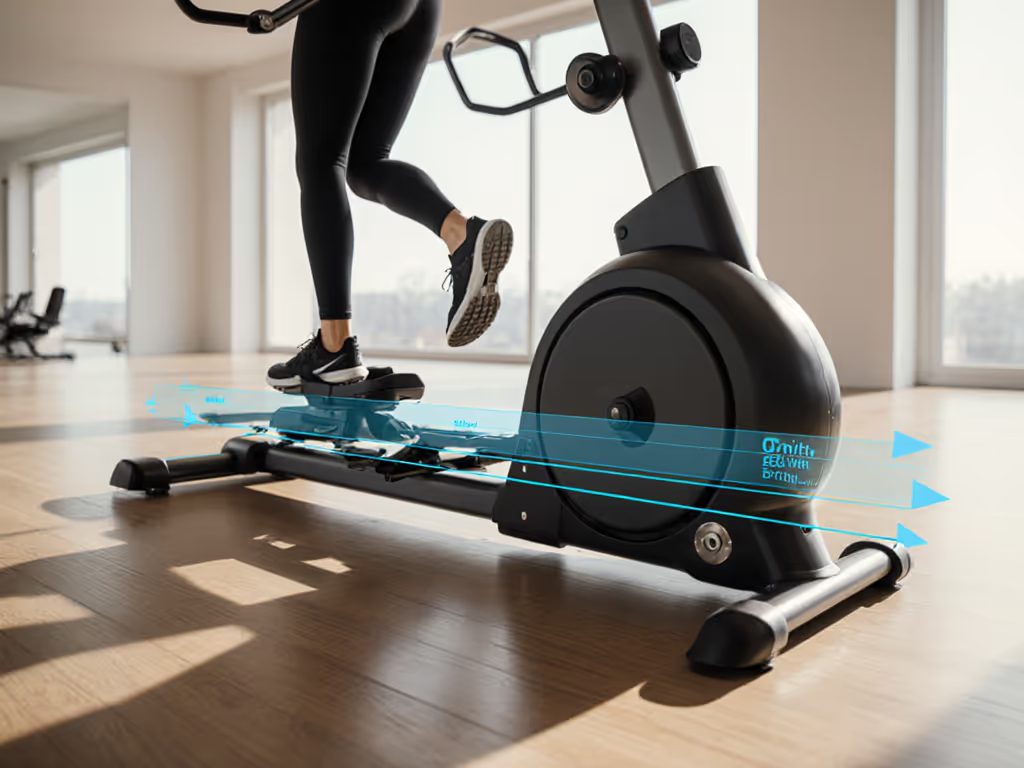
Your vestibular system, the intricate network in your inner ear that helps you maintain balance, thrives on predictable, rhythmic movement. When this system gets disrupted (by inner ear issues, medication side effects, or even prolonged bed rest), your brain struggles to process spatial orientation. The elliptical's controlled motion provides just enough stimulation to retrain your brain without overwhelming it.
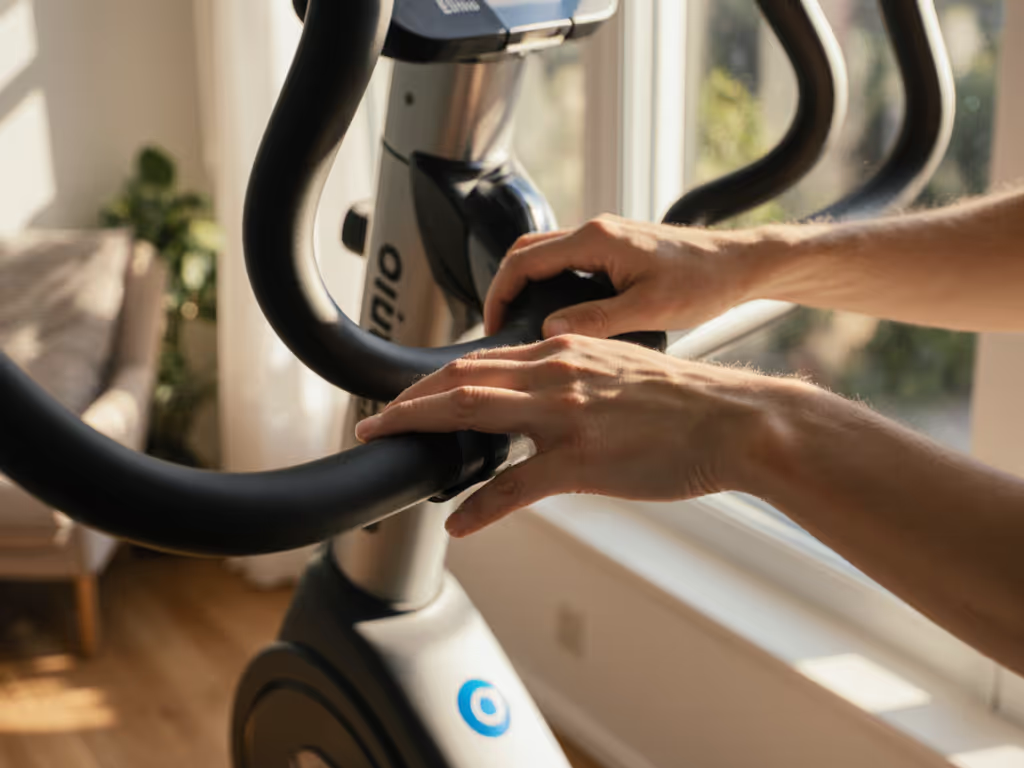
Unlike treadmills or stationary bikes that require balancing on one foot at a time or maintaining an unstable seated position, the elliptical offers constant support. Your feet stay connected to the pedals, creating a stable base while your head moves through space (a perfect scenario for inner ear exercise elliptical protocols). To reduce vertigo triggers further, dial in posture and grip with our elliptical form guide. This low-impact approach reduces fear of falling while still challenging your balance system in a controlled environment.
Your Step-by-Step Protocol for Gentle Balance Building
Step 1: Create Your Friction-Free Setup
Before you begin, remove any barriers that might prevent you from showing up consistently:
- Position your elliptical in a space with clear visibility (no tripping hazards)
- Keep resistance at the lowest setting, so low you can move the pedals with one hand
- Program a single preset for your sessions (10 minutes, level 1)
- Place water and a towel within arm's reach
This "zero setup" approach ensures that when you feel up to moving, you can begin immediately without decision fatigue. The goal isn't intensity, it's showing up consistently with minimal friction.
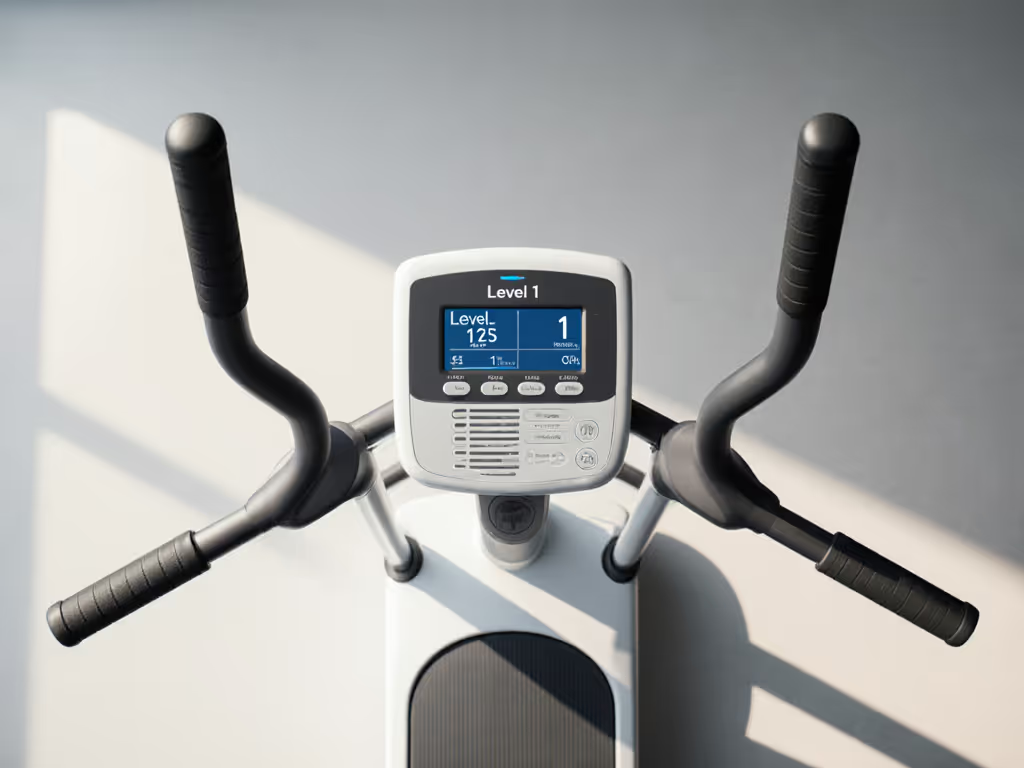
Step 2: Start with Foundation Movements
Your first sessions should focus on establishing rhythm and stability without adding complexity:
- Stand still on the pedals with hands lightly on the moving handles
- Begin pedaling slowly while keeping your gaze fixed on one point
- Complete 5 minutes with your eyes open, focusing on maintaining an even pace
- Gradually add 1 minute to your sessions each day
This vertigo exercise elliptical approach builds your tolerance gradually. Notice how your body feels during and after (your comfort is the compass guiding your progression). If you experience dizziness, stop and rest. If your dizziness stems from neurological conditions like Parkinson's or MS, see our neurological elliptical protocols for condition-specific adjustments. Your future self will thank you for honoring these signals rather than pushing through discomfort.
Step 3: Introduce Gentle Balance Challenges
Once you've built confidence with the basic motion (typically after 5-7 consistent sessions), add these subtle variations:
"Sustainable comfort is the shortest path to consistency. Pushing through discomfort might create short-term progress, but it often leads to longer breaks in your routine."
- Modified head turns: While moving steadily, slowly turn your head side to side, keeping your eyes focused on a stationary object
- Single-hand support: Alternate between using both hands and just one hand on the moving handles
- Eyes closed intervals: Close your eyes for 10-15 seconds at a time while maintaining steady movement
These dizziness treatment elliptical techniques help retrain your vestibular system by decoupling head and eye movements, a key component in many vestibular rehab protocols. Start with just one variation per session, adding more only when you feel completely comfortable.
Step 4: Build Your Sustainable Routine
Consistency matters more than duration when rebuilding balance. Create a protocol that fits your energy levels:
| Week | Session Length | Resistance Level | Balance Challenge |
|---|---|---|---|
| 1 | 5-7 minutes | 1 | None |
| 2 | 8-10 minutes | 1 | Head turns |
| 3 | 10 minutes | 1-2 | Single-hand support |
| 4 | 10-12 minutes | 2 | Eyes closed intervals |
This structured yet flexible approach addresses vestibular disorder elliptical protocols without overwhelming your system. The elliptical becomes a tool for recalibrating your balance, not a source of additional stress.
Troubleshooting Common Challenges
If dizziness appears during your session:
- Immediately reduce your speed
- Focus your gaze on a fixed point
- Place both hands firmly on the stationary handles
- Continue moving at a slower pace for 1-2 minutes before stopping
This "ride it out" technique helps your brain process the sensation without triggering fear. Many people find that continuing gentle movement through mild dizziness builds tolerance more effectively than stopping completely.
If you struggle with motivation:
- Anchor your elliptical sessions to an existing habit (e.g., after morning coffee)
- Keep sessions shorter than the time it takes to brew your favorite tea
- Celebrate showing up (the movement itself is the victory)
Remember, your goal isn't to "fix" your balance in one session. For motivation strategies that make sessions fly by, try our elliptical boredom-busters. It's about creating a sustainable practice where small improvements accumulate over time. That's how you move from "I can't" to "I did."
Creating Your Action Plan
Your first step toward better balance takes less time than brewing coffee:
- Today: Program your elliptical with a 5-minute, lowest-resistance preset
- Tomorrow: Complete your first session focusing solely on maintaining a steady rhythm
- By Friday: Notice how your confidence moving through space has shifted, however subtly
Don't worry about metrics or intensity. Your only goal is to show up and move with awareness. The balance improvements will follow naturally as your system recalibrates. In just a few weeks of these gentle sessions, you'll likely notice greater stability walking through grocery stores, less discomfort turning your head while driving, and increased confidence in your body's ability to navigate space.
The beauty of elliptical vestibular rehabilitation isn't in dramatic transformations (it's in the quiet moments when you realize you've climbed stairs without holding the railing, or turned your head without that familiar lurch). These small victories, repeated consistently, build the foundation for lasting balance. Your future self will thank you for starting with kindness rather than intensity.
Small, repeatable wins turn cardio into a lifelong habit.
Related Articles