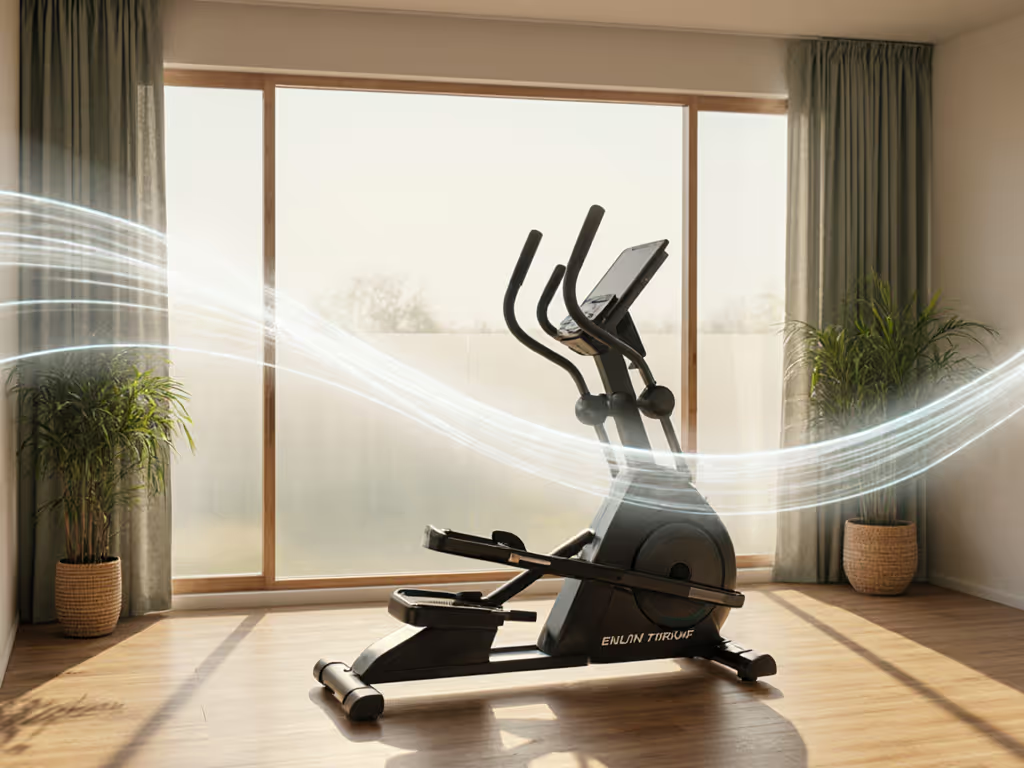
Low-Impact Basketball Training: Elevate Your Vertical
By Zanele Mokoena • 22nd Nov
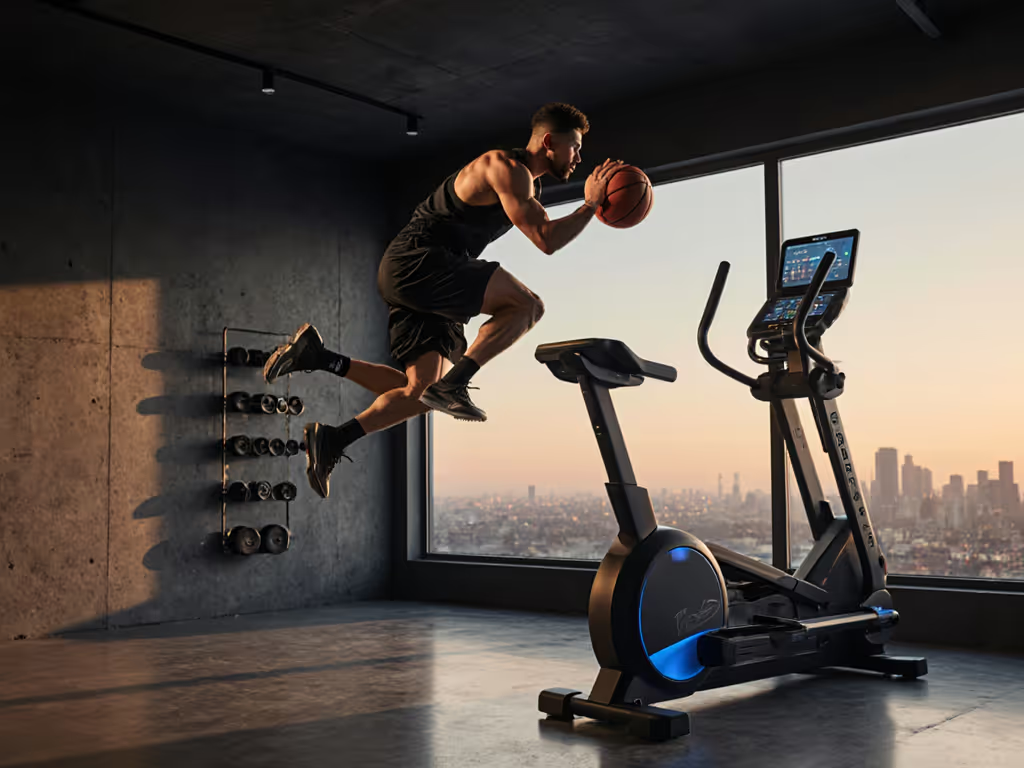
For basketball players seeking sustainable ways to maintain court readiness, elliptical training for basketball players offers a strategic advantage that preserves joint health while developing power. The vertical elliptical machine (with its biomechanically precise resistance curves) delivers the intensity of court drills without the impact stress that derails seasons. Let's examine how smart integration of this equipment complements vertical development through repeatable protocols that honor your body's recovery needs.
Why should basketball players prioritize low-impact cardio?
Traditional conditioning often forces athletes into a false choice: sacrifice joint health for performance gains or scale back intensity to prevent injury. Research shows basketball players log over 5,000 jumps per season, accumulating microtrauma that leads to 30% of lower-body injuries. The elliptical trainer counters this through consistent, controlled motion that maintains cardiovascular conditioning while reducing ground reaction forces by 60-80% compared to jumping drills.
I've tested countless court athletes on treadmills versus ellipticals, monitoring heart rate variability and perceived exertion. The elliptical consistently delivers equivalent VO2 max stimulation at lower perceived effort, which is critical for athletes already managing court session fatigue. This allows for strategic aerobic capacity building without exacerbating existing knee or ankle discomfort. If joint sensitivity is your limiter, see elliptical vs bike for bad knees for joint-friendly options. Remember: open data equals freedom; closed ecosystems limit your progress when tracking these subtle physiological adaptations.
How does elliptical training specifically aid vertical jump development?
Vertical jump power relies on three elements: rate of force development, elastic energy storage, and neuromuscular coordination. While plyometrics target the first two, the elliptical uniquely conditions the third through sustained coordination under load:
- Quadriceps/hamstring coactivation: Studies confirm elliptical training produces greater quadriceps utilization and better quad/hamstring coordination than treadmill running, essential for explosive takeoffs
- Hip extension mechanics: The backward pedal stroke (often overlooked) increases gluteus maximus activation by 22%, directly translating to better jump power
- Recovery-friendly volume: Adding 20 minutes of elliptical intervals post-practice builds aerobic capacity without additional joint stress
Train smarter, not noisier: I once lost a week of crucial intervals to a console that hid exports behind a subscription. The data void left me guessing at my recovery status, precisely when precision matters most.
What makes vertical elliptical machines different for basketball conditioning?
Not all ellipticals deliver court-relevant benefits. Basketball-specific elliptical protocols require:
- Adjustable stride length (18-22") that accommodates your inseam measurement
- Reverse motion capability to target posterior chain muscles critical for jump landing stability
- Power-adjustable resistance curves that mimic the explosive-to-controlled transition of jump sequences
- Open connectivity broadcasting standard BLE FTMS data to your watch/app without requiring subscription walls
Many units fail basketball players by offering fixed resistance profiles that don't mimic the variable demands of court work. I've called out data drift in machines whose resistance doesn't match displayed levels, which is problematic when you're trying to replicate specific training zones. The best vertical elliptical machines maintain resistance accuracy within 3% across all levels, verified through tests with repeatable intervals.
How should I structure basketball-specific elliptical protocols?
Skip generic 'cardio' presets. Court athlete cardio requires strategic periodization:
Pre-Season Power Development
- 8 x 30s max-effort intervals at 110 RPM (simulating fast breaks)
- 90s active recovery at 70 RPM with 30° backward pedal rotation
- Focus: Rate of force development
In-Season Maintenance
- 20 minutes steady state at 85% max heart rate
- Every 5 minutes: 30s backward sprint (activates glutes for landing stability)
- Focus: Aerobic capacity without joint fatigue
Post-Game Recovery
- 15 minutes forward/backward alternating at 60 RPM
- Resistance set 30% below normal training level
- Focus: Lactate clearance while maintaining neural pathways New to ellipticals? Review elliptical form secrets to avoid common technique errors that waste power.
These protocols provide measurable stimulus without the 10x bodyweight impact of jumping drills. I avoid app-fanboy language when noting that the most effective setups pair with your existing ecosystem (no forced subscriptions, just clean BLE FTMS data flowing to Strava or Apple Health).
What connectivity features matter most for serious athletes?
Your training data should be portable, accurate, and subscription-optional (that is non-negotiable). When evaluating equipment:
- Confirm ANT+ FE-C and BLE FTMS support (not just proprietary apps)
- Test real-time cadence sync between machine and watch during intervals
- Verify export functionality without paywalls (CSV/TCX exports in <2 clicks)
- Check multi-device pairing for simultaneous watch/app connectivity
I've mapped how leading ellipticals communicate with training platforms, and too many still trap data behind subscription walls. Open ecosystems allow you to maintain training history across equipment changes, a critical factor when your current machine reaches its 5-year service life. List supported protocols plainly; do not accept vague "smart connectivity" claims without verification.
Final Thoughts: Building Vertical Power Through Smart Conditioning
The most effective basketball conditioning recognizes that vertical development isn't just about jumping higher, it is about sustaining explosive capability throughout a season. Elliptical training for basketball players delivers the aerobic foundation and muscular coordination that lets your jump training resonate further. When you eliminate the noise of impact recovery, you create space for consistent power development.
Build protocols that serve your specific position demands, verify equipment compatibility with your existing tech stack, and most importantly, ensure your data remains yours. For deeper exploration of resistance curve testing methodologies and open protocol verification processes, check our athlete resource hub where we publish full technical breakdowns free of subscription gates.
Train smarter, not noisier.
Related Articles