Stride Length Calibration: Fit Your Elliptical to Your Body
By Luis Andrade • 27th Feb
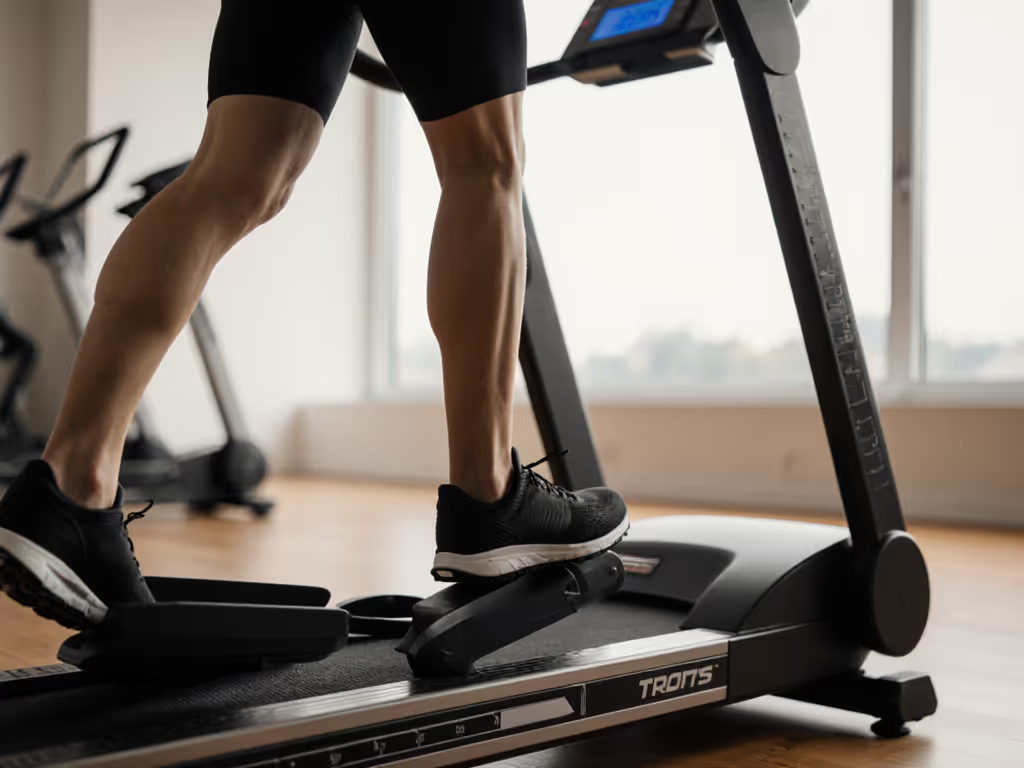
When you step onto an elliptical machine for the first time, a single misalignment becomes impossible to ignore. The pedals feel choppy, your knees angle awkwardly, or your legs fully extend but the motion demands you stretch unnaturally to complete each stroke. That friction isn't a personal failing (it's a calibration problem). Stride length adjustment is the bridge between a machine's mechanical design and your body's natural movement pattern, and getting it right pays dividends in comfort, injury prevention, and the longevity of both your joints and the equipment itself.
Most buyers focus on flashy features and price tags at purchase time, but stride calibration is where the machine either serves you silently for years or becomes a source of persistent discomfort that eventually collects dust. The good news: stride fitting is measurable and straightforward once you understand the biomechanics and the adjustment methods available.
Why Stride Length Directly Impacts Your Experience
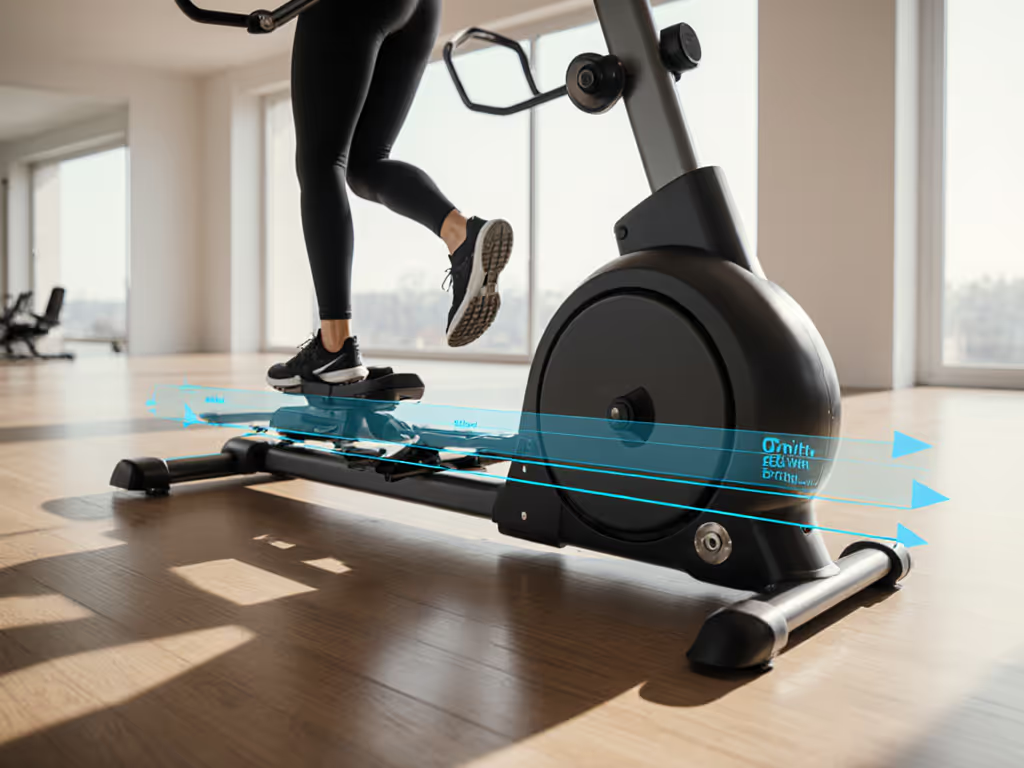
Stride length affects both comfort and effectiveness. When your stride is too short, your movements feel constrained and choppy, forcing your hips and knees to work at an inefficient angle. Too long, and you're reaching beyond your natural range, creating strain in your lower back, hips, and knees.
The challenge is that discomfort compounds over weeks and months. Poor stride alignment doesn't cause failure on day three (it builds subtle compensatory movements that accumulate stress). Your outer hip tightens. Your knee tracking falters. Eventually, you reduce frequency because the machine no longer feels right, and the investment stops paying returns.
This is why matching stride to your biomechanics isn't optional: it's foundational to sustainable use. When your stride length aligns with your natural walking and running cadence, you move more fluidly and efficiently, which makes your workout more enjoyable and reduces injury risk.
Height-Based Stride Recommendations
Stride length isn't arbitrary. Research and manufacturer data consistently show that your height correlates directly to the stride you need.
Refer to this chart as your baseline:
| Height Range | Recommended Stride Length |
|---|---|
| Under 5' | 11"-14" |
| 5'0"-5'3" | 14"-16" |
| 5'4"-5'8" | 16"-20" |
| 5'9"-6'0" | 18"-20" |
| Over 6' | 20" or more |
These ranges aren't marketing estimates (they reflect how biomechanics scale with limb length). A 20-inch stride length is typical of commercial gym ellipticals and suits most users between 5'3" and 6' relatively comfortably. However, the word "most" matters. If you fall outside that range, a fixed 20-inch stride becomes a compromise, not a match. If you’re over 6 feet or have long legs, see our ellipticals for tall people to dial in a comfortable stride.
For households with two users of significantly different heights, this disparity becomes real. A 5'2" partner and a 6'1" partner on the same machine with a fixed 20-inch stride means one feels cramped and the other feels overextended. This is where adjustable stride length becomes more than a convenience (it's the difference between a shared tool and a single-user device).
How to Measure Your Stride and Adjust
Before making adjustments, measure your natural stride. Stand barefoot, take a few normal walking steps, and measure from the heel of one footprint to the heel of the next. This gives you a baseline to compare against the machine's settings.
Next, locate your elliptical's adjustment mechanism. There are three common approaches: Not sure which drive type matches your gait? Compare front vs rear drive to understand how each affects stride feel.
Power Adjustment
Many newer ellipticals use powered stride adjustment linked to the console. Press the power ramp increase or decrease button, and the stride length changes automatically. This method is convenient and removes guesswork, but it adds electrical complexity (another component that can fail over time).
Manual Adjustment (Rear Drive Models)
Pull the adjustment knob and slide the adjustment bracket into aligned holes to shorten or lengthen the stride. Both sides must be set to the same length. This method is simple and doesn't rely on electronics, reducing maintenance risk.
Manual Adjustment (Arm Models)
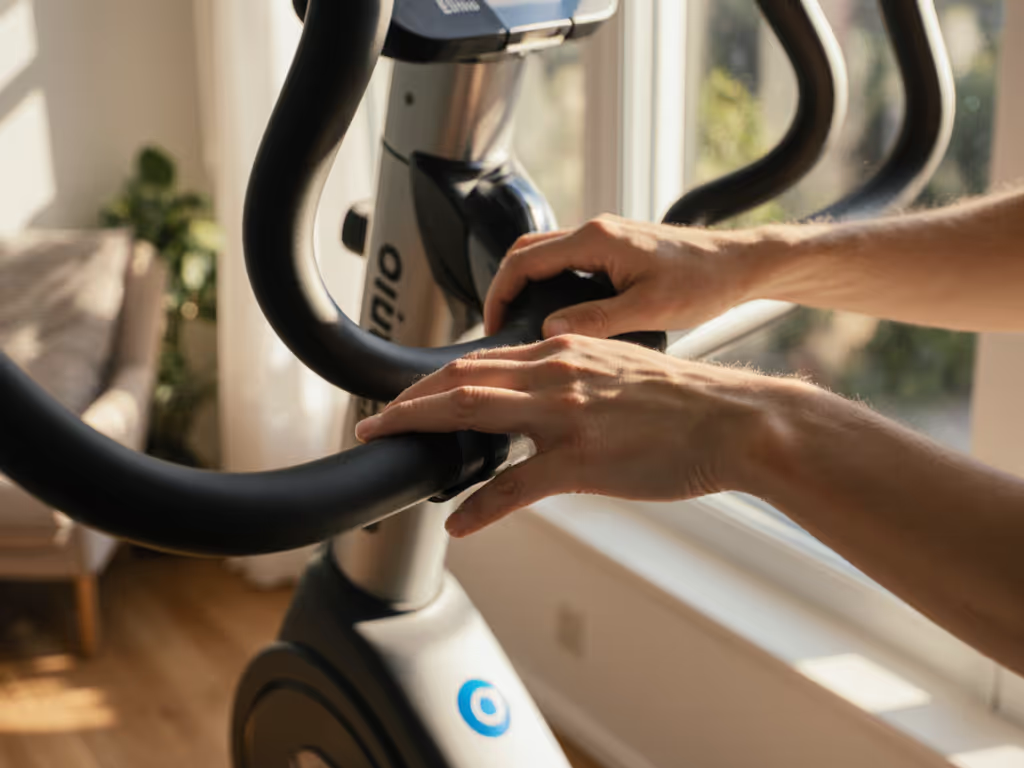
Turn the adjustment knob clockwise while pulling it outward until the adjustment arm pivots freely, then pivot the arm until the knob aligns with a hole in the handlebar leg. Secure both sides identically. This design is durable and mechanical (no hidden wear points).
Value survives the honeymoon: A manual adjustment system with metal components and minimal electronics is more likely to function smoothly five years from now than a power-adjusted system with a motor and sensors.
Once you've adjusted to a new stride, test it gradually. Take 5-10 minutes at a comfortable cadence and note how your hips, knees, and lower back feel. If you feel cramped or overextended, make further refinements.
Common Mistakes and Long-Term Consequences
Five mistakes undermine stride calibration and machine longevity:
1. Ignoring Discomfort as "Just Breaking In" Ellipticals don't require a break-in period for comfort. If the first session produces hip or knee tension, the stride length or machine design is mismatched. Pushing through discomfort doesn't fix biomechanics (it builds injury risk).
2. Choosing a Machine by Specs Rather Than Feel A machine with a "premium 22-inch stride" that doesn't fit your body is a premium mistake. Always test the actual stride length before purchasing, or verify detailed return policies. Before you buy, our elliptical buyer’s guide shows how to test stride fit like a pro.
3. Setting Stride Too Long to "Get a Bigger Workout" Overextension doesn't increase effectiveness; it increases injury risk and causes users to reduce frequency. Moderate, pain-free sessions beat infrequent, uncomfortable ones.
4. Assuming All Adjustable Strides Work Equally Some adjustment mechanisms are stiff or imprecise. A manual system that requires wrestling with stuck knobs or a power system that drifts out of alignment both undermine trust in the machine. When adjustment feels finicky, users stop making them and adapt instead (precisely backward).
5. Neglecting to Account for Multiple Users If your household has two very different heights and your machine has a fixed stride, one person will always compensate. Adjustable machines eliminate this tension, but only if the adjustment is smooth and repeatable. If it's slow or requires tools, people won't use it.
The Multifaceted Benefit: Why This Matters Beyond Comfort
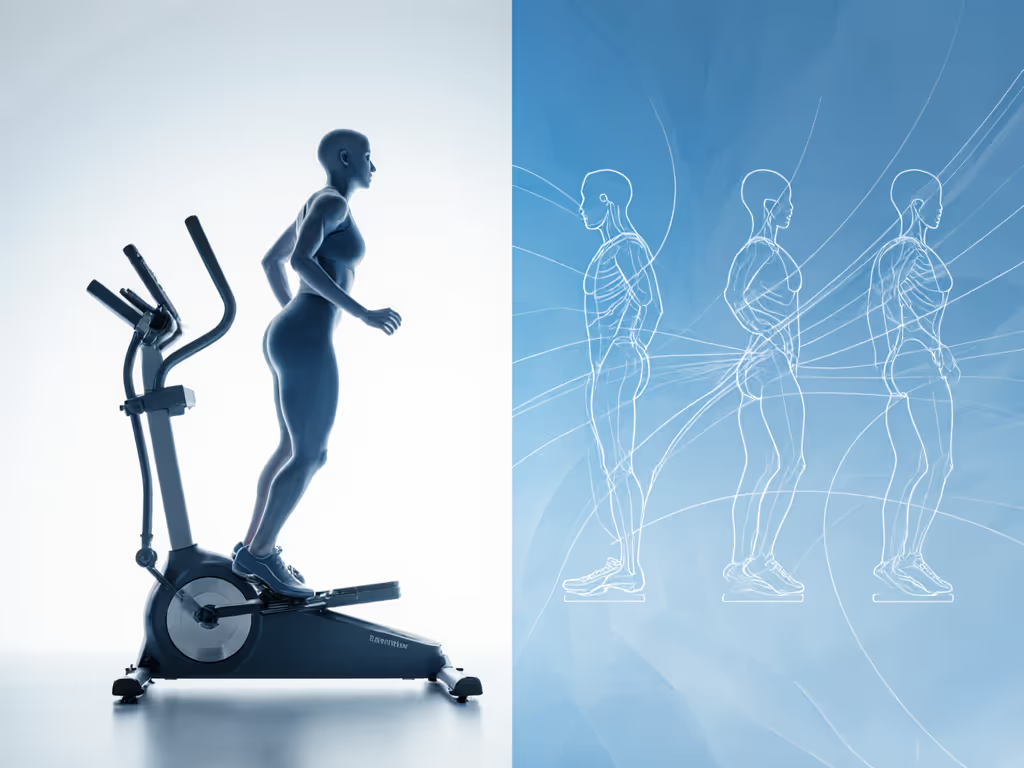
A properly calibrated stride reduces compensatory stress on joints, which means fewer micro-injuries accumulating over months. It also improves consistency. When the machine feels natural, you're more likely to use it regularly, building the habit that sustains cardiovascular health and stress reduction.
From a durability standpoint, correct biomechanics mean more controlled, rhythmic motion through the elliptical's linkage and drive system. When users overstretching or muscle through choppy strides, they're introducing irregular loads on the flywheel, bearings, and frame (precisely the conditions that accelerate wear).
Putting It Into Practice
When evaluating or adjusting an elliptical, prioritize this sequence:
- Measure your natural stride.
- Consult the height-to-stride chart and identify your target range.
- If your machine has adjustable stride, test multiple settings and note which feels most natural and sustainable.
- If stride is fixed, verify it matches your needs before purchase or ensure the return policy is clear and generous.
- For multi-user households, confirm that adjustments are easy and repeatable (not a three-minute assembly each time).
- After three to five sessions, reassess. Discomfort that persists signals a mismatch worth addressing, not ignoring.
Moving Forward
Stride length calibration is the overlooked detail that separates machines that quietly integrate into your routine from those that become sources of frustration. It's one of the few adjustments you control without special tools or expertise, and it ripples across comfort, injury prevention, consistency, and long-term equipment reliability.
If you're in the early stages of evaluating an elliptical, make stride fitting part of your decision framework. Request trials on machines with your target stride length, measure how your body responds over 10-15 minutes, and trust that response more than any marketing claim. If you already own a machine that feels slightly off, revisit the adjustment and give yourself permission to dial it in (this is maintenance in its truest form). For ongoing care beyond stride tweaks, follow our elliptical maintenance guide to keep the machine smooth and quiet.
Related Articles