Elliptical Heart Rate Monitors: Accuracy Tested
By Priya Natarajan • 3rd Mar
When you're deciding between heart rate monitor options for your elliptical (whether built-in contact sensors, wrist-worn devices, or a chest strap), accuracy matters far less than you think if you make the monitoring frictionless enough to sustain. Most elliptical heart rate tracking setups deliver sufficiently reliable numbers for steady cardio, but each approach trades accuracy, convenience, and durability in different ways. For a deeper dive into device-by-device performance, see our heart rate accuracy guide. Understanding these trade-offs helps you choose a system you'll actually use, which is where real habit changes begin.
The Problem: Too Many Options, Too Little Clarity
You stand in front of an elliptical console and see two grip sensors on the handles. Or you consider strapping on a smartwatch. Or you wonder whether a chest strap is overkill. None of these feels wrong exactly, but that ambiguity creates friction. Will the reading be trustworthy? Will the device stay paired? Will you have to think about it every time? For time-crunched professionals balancing work, family, and fitness, decision fatigue is the real enemy. You want to press start, know your effort level is being tracked reasonably well, and move on with your day. If you're unsure which numbers actually matter on the console, use our elliptical metrics guide to focus your tracking.
Why Accuracy Matters - But Not How You Think
Your heart rate zone matters for aerobic adaptation, pacing, and keeping intensity sustainable. But here's the friction trap: if your monitor is clunky to use, unreliable, or demands constant troubleshooting, you'll stop consulting it within two weeks. The best monitor is the one that gives you good enough data so seamlessly that you forget you're being measured.
The research is clear: wrist-worn fitness trackers and built-in elliptical sensors are less accurate than chest straps, especially during elliptical training at moderate to high intensity[4]. The Apple Watch, among wrist-worn devices, performed better on ellipticals compared to other smartwatches, though even it showed limitations[4]. A chest strap closely mirrors electrocardiogram readings, the gold standard for heart rate measurement[4].
But here's the catch: when using arm levers on an elliptical, none of the popular wrist-worn devices delivered reliable readings[4]. And if you're switching between devices or activities, consistency drops further[2]. Contact sensors on the elliptical itself can offer reasonable tracking for general fitness purposes, though they depend on consistent hand positioning and grip quality[3].
The Agitation: Small Inaccuracies Compound Into Missed Sessions
You buy an elliptical partly because you want to own your cardio routine: no gym commute, no scheduling around classes, no explaining to anyone why you're there. But if your chosen heart rate monitor is temperamental, you'll unconsciously avoid using it. You'll skip the session because you don't want to fiddle with syncing. You'll doubt the numbers because they seem off. You'll reach for your phone to compare readings. These small friction points don't kill one session; they silently erode 3-5 weekly sessions into 1 or 2.
That consistency is what moves the needle. A study comparing wrist-worn trackers during elliptical work found that the Apple Watch reported missing heart rate data exceeding 20% of the session in some cases, while Huawei and Garmin devices had fewer gaps[1]. Over time, that unreliability becomes a reason to stop checking at all.
Wrist-worn monitors also underestimate heart rate during cycling and elliptical training, and they become significantly less accurate as intensity climbs[2]. If you're aiming to train in a specific zone (say, zone 3 for aerobic endurance), an underestimated reading might make you think you're working harder than you actually are, or not hard enough. For someone rebuilding consistency after time away from exercise, that false feedback loop is demoralizing.
The Solution: Match Your Monitor Type to Your Reality
Contact Sensors on the Elliptical Console
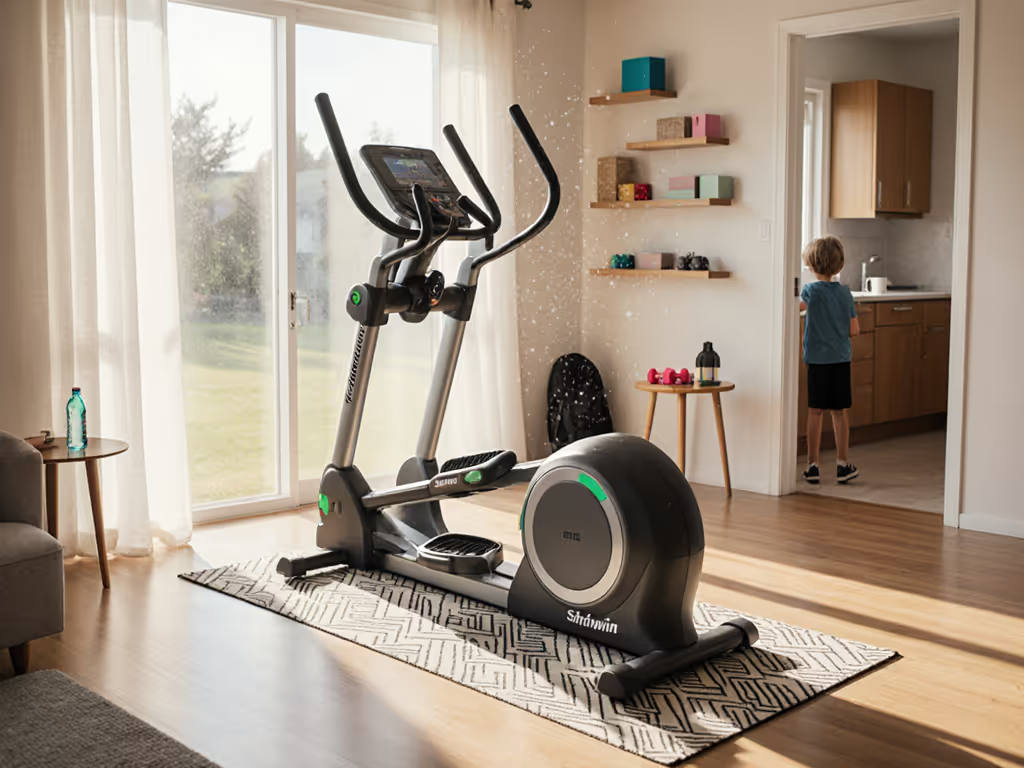
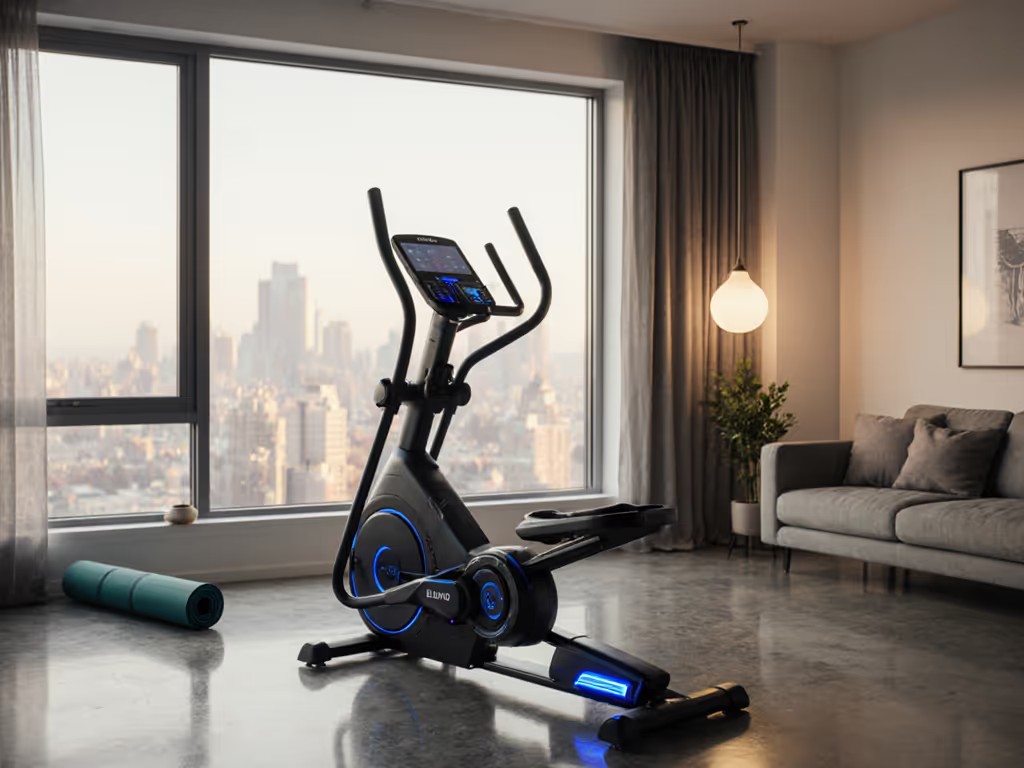
These built-in grip sensors are your zero-friction option. No pairing, no battery, no extra device.
Accuracy: Reasonably reliable for general fitness tracking, especially at moderate intensities, but dependent on consistent hand contact and sensor quality[3]. The best results come when you maintain light contact on both handles without death-gripping.
Best for: People who want instant feedback without adding anything to their wrist. Couples with different body sizes (since hand size matters less than positioning). Anyone skeptical of gadget-dependency.
Trade-off: You need both hands on the handles, limiting arm movement and workout variety. Readings can drift if you shift grip pressure or only touch one handle.
Setup checklist:
- Wipe the sensor pads with a dry cloth before each session; skin oil buildup reduces conductivity.
- Maintain light, consistent finger contact, not a death grip.
- If readings spike or drop suddenly, check your hand placement.
Wrist-Worn Fitness Trackers (Apple Watch, Garmin, Huawei)
These devices offer convenience and multi-activity tracking, but they come with accuracy trade-offs on the elliptical.
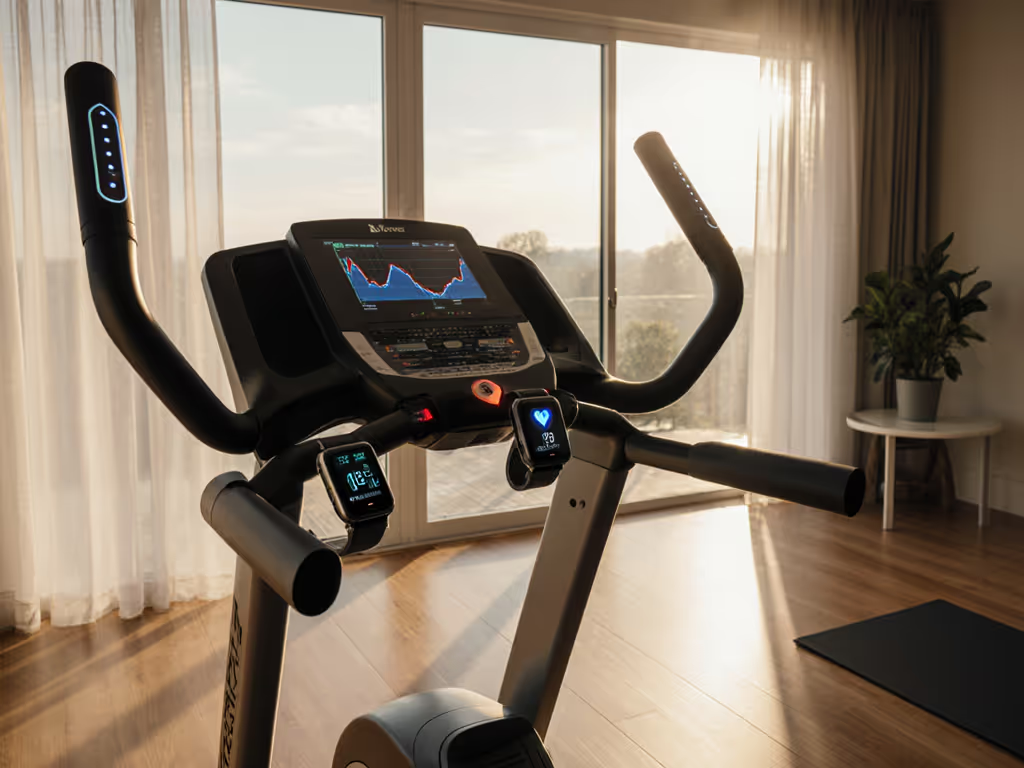
Accuracy: The Apple Watch showed the best agreement among wrist-worn devices during elliptical exercise, with acceptable correlation to a chest strap baseline[1]. However, even the Apple Watch had missing data during sessions, and all wrist-worn devices underestimated heart rate, particularly as intensity increased[2][4]. On an elliptical with arm levers (where arm motion is continuous), none of the popular wrist-worn trackers delivered reliable readings[4].
Best for: Multi-sport users who also run, swim, or cycle and want one device for all activities. People with smaller wrists or those who dislike chest straps. Anyone already invested in a smartwatch ecosystem.
Trade-off: Accuracy drops on the elliptical compared to chest-strap baselines. You'll see occasional erratic spikes or dips. The device may miss beats during high-intensity intervals. If arm levers are part of your routine, expect degraded performance.
Setup checklist:
- Ensure a snug fit on your wrist (not too loose; optical sensors need consistent skin contact).
- Wear the device on the wrist that feels most comfortable during arm movement.
- Avoid wearing it over a long sleeve; bare skin improves sensor accuracy[1].
- Pair it with the elliptical's Bluetooth connectivity (if available) to log sessions without re-entry.
- Accept that the numbers are approximate, not clinical, especially during sprints or high resistance.
Chest Strap Monitors (Polar, Garmin, etc.)
This is the accuracy gold standard, and it might surprise you how easy they are.
Accuracy: Chest straps measure electrical activity, matching electrocardiogram readings across all intensities and activities[4]. They work equally well on treadmills, ellipticals, stationary bikes, and during rest[4]. No dropout, no lag, no underestimation.
Best for: Serious heart rate zone training. People with larger or smaller wrists where smartwatches don't fit well. Anyone doing multi-user sessions on one elliptical (the strap is easy to swap). Users who want data they can trust for pacing and recovery.
Trade-off: One more thing to put on. Comfort varies; some people find them restrictive. You need to ensure the strap is wet or moist (or use conductive gel) for reliable contact. Replacement straps are inexpensive but slightly annoying. For strap options and add-ons that simplify setup, see our elliptical accessories guide.
Setup checklist:
- Dampen the back of the strap with water or sweat before wearing (or use a thin layer of conductive gel for dry conditions).
- Position the strap snugly across your lower chest, just below your sports bra or shirt.
- Pair it once with your elliptical or watch; most maintain connection across sessions.
- Wash it monthly to prevent salt buildup.
Make It Easy, Make It Daily
The best monitor is the one that gets out of your way. Research shows that wrist-worn trackers deliver acceptable accuracy during low-intensity elliptical work and at rest[2], but they falter under fatigue and high resistance. Contact sensors work reliably if you maintain consistent hand contact. Chest straps never let you down but require a small ritual.
For most busy professionals returning to consistent cardio or building 3-5 weekly sessions, contact sensors or a chest strap remove decision fatigue. You don't wonder if the reading is trustworthy; you simply glance, adjust effort if needed, and finish your session in the window you've carved out. That seamlessness is what turns an elliptical from a purchase into a habit. When you're ready to train specifically for cardiovascular improvements, follow our heart health workout plans. Small, repeatable wins build momentum.
After a wrist injury once sidelined me from kettlebells, I rebuilt momentum on an elliptical with one rule: zero setup friction. I skipped the smartwatch heart rate data (which kept dropping) and used the built-in contact sensors instead. Sessions stayed short, the ritual stayed simple, and the consistency came back. The injury healed, but the elliptical habit didn't end, because it was easy enough to sustain.
Final Verdict: Choose Your Trade-Off Wisely
For simplicity: Use the elliptical's built-in contact sensors. Wipe them clean, maintain light grip contact, and accept ±5–10% variance. Perfectly adequate for aerobic fitness.
For multi-sport: Pair a smartwatch (Apple Watch preferred for elliptical accuracy among wrist-worn options) with the elliptical's contact sensors as a backup. Your watch tracks overall trends; the contact sensors give you session-to-session accountability.
For precision zone training: Invest in a chest strap. It syncs seamlessly, works in any condition, and eliminates guesswork. The small ritual of putting it on becomes part of your pre-session routine (a cue that says we're doing this today).
What matters most isn't owning the most accurate device. It's choosing one that feels so obvious and frictionless that you stop thinking about the monitor and start thinking about the workout. That's when consistency clicks in, and consistency is where change happens. Small, repeatable wins turn cardio into a lifelong habit.
Related Articles