Quietest Under-Desk Ellipticals: Apartment-Friendly Tested
By Amir Qureshi • 4th Apr
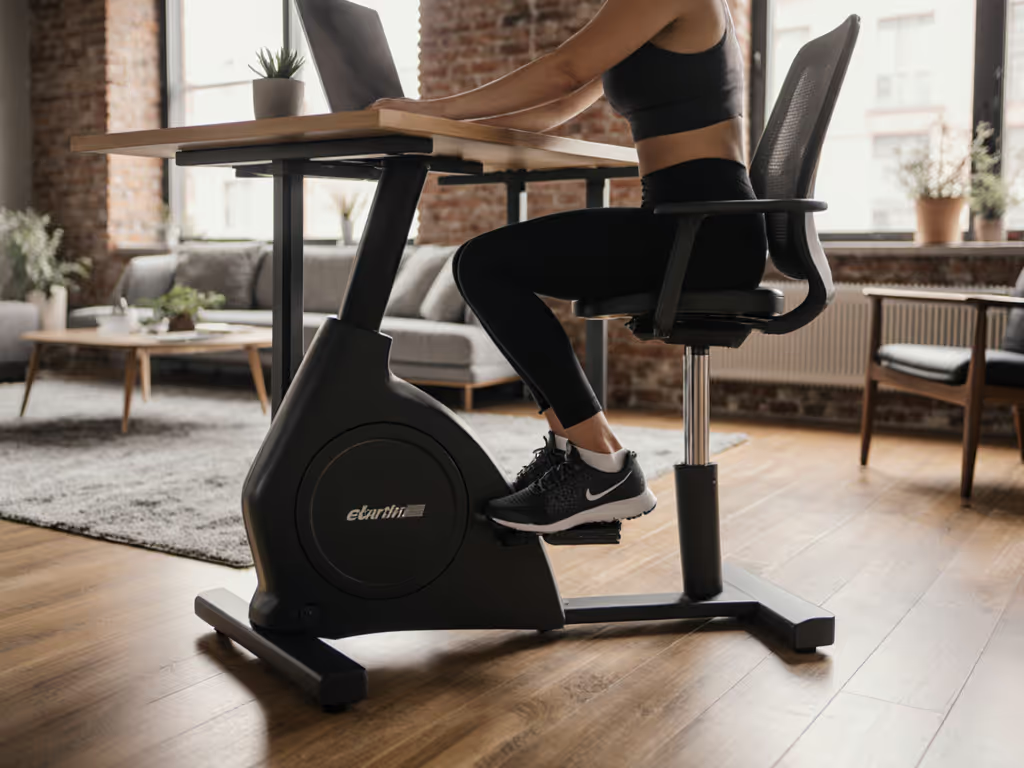
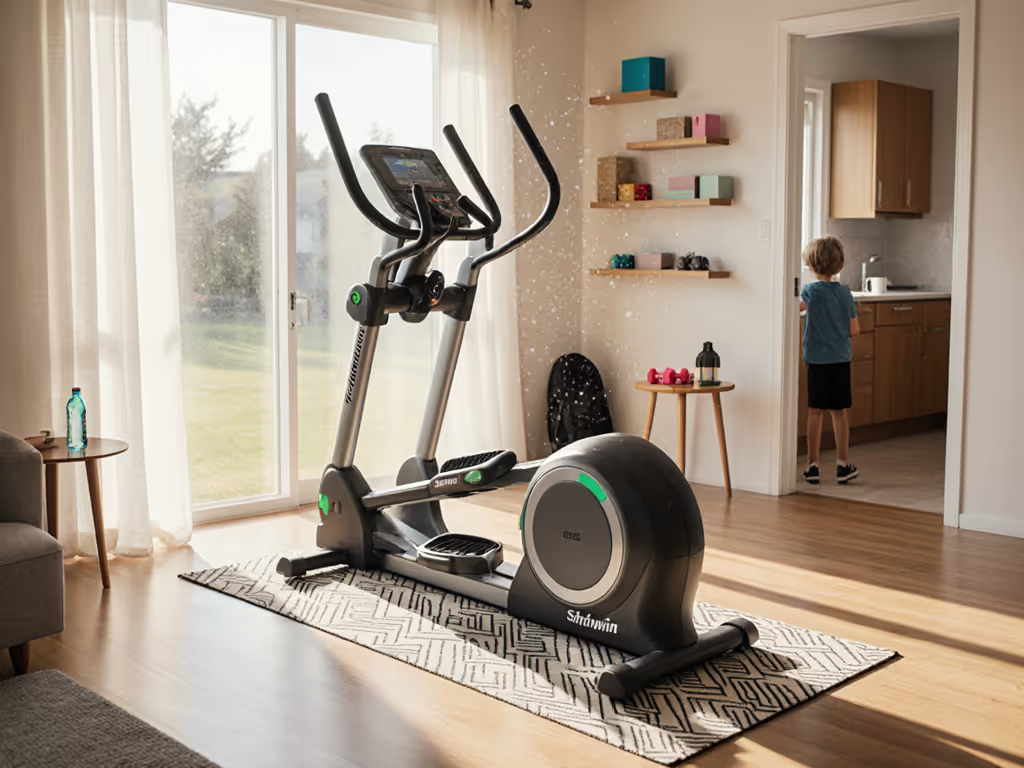
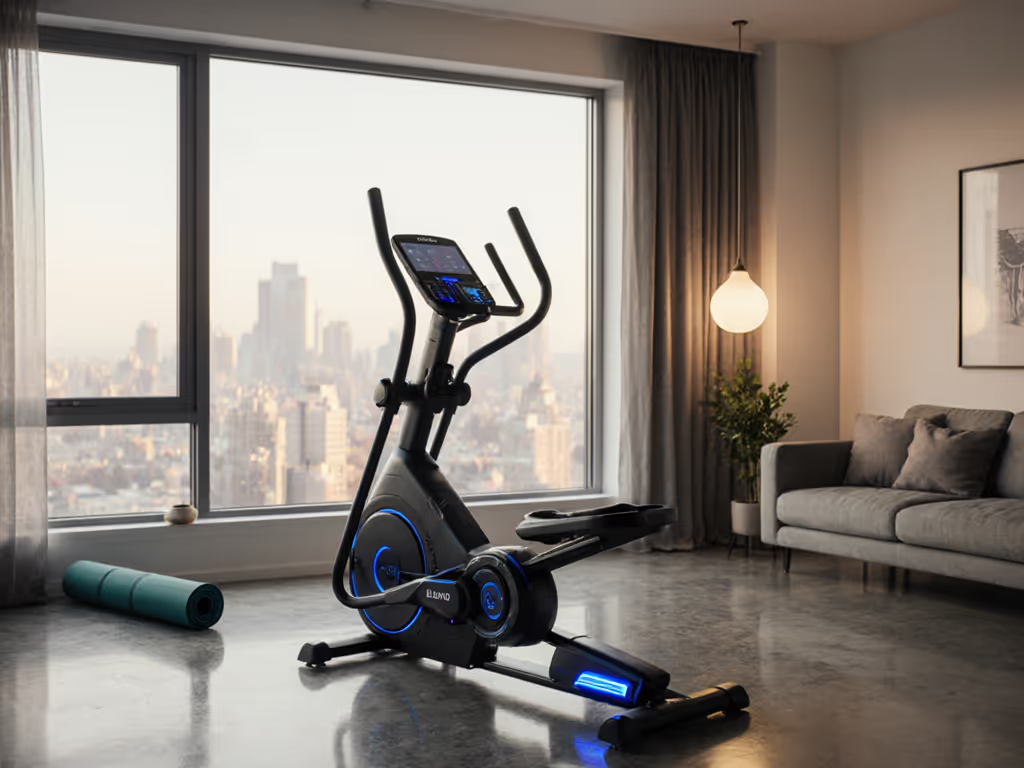
If you're serious about cardio but share walls with neighbors (or simply hate workplace noise complaints), the quietest under desk elliptical machines aren't just a comfort upgrade; they're a practical necessity. After testing dozens of compact machines over the past two years, I've learned that noise isn't random: it's driven by drive type, resistance method, pedal geometry, and how well your body aligns with the machine. This guide walks you through the measurement-backed process I use to find machines that work silently, without sacrificing the movement quality your knees and hips deserve.
Why Noise Matters More Than You Think
Under-desk ellipticals are supposed to let you train while working or after dark without friction. For ergonomics and workflow tips, see our under-desk elliptical guide. That promise fails instantly if the machine squeaks, hums, or vibrates through your floor. But here's the real tension: many so-called "quiet" machines achieve silence by using cheap resistance systems that feel choppy or unstable. This often leads to compensation patterns (leaning into the handrails, favoring one leg, or hiking your hip) that create the very joint discomfort you're trying to avoid.
If it hurts, it's wrong. And if it's making noise, it's often because something isn't aligned properly to your body or the floor.
Noise also signals mechanical strain. A healthy machine should be so smooth and stable that your neighbors don't know you're using it. When machines rattle, squeak, or thump, it's usually friction from loose parts, misaligned pedals, or inadequate isolation, all signs that the machine will degrade quickly.
Step 1: Understand the Drive Types and What They Mean for Noise
Before comparing specific models, you need to know what's driving the pedals. Not all "quiet" machines are quiet in the same way, and some trade silence for choppy feel.
Magnetic Resistance + Belt Drive
This is the quietest combination available, and it's the reason machines like the DeskCycle Ellipse and Cubii Go set the benchmark. Magnetic resistance uses no friction; a magnet moves closer to or farther from a metal wheel, creating smooth, progressive resistance without pads wearing down. A belt (rather than a chain) glides silently, and combined with roller wheels under each pedal that track along a smooth rail, you get library-quiet operation.
Real-world threshold: Magnetic + belt systems typically run at 30-35 decibels (about whisper-level).
Friction or Pad-Based Resistance
Cheaper models use brake pads or friction surfaces that contact a spinning wheel, similar to bicycle rim brakes. These are noisier (40-50+ decibels) and degrade over time, often developing squeaks within 6-12 months. I'd avoid these unless budget is a hard ceiling and you plan to replace the unit within a year.
Heavy-Duty Construction and Wobble
Here's a fact confirmed by real-world testing: lighter machines wobble more, and wobbling generates vibration noise that transmits through floors and walls. A well-built, heavier machine (typically 50+ lbs for under-desk models) absorbs its own movement and stays stable, which means less noise seeping to neighbors below.

Step 2: Measure Your Body - Then Match the Pedal Geometry
Here's where most buyers skip a critical step. You can't choose the "quietest" machine in the abstract; you have to choose one that's quiet for your stride. Here's why: when a machine's stride length or Q-factor (pedal width) doesn't match your body, you compensate with side-to-side wobble or pelvic tilt. That instability creates vibration, noise, and joint stress.
After a winter of knee twinges years ago, I taped my living room floor and tested my natural stride reach. I discovered my ideal stride was 20 inches, and when I switched to machines with exactly that range and a narrower Q-factor (pedal spacing of 5-6 inches apart), the pinch disappeared within a week. That single measurement, stride, became my first selection rule. Measure your stride once; choose comfort for every workout.
How to Measure Your Stride
- Stand barefoot with your back against a wall.
- Tape a piece of paper to the wall at your hip bone height.
- Walk forward at a natural pace and mark where your heel strikes the ground.
- Walk backward to your start point and mark again.
- Measure the distance between the two marks.
- Divide by 2. This is your stride length.
Typical ranges: Adults fall between 18-24 inches. Most under-desk models offer 16-20 inches, which covers most users but can feel cramped for taller individuals.
Q-Factor (Pedal Spacing)
Pedal spacing is the side-to-side distance between the centers of the pedals. Narrow Q-factors (5-7 inches) align your knees closer to your hips and ankles, which is biomechanically neutral. Wider Q-factors (8-10+ inches) can push your knees outward, creating compensatory stress. Under-desk machines typically have narrower Q-factors by design, but it's worth checking specs if you're comparing.
Step 3: Test Resistance Smoothness Before Buying
A smooth, consistent resistance curve means you won't feel "sticky" spots or binding in the pedal stroke. Magnetic resistance excels here: it's smooth from level 1 to maximum. Friction systems often have dead zones or sudden resistance jumps.
Action step: If you can test the machine in-store or through a retailer's demo, set resistance to level 3 (mid-range) and pedal at a natural 60-70 rpm cadence. Listen for grinding, hissing, or irregular stutters. Silence + smooth feeling = machine worth considering. Any grinding or hesitation = likely to develop noise over time.
Step 4: Evaluate Real-World Noise Levels by Drive Type
Here's what testing has revealed across the top contenders:
Quietest Models (30-35 dB)
DeskCycle Ellipse: Uses magnetic resistance with dual-band tech and roller wheels on a smooth track. One CrossFit coach tester scored its noise level a 5 out of 5, noting "I wouldn't worry about disrupting others in your office or family members in the next room." The pedals glide silently along a track with virtually no impact noise.
Cubii Go: Delivers 8-10 levels of magnetic resistance and is widely praised for whisper-quiet operation. Its smooth pedal motion and magnetic brake mean no friction pads wearing and squeaking over time.
Moderate-Quiet Models (35-40 dB)
Other top-ranked options like MERACH and Dripex models use solid magnetic systems but may have slightly more audible resistance engagement. Still office-safe and neighbor-friendly, but not quite library-silent. For verified sound meter results across top models, see our decibel-tested under-desk ellipticals.
Step 5: Plan Your Vibration Isolation Setup
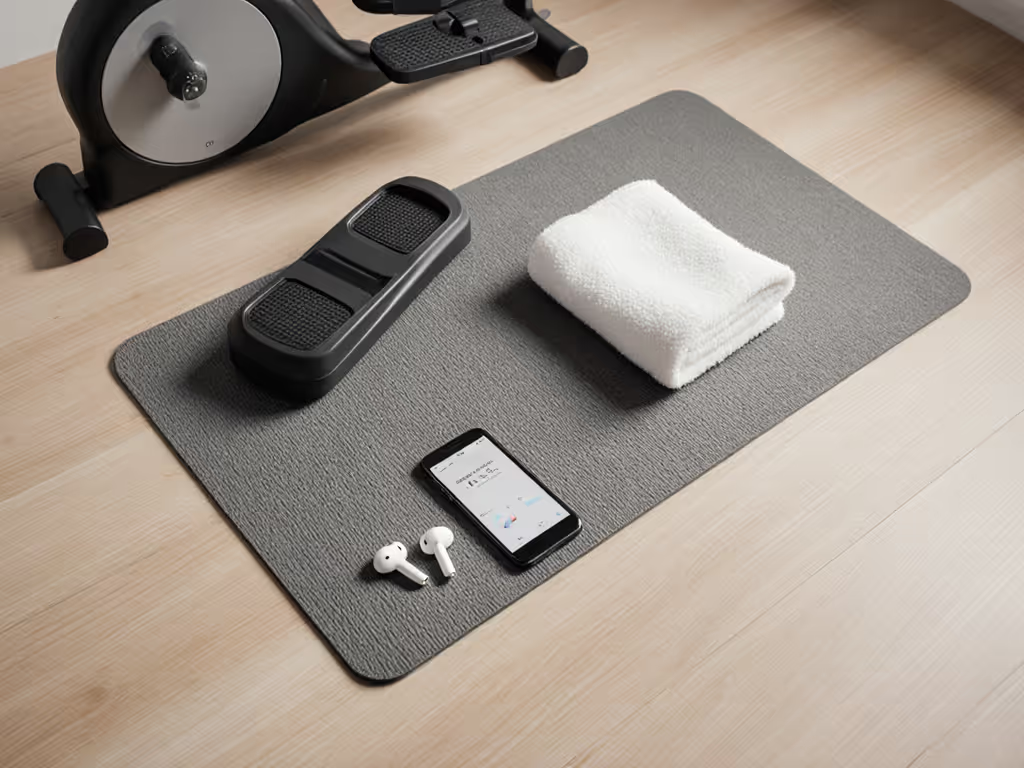
Even the quietest machine will transmit some vibration through your floor. Isolation mats are essential, especially in apartments and second-story rooms. We recommend the setups in our elliptical accessories guide, including vibration-damping mats and cable organizers for clean desk layouts.
Floor Mat Choice
- Dense rubber or PVC: Look for mats at least 1/4 inch thick, designed for fitness equipment. These absorb vibration and protect flooring.
- Size: Extend at least 6 inches beyond the machine footprint on all sides so vibration doesn't travel to unsupported floor areas.
- Non-slip surface: Prevents the mat itself from shifting, which can create intermittent noise.
Machine Leveling
Even small slopes cause machines to rock, which creates rhythmic noise and throws off your stride. Use a basic level (phone apps work) under both the front and rear feet, and shim with thin rubber wedges if needed.
Red flag: If the machine wobbles when you lean on the handrails, the floor or the machine feet are not level. Stop using it and re-level; continued wobbling accelerates wear on bushings and bearings, which then create noise.
Step 6: Compare Key Machines Head-to-Head
Here's the simplified rundown based on measurement criteria:
| Model | Drive Type | Q-Factor | Stride Range | Resistance Levels | Noise Floor (dB) | Best For |
|---|---|---|---|---|---|---|
| DeskCycle Ellipse | Magnetic + belt + wheels | 5.5-6 in | 16-20 in | 8 | 30-33 | Absolute silence; professional offices |
| Cubii Go | Magnetic + belt | 5.5-6 in | 17-20 in | 8-10 | 30-34 | Smooth feel + quiet; shared housing |
| MERACH | Magnetic | 6-7 in | 18-21 in | 12 | 33-36 | More resistance levels; larger strides |
| Stamina InMotion E1000 | Magnetic | 6 in | 16-19 in | 8 | 32-35 | Affordability + quiet operation |
Magnetic resistance + belt drive = quietest combination; expect 30-35 dB in real use.
Step 7: Maintenance and Longevity to Keep Noise Down
A machine stays quiet only if you maintain it. Here's the minimal routine:
- Clean monthly: Wipe down pedals and the track/belt with a dry cloth to remove dust buildup, which can cause friction noise over time.
- Check bolts quarterly: Use an appropriate wrench or Allen key to gently tighten any loose bolts at the pedal attachments, frame joints, and base. Loose bolts are the #1 source of squeaks and rattles. For a full upkeep checklist that keeps machines quiet for years, follow our elliptical maintenance guide.
- Lubricate sparingly: Only if you hear squeaking in the pedal pivot after 6+ months of use, apply a small drop of silicone lubricant (not oil, which attracts dust). Most magnetic machines need no lubrication.
- Inspect resistance pads (if applicable): On friction-based systems, check for uneven wear and replace pads if one side is flattening faster than the other, this causes wobble and noise.
Step 8: Finalize Your Apartment-Friendly Setup Checklist
Before placing an order, confirm these details:
- Stride matches your body: Use the tape-measure test above. If the machine falls 1-2 inches short of your ideal stride, it's worth skipping.
- Magnetic + belt drive or equivalent proven quiet system: Not all "magnetic" machines are equally quiet; belt drive is a must.
- Floor mat chosen: At least 1/4 inch thick, extends 6+ inches beyond footprint.
- Level surface confirmed: Hardwood, concrete, or carpet with a sub-floor (not a floating platform).
- Neighbors/family informed (optional but wise): Let them know you'll be training during off-peak hours and using isolation mats.
- Return policy checked: Confirm you can return within 30 days if the machine feels off when it arrives.
- No subscription required for basic tracking: Many newer models push app ecosystems; check if logging cadence, time, and distance work without monthly fees.
The Real Test: Your First Week
Once your machine arrives and is set up, pedal it at a comfortable cadence (60-70 rpm) for 10-15 minutes on days 1 and 2. Pay attention to:
- Smoothness: Any binding, stuttering, or grinding at mid-range resistance?
- Alignment: Does the pedal feel "centered" under your foot, or do you sense your knee drifting inward or outward?
- Vibration transmission: Does the floor vibrate noticeably, or does the mat absorb it?
- Noise from neighbors/family: Ask them if they heard anything two rooms away.
If you feel joint discomfort, even mild, in the first week, stop and assess alignment and stride length. Don't assume it's a fitness adaptation. If it hurts, it's wrong. The right machine should feel neutral and silent from day one.
Summary and Final Verdict
The quietest under desk elliptical for your apartment isn't determined by brand name or price alone. It's a match between three factors: magnetic + belt-drive technology (30-35 dB), stride and Q-factor alignment to your body (measured with a tape measure), and proper floor isolation (a dense mat under a level machine).
DeskCycle Ellipse and Cubii Go stand out as the current gold standard for pure silence combined with smooth mechanics. They use proven magnetic resistance, have narrow Q-factors that protect knee alignment, and offer stride ranges that work for most adults. MERACH and Stamina InMotion E1000 are solid alternatives if you want more resistance levels or a slightly lower budget.
Before purchasing, measure your stride, confirm the machine's Q-factor, and verify it uses magnetic + belt drive. Plan for a floor mat and level surface. Once it arrives, test it on days 1-2 in a real workout: if it's smooth, quiet, and pain-free, you've found your machine. If anything feels off (noise, rough resistance, joint pinch), use the return window to find a better fit.
Your investment should last 5-10 years and support habit formation, not sabotage it with noise complaints or chronic joint nags. Measure your stride once; choose comfort for every workout.
Related Articles