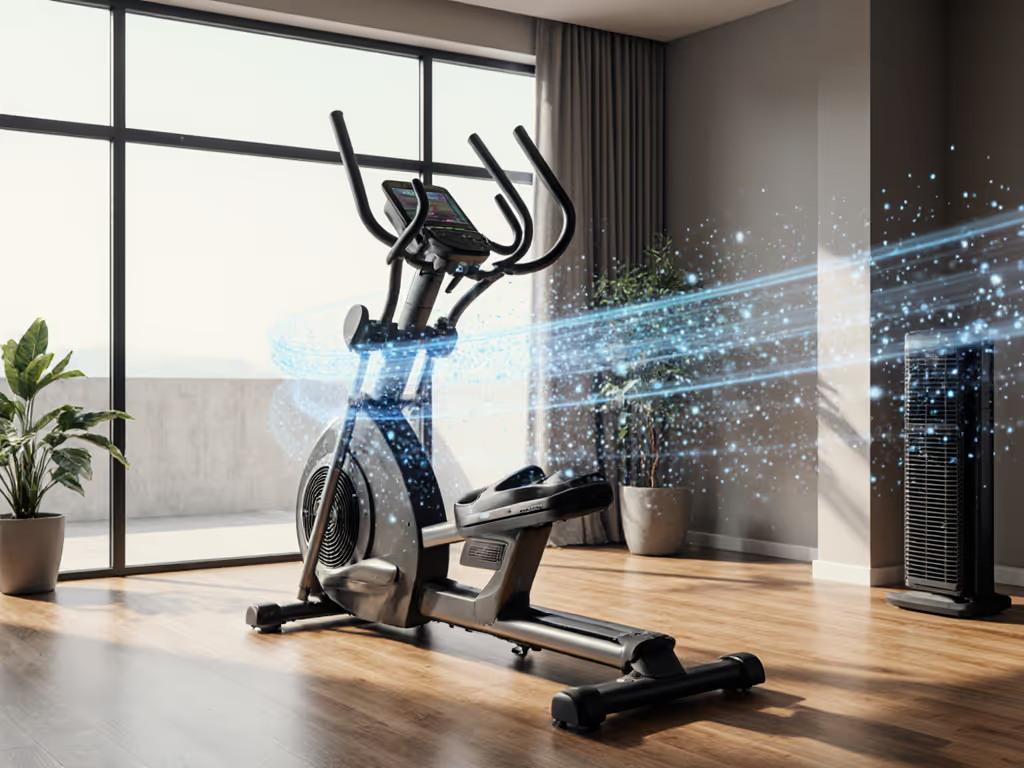
Schwinn 470 Review: Family-Fit Without the Noise
By Amir Qureshi • 10th May
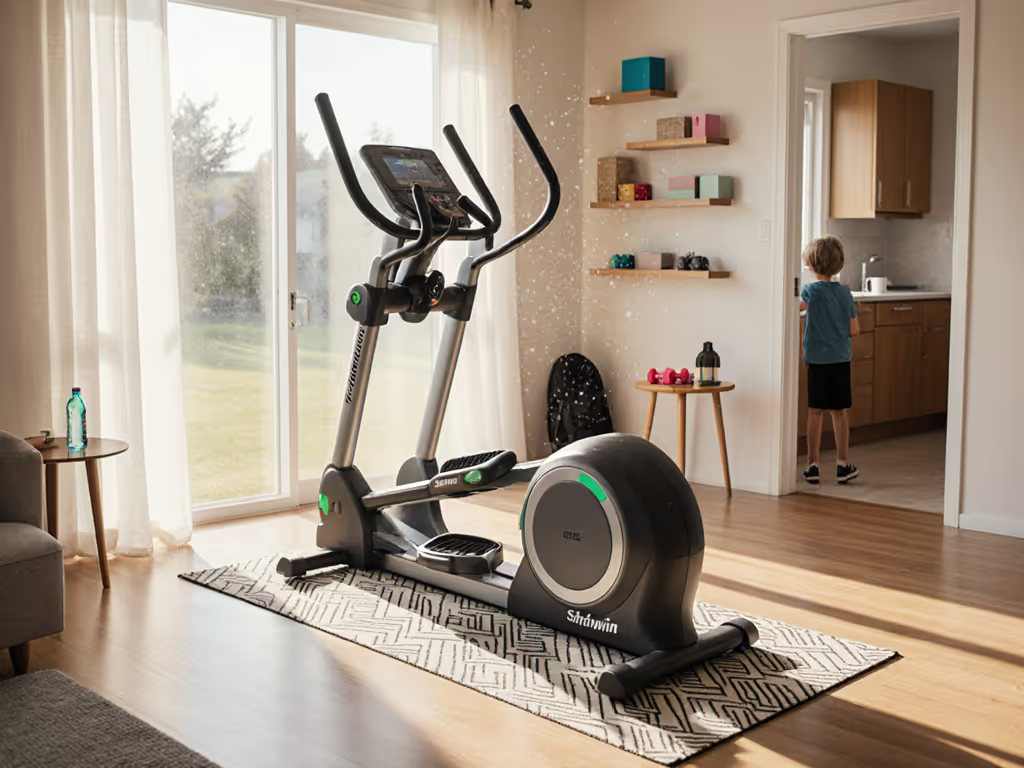
When you're shopping for an elliptical, the spec sheet can feel like a foreign language: flywheels, resistance curves, Q-factor, stride length. But here's what matters most (and why I start every Schwinn 470 review with your body, not the brand). The Schwinn 470 lands at just over $1,000 and brings a 20-inch stride length, magnetic resistance, and something increasingly rare: a subscription-free elliptical experience. Before you click "add to cart," let's walk through what "family-fit" actually means, measure how it suits your frame, and test whether the noise and stability claims hold up to real home use.
Why Stride Length and Q-Factor Decide Comfort, Not Marketing Hype
The 20-inch stride on the Schwinn 470 is neither short nor oversized, it is designed to fit a broad middle range. But "broad" doesn't mean everyone, and that's where most buyers stumble. Stride length isn't just a number; it's the arc your leg travels with each pedal revolution. Too short and your knees track forward while your hip flexors bunch. Too long and your leg locks at the bottom, straining the knee joint. There's a simple way to test your fit before money changes hands. Use our stride length calibration guide to dial in precise measurements before you buy.
Stand with your back against a wall, bare feet about hip-width apart. Measure from the wall to your toes with a tape measure, that's your wall-to-toe distance. Most sources recommend a stride length that sits around 50% of your inseam, though some people thrive at 55%. If your inseam is 32 inches, a 16- to 18-inch stride often feels natural; a 38-inch inseam usually prefers 19 to 21 inches. The Schwinn 470's 20-inch span works well for users with an inseam between 30 and 37 inches, roughly 5'6" to 6'1" depending on torso-to-leg ratio.
Beyond stride length, Q-factor (the distance between your feet on the pedals) shapes how your knees align over your ankles. The Schwinn 470 uses what Schwinn calls "Precision Path Foot Motion Technology," which aims for a narrower, more neutral Q-factor. A narrower Q-factor (closer pedals) reduces the lateral stress on your knee joint and hip, especially during longer sessions or higher inclines. After a winter of subtle knee twinges from a machine with too wide a pedal stance, I taped my living room floor and tested reach with a simple wall-to-toe drill. Swapping to a configuration with a narrower Q-factor eliminated the pinch within a week. Since then, I measure once, then trust comfort for every workout. Measure, don't guess.
The 20-Inch Stride in Real Homes: Fit and Footprint
The Schwinn 470's assembled dimensions are 70.1 inches long × 28.2 inches wide × 63.2 inches tall. That's substantial but not exceptional for a mid-range machine. For apartments and spare rooms, the length is the constraint, you'll want at least 8 feet of clear floor space, preferably more if you plan to walk around the machine during setup or maintenance. If space is tight, see our compact elliptical guide for models that fit small homes without sacrificing stride feel.
Step-up height is often overlooked but critical for daily use. A footplate too high strains your ankle and hip; too low and your foot angle becomes awkward. The Schwinn 470 has large, cushioned footplates designed for comfort, though the exact step-up height isn't explicitly published. Most users report it feels accessible for those 5'4" and taller; shorter users (under 5'4") sometimes report needing to climb rather than step aboard. If you're sub-5'4", request a hands-on test or confirm return flexibility before purchase.
Ceiling clearance matters too, especially for tall users or basement placement. Schwinn recommends clearance of your tallest user's height plus 26 inches. A 6'2" person needs 8 feet 2 inches of headroom at minimum. If your basement has an 8-foot ceiling, a 6'4" user is cutting it very close. A ceiling 2 inches too low means stopping your sprint or ducking (neither pleasant).
Quiet Ride and Stability: What the Tests Show
One of the Schwinn 470's standout promises is its quiet operation, and the 164-pound weight combined with a high-speed, high-inertia flywheel does deliver a smooth, whisper-soft experience at moderate cadences. Users in upstairs apartments and shared walls frequently praise the lack of clunking, a real plus if you're planning 6 a.m. sessions and your neighbor sleeps late. Learn why magnetic systems stay quieter in our magnetic vs air resistance comparison.
That said, stability shows cracks at high resistance and high incline together. YouTube reviewers and some user reports note that the frame wobbles slightly when both are maxed out. This isn't dangerous; it's more of an annoying shimmy. The machine is held together mostly by bolts rather than welded joints, which keeps it light and transportable but sacrifices some rigidity. For steady-paced cardio at moderate to high resistance, the wobble is imperceptible. For HIIT or sprints with 8+ incline and 20+ resistance, you may feel movement. If you're planning aggressive, max-out intervals, the Schwinn 470 is a compromise; if you're targeting 45-minute steady sessions at 60-70% effort, the stability is fine.
Maintenance note: Schwinn pre-greases the connecting joints to reduce friction, which lowers squeaking risk early on. However, some users report squeaking after 6-12 months as grease ages. This is manageable with occasional joint lubrication but worth knowing upfront.
Subscription-Free Ecosystem and Bluetooth Connectivity
The Schwinn 470's appeal for pragmatic buyers shines in its app ecosystem. Unlike many premium machines, it doesn't lock you into a proprietary subscription. The elliptical pairs via Bluetooth with the Schwinn Trainer app, but you can also sync your workout data to MyFitnessPal, Google Fit, Under Armour, Apple Health, and Strava without paying a dime for Schwinn's own platform.
This open architecture is rare. Many ellipticals force you into a $10-$15 monthly app subscription or geo-fenced content packages. See the 5-year cost of subscriptions to understand long-term expenses. The Schwinn 470 lets you decide your own ecosystem. If you're already logging in Apple Health or Strava, your steps, time, and HR data flow seamlessly. If you prefer a standalone, offline experience, the machine logs metrics to its 4-user profile system and you can review on the dual LCD screens.
Bluetooth pairing is straightforward on most devices, though early reports note occasional connectivity hiccups on some Android devices (nothing catastrophic), but worth a test run if Android is your platform.
Family and Multi-User Comfort: The Real Test
The Schwinn 470 shines for households with different heights and fitness levels. The motorized incline (adjustable 0-10 degrees) is a standout feature; unlike Schwinn's budget models (430, 411), you don't have to step off the machine to adjust slope, a huge quality-of-life upgrade for multi-user homes where one person runs steep and another prefers flat. For households sharing one machine, see our multi-user elliptical guide for setup tips and top picks.
The 4-user profile system means each family member gets saved preferences: stride feel, resistance level, incline, and favorite programs. A 5'5" user and a 6'1" user can each step on, select their profile, and get a customized experience instantly. No fumbling with manual resets.
Heart-rate monitoring uses grip sensors (not a chest strap), which is less accurate but friendlier for users who dislike strap discomfort. The 29 preset workouts span recovery, fitness tests, custom intervals, and quick starts, enough variety to prevent boredom but not so many that you're paralyzed by choice.
One caveat: the fixed footplate size isn't adjustable. If one user has size-8 feet and another wears size-13, both are stepping onto the same pedal. The Precision Path design tries to accommodate this, but some very small-footed users report their heel hanging off the edge. Test if possible, or confirm the return window covers a full trial.
Durability, Warranty, and Long-Term Value
The Schwinn 470 comes with a 10-year frame warranty and 90-day labor coverage: solid on the frame, limited on service. Many premium machines offer lifetime frame warranties and 1+ year labor; Schwinn's approach reflects a mid-tier positioning. Most owners report trouble-free operation for 2-4 years, with some reaching 6+ years of regular use. The magnetic resistance system is inherently reliable (no brushes to wear), and the pre-greased joints help longevity.
The 300-pound weight capacity is adequate for most households but lower than some competitors (Bowflex models support 400). If your household includes users over 280 pounds, confirm the machine's rated capacity before ordering.
Shipping is $99 standard; assembly is a $249 optional fee or DIY with included tools. Most users report 90 minutes to 2 hours for DIY assembly. The machine ships in two boxes and weighs 164 pounds total, manageable for two people but heavy if moving up stairs alone.
Schwinn 470 Value Assessment: Specs vs. Real-World Fit
At just over $1,000, the Schwinn 470 occupies a sweet spot: below premium machines ($2,000-$4,000) but above true budget models ($400-$700). You're paying for:
- 20-inch stride: Fits the 5'6" to 6'1" range well; not adjustable, so body-to-frame fit is critical.
- Motorized incline: Unlike lower-tier Schwinn models, you don't step off to adjust.
- Magnetic resistance: Smooth, quiet, low-maintenance.
- App compatibility: Subscription-free ecosystem.
- Lightweight and transportable: 164 pounds, helpful for renters or those who move.
You're not paying for:
- Welded frame: Bolted joints are acceptable but less rigid under extreme load.
- Extended warranty: 10 years on frame, 90 days on labor, middle-of-the-road.
- Adjustable stride or Q-factor: The fit is fixed; body-to-machine matching is one-way.
- Premium flywheel: The 20-pound flywheel is the minimum threshold for smooth operation; it delivers but doesn't exceed.
Measurement Checklist Before You Buy
Before committing, run through this simple checklist using a tape measure:
- Inseam: Measure from crotch to floor. Compare to the 50–55% rule for the 20-inch stride. (Target: 32-38-inch inseam.)
- Room length: Do you have 8+ feet of clear floor? (Footprint is 70.1", plus walking space.)
- Ceiling height: Add 26" to your tallest user's height. Is that clearance available?
- Step-up comfort: If possible, test on a similar machine or stand on a 12-inch platform to simulate the footplate height.
- Doorway fit: Can a 70-inch-long box fit through your entry and into the target room?
- Weight capacity: Is everyone in your household under 300 pounds?
If you answer yes to all five, the Schwinn 470 is a strong candidate. If you hit a no, the machine may not suit your situation, and that's worth knowing before the delivery truck arrives.
The Family-Fit Promise: Does It Deliver?
The Schwinn 470 does deliver on quiet, multi-user operation and does offer a subscription-free experience that respects your autonomy and budget. Its motorized incline, app ecosystem, and 4-user profiles make it genuinely family-friendly. The 20-inch stride is well-suited for the 5'6" to 6'1" window, the magnetic resistance is smooth, and the 164-pound weight is practical for frequent movers.
However, it's not a one-size-fits-all machine. If your household is notably shorter (under 5'4") or taller (over 6'2"), or if you plan intense sprinting at max incline and resistance, the Schwinn 470 shows limitations. The fixed stride and Q-factor mean body-to-frame compatibility is non-negotiable; it can't adapt if you're an outlier. And the 90-day labor warranty is tighter than the competition, so post-purchase issues can get expensive.
Final Verdict
The Schwinn 470 is a pragmatic, well-rounded choice for couples and families who want a quiet, reliable machine under $1,200, don't need app subscriptions, and fit the 20-inch stride window. It prioritizes low-impact, steady-paced cardio, not explosive interval training. For urban dwellers and space-conscious buyers, the lightweight build and modest footprint are genuine wins. For users outside the 5'6" to 6'1" range or those planning extreme workouts, a longer or adjustable-stride machine might serve better.
Measure your inseam, check your room length and ceiling height, and confirm the 20-inch stride matches your body once. Do that, and the Schwinn 470 becomes a reliable companion for years of quiet, family-friendly workouts. Skip the measurement step, and you risk a machine that feels choppy, awkward, or wasted space. Measure, don't guess.
If the specs align with your space and body, the Schwinn 470 value assessment is clear: a solid return on a mid-tier budget, free of subscription lock-in, and designed for homes where noise and multi-user flexibility matter more than extreme performance.
Related Articles