Elliptical Trainer for Balance: Elderly Progression Guide
By Luis Andrade • 8th Apr
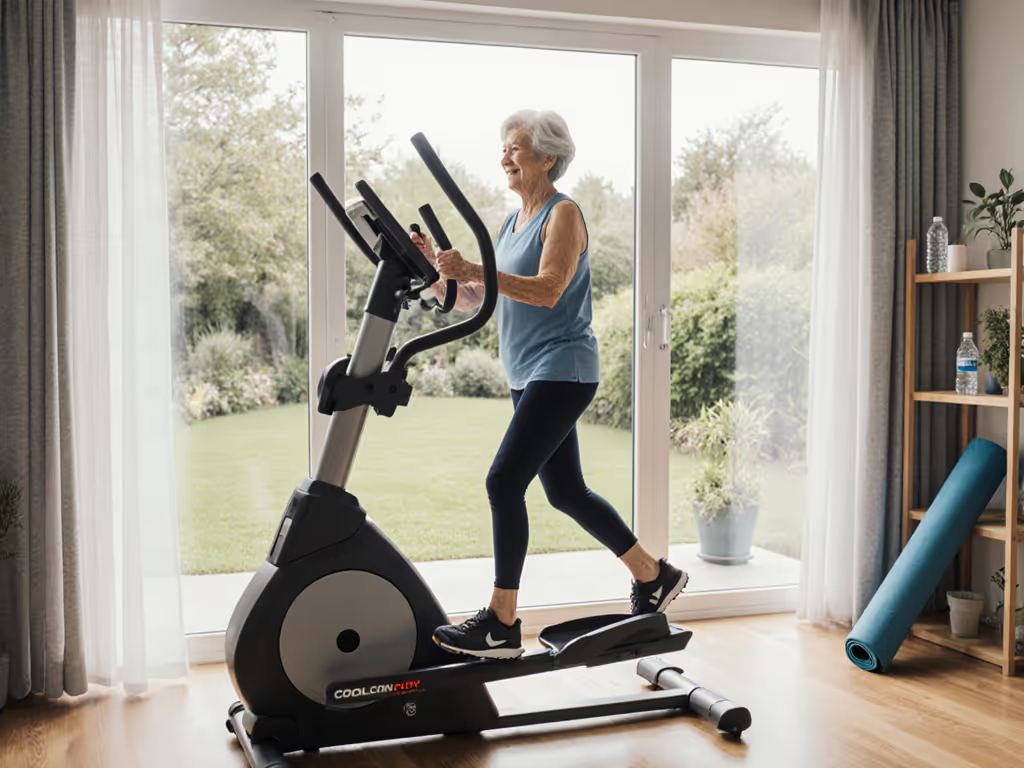
Balance matters more as we age. A slip becomes a fracture; a fracture becomes immobility; immobility becomes decline. The elliptical trainer offers a pathway to restore proprioception and coordination without the joint punishment of traditional cardio, but only if you choose the right machine and approach progression systematically. This guide walks through the neuromechanics, durability factors, and real-world progression framework for using an elliptical to rebuild balance and stability in older adults.
Why Ellipticals Work for Elderly Balance Training
Low-Impact Foundation
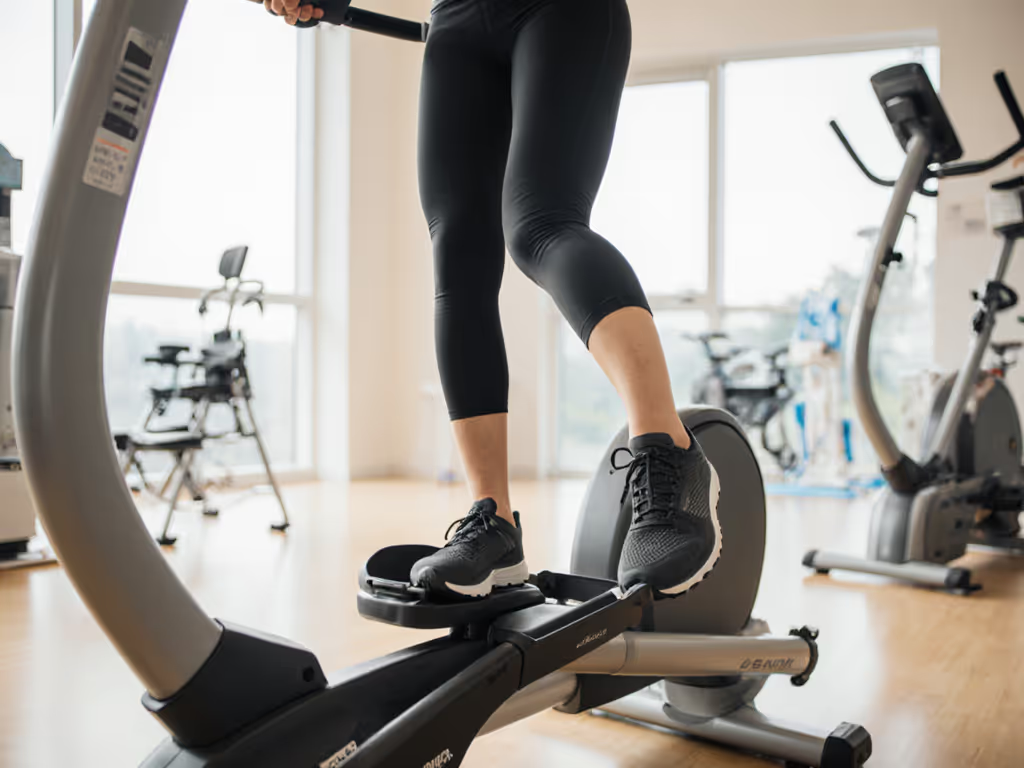
Fall risk in older adults stems from three converging issues: weakened lower-body muscles, diminished proprioceptive feedback, and accumulated joint wear that creates pain-avoidance movement patterns. The elliptical trainer addresses all three simultaneously because your feet never leave the pedals[3]. During traditional running or even brisk walking, your lower body joints (knees, ankles, hips) absorb repeated impact. The elliptical glides instead, meaning your joints remain stable while your muscles still fire at near-maximum capacity. Research confirms this: a 2021 study found that the elliptical caused significantly less long-term joint and cartilage degeneration in the knee than running or cycling[5].
This matters directly for elderly users because it means you can train consistency without triggering pain cycles. Pain creates fear; fear creates avoidance; avoidance weakens you further. The elliptical breaks that feedback loop.
Weight-Bearing Movement Without Trauma
Older adults need weight-bearing exercise to maintain bone density and skeletal strength[3]. Unlike a seated bike (which provides none) or a pool workout (which removes gravity entirely), the elliptical preserves meaningful load while cushioning impact. Your legs and core are genuinely working against resistance and gravity, you are just not spiking joint stress in the process. This distinction is critical for someone returning to fitness after a knee procedure or managing mild osteoarthritis. For condition-specific guidance, see our elliptical for arthritis guide.
Understanding Proprioception and Neurological Balance Training
What Proprioception Actually Does
Proprioception (your body's sense of position in space) declines with age. You become less aware of where your feet are relative to the ground, your balance reflexes slow, and correcting mid-motion becomes harder. Traditional balance work (single-leg stands, balance boards) targets this directly but demands high stability and carries fall risk. If dizziness or vestibular issues affect your balance, follow our vestibular rehab protocols to progress safely.
The elliptical builds proprioception differently: by requiring sustained, coordinated movement through a prescribed range of motion. Your nervous system recalibrates how to activate stabilizer muscles, coordinate upper and lower body, and maintain rhythm. An exercise physiologist at HSS notes that the elliptical is "ideal for people in physical rehabilitation and those who need to learn proper movement mechanics and control of their body"[3].
Movement Mechanics and Postural Stability
Each elliptical stride involves simultaneous arm and leg coordination. Your core stabilizes throughout; your posture must remain upright; your rhythm must stay consistent. For older adults, this mimics the neurological demands of real-world tasks (walking while carrying groceries, ascending stairs, navigating uneven terrain) better than isolated exercises do. The machine enforces good mechanics through its fixed pathway; you cannot compensate by leaning sideways or overstriding without destabilizing yourself.
This neurological balance elliptical training effect builds slowly over weeks, not days. Expect noticeable improvement in standing stability and stair confidence within 4-6 weeks of consistent use, assuming 3-4 sessions weekly.
Machine Features That Support Safe Progression
Stability and Stride Length Match
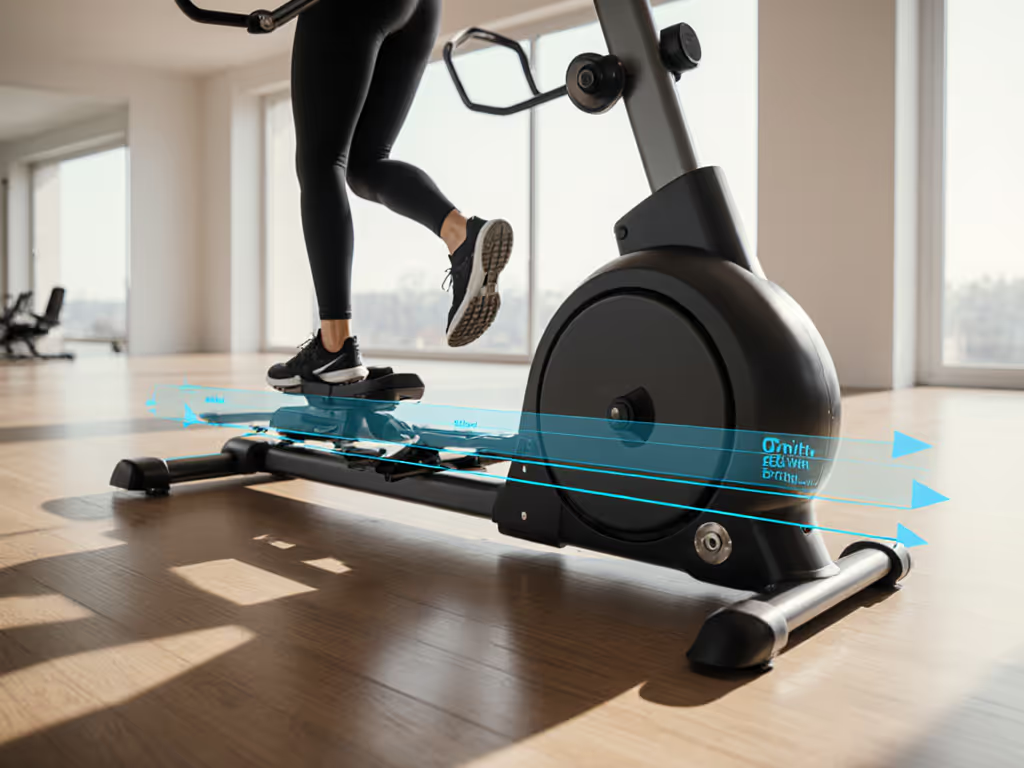
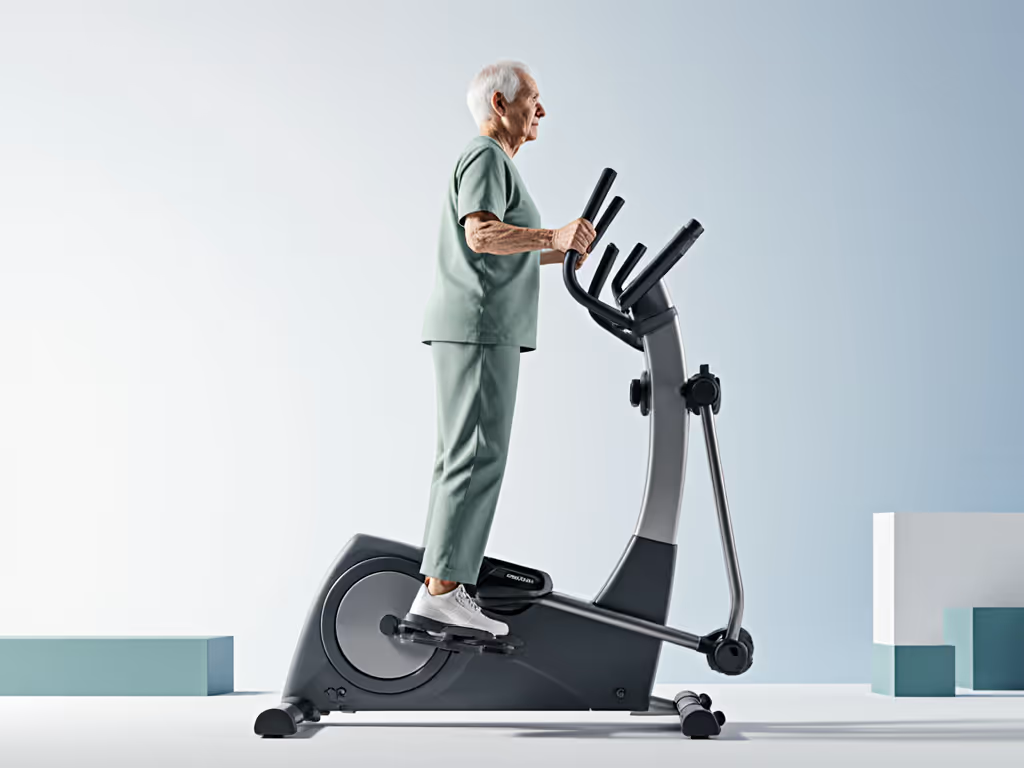
Not all ellipticals are engineered equally for balance work. Narrow Q-factor (the distance between pedals) and a stride length matched to your inseam create a natural, stable motion. If the machine feels choppy or requires your legs to collapse inward, proprioceptive training fails, you're compensating rather than learning.
Measure your inseam accurately: stand barefoot with heels 6 inches apart, run a tape measure from crotch to floor. Most adults aged 65-75 have inseams of 28-32 inches; this typically maps to ellipticals with 18-20 inch stride lengths. Use our stride length calibration to confirm fit before you buy. Too long and you overstride; too short and you feel trapped. Test the motion in-store or ensure a return policy permits a 30 day trial.
Handle Design and Upper-Body Integration
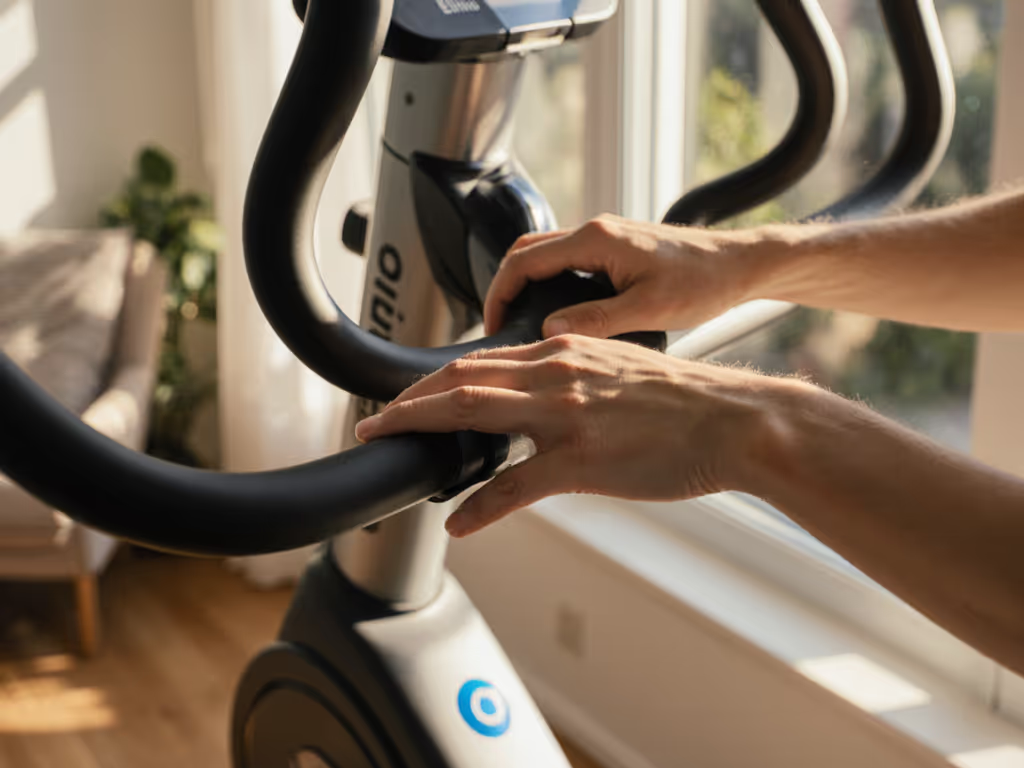
Fixed handles that don't require gripping are preferable for balance training. When you must maintain a tight grip to steady yourself, you're using your arms to compensate for core weakness rather than developing it. Look for handles positioned so your arms stay slightly bent at rest, about 85-90 degrees. This geometry encourages natural arm swing and reduces shoulder strain over time.
Moving handles (those that push and pull with leg drive) are fine but not essential; static handles do the job and often feel more stable to older users.
Resistance Smoothness and Incremental Control
Jerky or inconsistent resistance creates balance instability. Magnetic resistance systems (electronically controlled magnets) deliver smooth, linear resistance with minimal vibration (a quality marker for long-term durability as well). Avoid budget models with noisy friction pads; they wear quickly and create vibration that's both unpleasant and mechanically unstable.
Progression demands fine-tuned control: you want to increase difficulty in small increments (5% jumps, not 20% leaps) so your nervous system adapts gradually.
Durability and Lifecycle Value for Elderly Users
Why Machine Quality Outlives Trends
A $1,200 elliptical used 4× weekly for 8 years costs $37.50 per session. A $600 unit that wobbles loose at month 6, develops a squeaking belt at month 9, and ends up as a coat rack by year 2 costs $7.50 per session, but delivers zero benefit. Total cost over time beats flashy features on day one. Older adults especially benefit from machines with proven drivetrains, metal where it matters, and transparent warranty coverage.
Look for:
- Flywheel weight: 20-35 lbs for smooth, stable motion; lighter flywheels feel jerky
- Frame material: Welded steel (not extruded aluminum) withstands years of consistent loading
- Warranty: 5-year frame, 2-3 year parts, 1-year labor; anything less signals cost-cutting
- Parts availability: Can you source replacement bushings, belts, or pedal assemblies in 3-5 years? Check manufacturer's service portal.
Subscription Avoidance for Simplicity
Many modern ellipticals push app ecosystems and monthly fees ($10-$15/month) for workout tracking or entertainment. For elderly users building a basic balance habit, this is unnecessary friction. Seek a machine that:
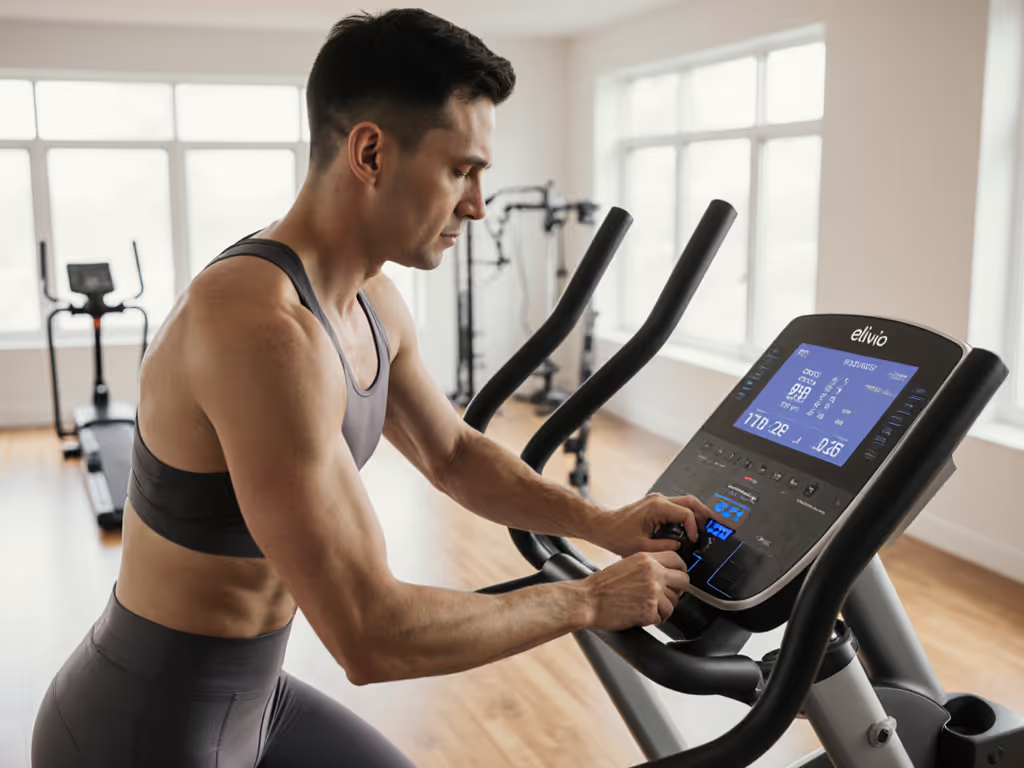
- Tracks cadence, time, and resistance without an app
- Syncs step count to Apple Health or Google Fit optionally (Bluetooth, not mandatory)
- Stores your last 10 workouts on-device
- Requires no subscription to use basic features
Buy once, maintain right: Choose machines from manufacturers with 15+ year track records (established brands, not startups), clear service channels, and honest warranty language.
Progression Framework for Balance Development
Weeks 1-2: Familiarity and Base Stability
Start at the lowest resistance, moderate cadence (60-70 RPM). Focus on upright posture, hands light on handles (testing grip, not leaning). Sessions: 15-20 minutes, 3× weekly. The goal is neuromuscular adaptation to the motion, your body learning the pathway and rhythm. Do not push intensity; consistency matters far more.
Weeks 3-6: Building Coordination and Endurance
Increment resistance by 10% every 2-3 sessions. Increase session duration to 25-30 minutes. Alternate between steady-state (constant cadence and resistance) and variable sessions (5-minute warm-up, then 5-10 minute blocks at varying resistance, 5-minute cool-down). This variability forces your nervous system to recalibrate balance and coordination. CDC guidelines recommend 150 minutes of moderate exercise weekly; aim for 90-120 minutes on the elliptical plus gentle stretching or walking on non-elliptical days[7].
Weeks 7+: Maintenance and Challenge Integration
Once you've established a 30-minute, moderate-intensity habit, vary sessions:
- Endurance days: 40-45 minutes at steady, easy resistance
- Variable days: 30 minutes with resistance climbs and descents (mimics outdoor terrain)
- Interval days: 5-minute warm-up, 6-8 blocks of 2 minutes at increased resistance + 1 minute recovery, 5-minute cool-down (2-3× weekly only)
Measurable markers: improved stair tolerance, steadier standing balance, reduced morning stiffness, and subjective confidence in walking and balance tasks. Track improvements with our elliptical metrics guide so small balance gains don’t go unnoticed.
Long-Term Sustainability and Maintenance
Preventive Care Schedule
Quarterly: Check belt tension, verify pedal alignment, inspect for cracks. For step-by-step care, follow our elliptical maintenance guide to extend lifespan and keep motion smooth. Annually: Lubricate moving parts per manual, test resistance at all levels for smoothness. After 1,000 hours (roughly 18 months of regular use): Replace pedal bearings or bushings if available. This small maintenance cost ($50-150 per service) prevents the squeaking decline that kills long-term adherence.
Real-World Noise and Vibration Management
A quality elliptical running on a level floor with an anti-vibration mat underneath will produce roughly 60-70 decibels, quieter than a dishwasher, similar to normal conversation. Avoid budget models; they often reach 75-80 dB and develop harmonic wobbles that transfer to flooring. For older users in shared walls or upstairs units, machine quality directly impacts household peace and therefore adherence.
Bringing It Together
Rebounding balance and coordination as you age isn't about flashy features or trending workout apps. It's about choosing a durable, biomechanically sound machine; progressing methodically over weeks; and showing up consistently. An elliptical trainer (selected for smooth operation, honest durability specs, and realistic warranty coverage) becomes an asset that pays compound dividends: improved stability, greater independence, fewer falls, sustained fitness habit.
Expect to invest $1,000-$1,800 in a quality machine. Expect to use it 3-4× weekly for 8+ years. Calculate the lifecycle math: that's under $40 per month for measurable gains in proprioception, lower-body strength, and autonomy. The alternative (frailty, fall-induced injury, and lost independence) carries far higher cost. Buy once, maintain right, and you've purchased years of uninterrupted balance progression and genuine health security.
Related Articles